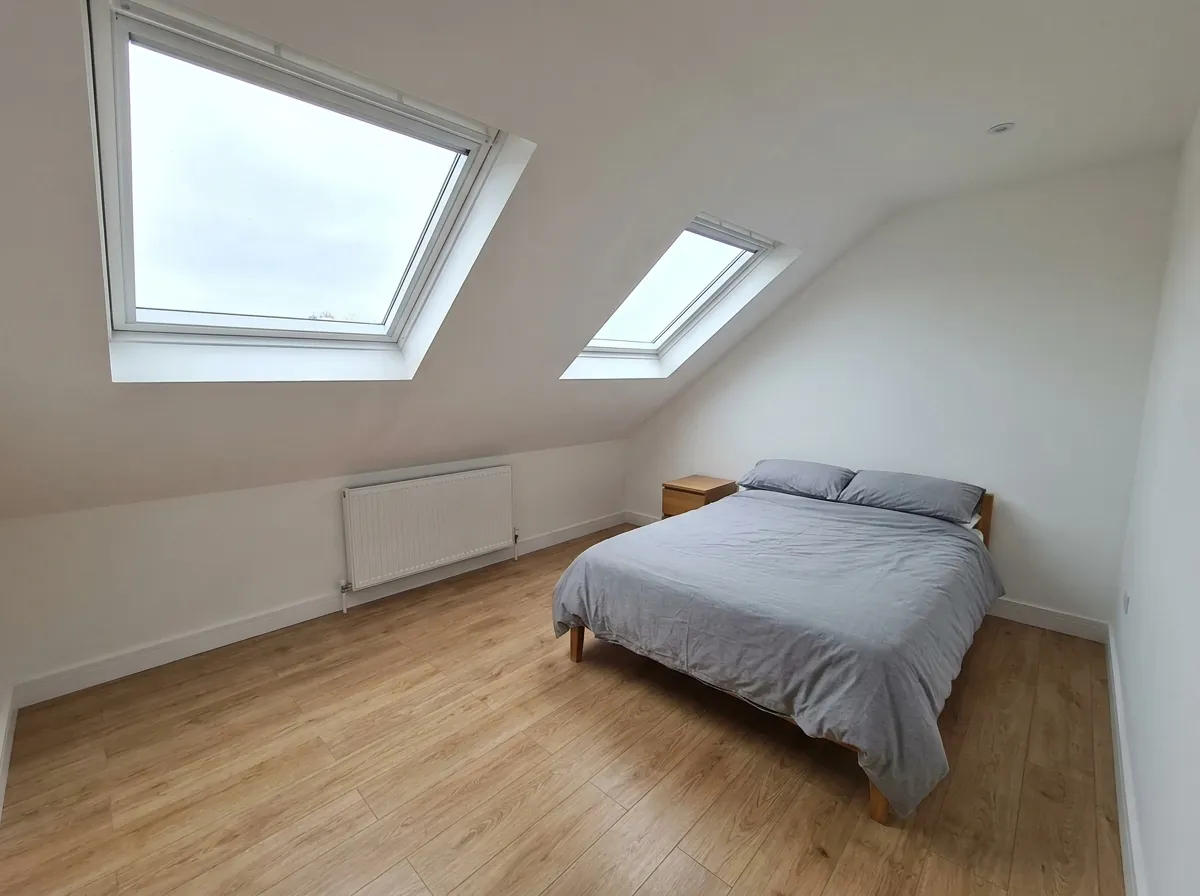
Sunderland cottage loft conversions: adding a storey to a single storey house
The Sunderland cottage is the reason loft conversion enquiries from Wearside read differently to those from anywhere else. These are single storey terraced houses, best understood as terraced bungalows, built in huge numbers between roughly 1860 and 1910 for the skilled workers of the Wear shipyards and collieries, and still going up in Fulwell's Scottish streets as late as 1933, when Moray Street was completed. The glassmaker James Hartley and Co built 80 cottages across Lily, May, Rose and Violet Streets in Millfield, Hendon got the Little Egypt estate around Cairo Street, and the ABC streets of High Barnes (Abingdon, Barnard, Eastfield and Guisborough) followed around 1900. Each cottage has its own front door, one or two rooms at the front, kitchen and bedroom behind, and a long rear yard. The historian Michael Johnson called them Wearside's little palaces.
For loft conversion purposes the cottage is a special case. On a two storey terrace a conversion adds a third level. On a cottage it adds the entire upstairs. A two bed cottage becomes a three bed house with a bathroom on the new floor, which is the biggest proportional space gain available anywhere in the region.
Two design problems decide every cottage project. The first is the staircase. The house has never had one, so the new flight has to come out of the existing floor plan, usually a slice of the second reception room or the rear bedroom against the party wall. Expect to give up three to five square metres downstairs, and expect the stair position to dictate whether the loft works as one bedroom or two. The second is volume. Cottages count as terraced houses under permitted development, so the cap is 40 cubic metres rather than 50, and a full width rear dormer on a long cottage roof can get close to it. Spot a front dormer on a cottage street and you are looking at a granted planning application, because permitted development never covers the front slope. Ridge height varies street by street, and a low ridge with a shallow pitch can rule a conversion out, which is exactly what the free survey measures first.
Terraces, semis and the seafront: the rest of the Sunderland stock
Ashbrooke and Thornhill hold the city's Victorian and Edwardian terraces and villas on tree lined streets off Ryhope Road. Steep slate pitches give these houses generous lofts, and the classic designs are a rear dormer or an L-shaped dormer over the back offshoot, which can deliver two rooms rather than one. Most of Ashbrooke sits inside a conservation area, covered in the planning section below.
Fulwell, Seaburn and the Barnes streets around Barnes Park carry red brick 1930s semis with hipped roofs, and the hip is what limits the loft. A hip-to-gable rebuild paired with a rear dormer recovers a full second floor and is the default design here, the same conversation our surveyors have in Gosforth or Whitley Bay.
Roker is its own micro-market. Roker Terrace, begun in the 1840s and designed in part by John Dobson, lines the seafront with tall properties of up to four storeys, and Roker Park Terrace, finished by 1905, is one of the most decorative Edwardian terraces in the city. Roofs here are mostly Welsh slate and the marine exposure is real, so dormers facing the North Sea get upgraded flashings, cladding and fixings.
Roker and Monkwearmouth also carry pockets of two flat terraces built on the Tyneside pattern, a pair of flats behind paired front doors. A Sunderland cottage is a different animal, one single storey house per front door, but the flatted terraces matter legally. Flats have no permitted development rights, so an upper flat loft always starts with a planning application. The dormer shape that fits depends on the roof you are working with, so it helps to compare the dormer types before you commit to a design.
What a loft conversion costs in Sunderland in 2026
The North East is the cheapest English region for building work, and Sunderland sits at the affordable end of that band, with local pricing running roughly 10 to 15 percent below the national average. Cost guides put the city at about 0.88 times UK rates.
Typical fully fitted prices in SR postcodes, mid-spec, building control inclusive:
- Velux conversion (rooflights only): £20,000 to £28,000
- Rear dormer on a Sunderland cottage, including the new staircase: £30,000 to £42,000
- Rear dormer on a Victorian or Edwardian terrace: £32,000 to £45,000
- Hip-to-gable with rear dormer on a 1930s semi: £40,000 to £52,000
- L-shaped dormer on a larger Ashbrooke or Thornhill terrace: £45,000 to £58,000
Those figures include structural calculations, building control fees of £500 to £900, full electrics and plumbing, plastering and decoration, one shower room or en-suite, and a 10 year workmanship warranty. Cheaper quotes exist on Wearside. Check what they leave out, because steels, stairs and building control are the usual gaps.
What moves the number here: the cottage staircase and the making good of the room it lands in, marine detailing on Roker and Seaburn jobs, and conservation-grade slate in Ashbrooke all push it up. Skipping the en-suite saves £6,000 to £9,000, and steep Ashbrooke pitches sometimes carry enough headroom for a rooflight scheme at half the cost of a dormer.
The honest value maths on Wearside
Sunderland is one of the most affordable cities in the UK, and that cuts both ways for a loft conversion. The average house price across the city was £145,000 in April 2026, up 6 percent on the year, with terraced sales running around a £115,000 median. At the same time SR6, covering Fulwell, Seaburn, Roker and the coast, averaged £237,754 across 2025 sales, with semis there around £266,000. The market is genuinely split, and the conversion maths follows the split.
Where the numbers work: Fulwell, Seaburn, Ashbrooke and the Barnes streets. Take a three bed 1930s semi near Seaburn at £250,000. A hip-to-gable and dormer at £40,000 to £52,000 that adds a fourth bedroom and en-suite typically lifts value by 15 to 20 percent, which is £37,000 to £50,000. On paper that is close to a wash, and the real comparison is with trading up, where duty, agents, solicitors and removals stack on top of the higher price. On the coast and in Ashbrooke, converting usually beats moving.
Where the numbers are marginal, and we will tell you so: the cheapest cottage and terrace streets in Hendon, Millfield and Pallion, where whole houses change hands between £60,000 and £110,000. A £35,000 dormer on an £85,000 cottage will rarely come back at sale, because even a 20 percent uplift is £17,000. The honest case for converting there is the space itself. A third bedroom that keeps you in a street you like can still be a rational spend, and a bedroom-only dormer without the en-suite trims the bill toward £28,000 to £32,000. If the survey says the value case is thin, we say so before you commit to anything.
Planning permission: Sunderland City Council rules
Sunderland is its own planning authority, so guidance written for Newcastle addresses does not apply south of the Wear. Applications go through the national Planning Portal to Sunderland City Council, which offers pre-application advice and a paid Fast Track service for householder applications.
Most Sunderland loft conversions proceed as permitted development. The limits that matter: 40 cubic metres of added roof volume on terraced houses, which includes every Sunderland cottage, and 50 on semis and detached homes. No dormer may sit on the front slope, the enlargement must stay below the ridge and sit back 20cm from the eaves, and flats have no permitted development rights at all. For any permitted development job we recommend a lawful development certificate, which proves the work's legality to lenders and future buyers.
Fees changed sharply in recent years. The householder application fee doubled in April 2025 from £258 to £528 and now rises each April, standing at £548 from April 2026, with a lawful development certificate for proposed works at half that. Building regulations approval is required whatever the planning route, and building control fees on a domestic loft typically run £500 to £900.
Conservation areas change the route entirely. The council lists 22 conservation areas across the city, and inside them roof enlargements lose permitted development rights, so every dormer needs a householder application. Ashbrooke, designated in 1969 with its Victorian terraces, villas and churches, affects the most loft projects, and streets like Ashbrooke Terrace and Ashbrooke Crescent carry Article 4(2) directions covering even minor external alterations. Roker Park, designated in 1995 around the historic park, catches parts of the seafront stock. In these areas we design rear dormers set below the ridge in matching slate, and rooflight schemes usually remain the low friction option.
One more Sunderland quirk. An Article 4 direction in force since December 2013 removes permitted development for converting a family house into a small HMO across the Barnes, Hendon, Millfield, St Michael's and St Peter's wards. A family loft conversion is unaffected, but converting and then letting the house to students needs its own change of use permission in exactly the wards where the cheap cottages are.
How we work across Sunderland and Wearside
We are a nationwide loft conversion specialist, and the same North East team that runs our Newcastle, Gateshead and coastal work covers Sunderland and the rest of Wearside.
- Free home survey. A surveyor measures ridge height and pitch, maps the staircase options (the deciding factor on a cottage), checks party wall condition and looks up the conservation and Article 4 status of your address.
- Written quote after the visit. Broken down by stage, with inclusions and exclusions in writing.
- Planning route confirmed before drawings. A lawful development certificate for permitted development jobs, or a householder application with sympathetic drawings where conservation rules apply. The council's public planning register shows what has been approved on your street, and that precedent usually shapes a cottage design.
- Structural design and building control. A structural engineer sizes the new steels and floor, then a full plans application goes to building control before anything is opened up.
- Party wall notices. Two sets on a mid-terrace cottage, served on your behalf under the Party Wall etc. Act 1996.
- Build. 6 to 14 weeks on site depending on type, with the roof weathered in within the first fortnight.
- Sign-off. Building control completion certificate and the 10 year workmanship warranty, both delivered with the keys.
Before you book
Frequently asked questions
How much does a loft conversion cost in Sunderland?
A rear dormer on a Sunderland cottage, including the new staircase, typically lands between £30,000 and £42,000 fully fitted. A dormer on a two storey terrace runs £32,000 to £45,000, a hip-to-gable with rear dormer on a 1930s semi £40,000 to £52,000, and a rooflight-only conversion £20,000 to £28,000. All figures are mid-spec and include building control, structural calculations and a written quote itemised by stage.
Can a Sunderland cottage take a loft conversion?
Most can, and the gain is bigger than on any other local house type because the conversion adds the entire upstairs, turning a two bed cottage into a three bed house. Two questions decide it: ridge height, since a low shallow roof can rule out usable headroom, and the staircase, which has to come out of the ground floor plan and costs three to five square metres of existing space.
Do I need planning permission for a loft conversion in Sunderland?
Usually no. Most rear dormer and rooflight conversions fall within permitted development if you stay under the volume caps of 40 cubic metres on terraces and 50 on semis, keep off the front roof slope and stay below the ridge. A householder application is needed for conservation area properties, flats and anything over those limits. The fee is £548 from April 2026, and a lawful development certificate costs half that.
What are the rules in the Ashbrooke conservation area?
Ashbrooke was designated a conservation area in 1969, and inside it roof enlargements lose permitted development rights, so any dormer needs a householder application. Some streets, including Ashbrooke Terrace and Ashbrooke Crescent, carry Article 4(2) directions that bring even minor external alterations into planning control. Approvable designs are usually rear dormers set below the ridge in matching slate. Rooflight conversions are the lower friction route.
Is a loft conversion worth it on a cheaper Sunderland terrace?
Sometimes it is a poor investment, and it is better to know that up front. On Hendon, Millfield and Pallion streets where houses sell for £60,000 to £110,000, a £35,000 dormer will rarely be recovered at sale, since even a 20 percent uplift on an £85,000 cottage is £17,000. The case for converting there rests on the extra bedroom itself. In Fulwell, Seaburn and Ashbrooke the resale maths is far stronger.
How long does a loft conversion take in Sunderland?
A cottage dormer typically takes 6 to 10 weeks on site, a terrace dormer 8 to 12, and a hip-to-gable with rear dormer on a semi 10 to 14. Add 6 to 10 weeks beforehand for structural design, building control and the planning route, plus an 8 week determination period where a conservation area application is needed. Party wall notices add two months if neighbours do not consent straight away.
Which parts of Sunderland do you cover?
All of it. SR1 and SR2 around the centre, Hendon, Ashbrooke and Thornhill, SR3 and SR4 including Millfield, Pallion and High Barnes, SR5 north of the river, and SR6 through Fulwell, Seaburn and Roker, plus Washington and Houghton-le-Spring. The same North East surveyors and trades handle our Newcastle, Gateshead and coastal jobs, so Wearside projects run on an identical process and warranty.
Related pages
- Cities/Newcastle →
- Cities/Newcastle/Gateshead →
- Cities/Newcastle/Whitley Bay →
- Cities/Newcastle/Dormer →
- Cities/Newcastle/Hip To Gable →
- Cities/Newcastle/Velux →
- Cities/Newcastle/Cost →
- Cities/Newcastle/Planning Permission →
- Cities/Newcastle/Tyneside Flats →
- Loft Conversion Cost →
- Loft Conversion Types →
- Loft Conversion Planning Permission →
- Types Of Dormer →
- Cities/Sunderland/Dormer →
- Cities/Sunderland/Hip To Gable →
- Cities/Sunderland/Velux →
- Cities/Sunderland/Mansard →
Ready for a written quote?
Free home survey, a written quote itemised by stage, and a 10 year workmanship warranty.