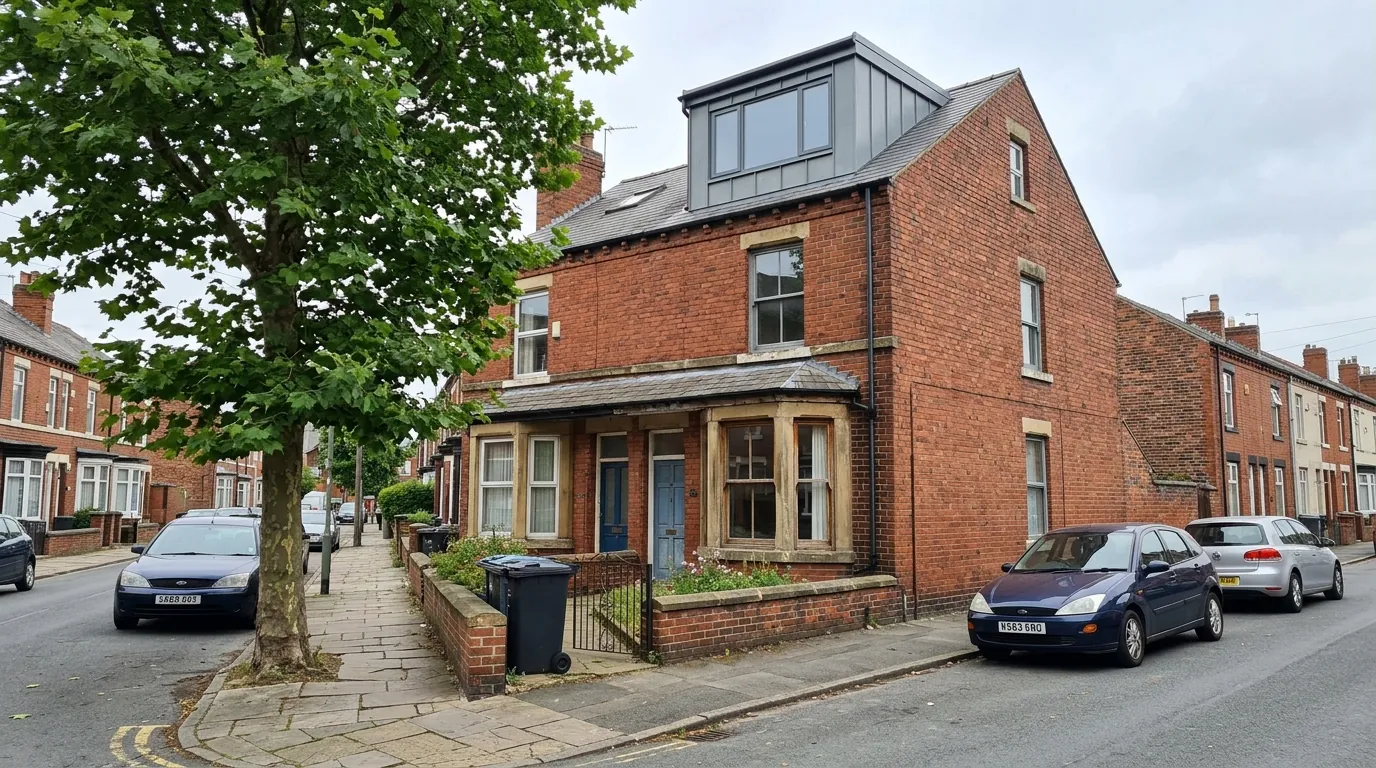
Three councils cover the Newcastle conurbation
Most homeowners assume one council runs the whole city. It does not. The Tyne splits the planning map and the metropolitan boroughs to the east and south each have their own planning department, validation checklist and conservation team.
Newcastle City Council covers the core city and the inner suburbs. That is broadly NE1 through NE7 on the north side of the Tyne plus NE15 to the west. Jesmond, Heaton, Gosforth, Fenham, Walker, Benwell and Lemington all sit here.
North Tyneside Council covers the coast and the eastern suburbs: Whitley Bay, Tynemouth, North Shields, Cullercoats, Wallsend and Longbenton, mainly NE25 through NE30 plus parts of NE12 and NE27.
Gateshead Council runs everything south of the Tyne in the conurbation: Gateshead itself, Low Fell, Whickham, Felling, Dunston, Blaydon and the Team Valley fringe. Postcodes NE8 through NE11 mostly, with NE16, NE21 and parts of NE39 and NE40 also under Gateshead.
If you are unsure which authority your house sits under, the GOV.UK "Find your local council" tool resolves by postcode in seconds and is the only definitive answer. Submitting to the wrong council does not just delay things, it invalidates your application and you start again.
For a deeper look at typical Newcastle loft conversion costs, the regional figures and labour rates that drive 2026 quotes are covered in the cost page.
Permitted Development rules in detail
Most Newcastle loft conversions are built under Permitted Development (PD), which means no full planning application is needed if the design stays inside the limits set by the Town and Country Planning (General Permitted Development) Order 2015.
The core volume allowances for a house are:
- 40 cubic metres of added roof volume for a terraced house
- 50 cubic metres for a detached or semi-detached house
Any previous roof additions count against this allowance, including dormers built by the last owner. Other PD conditions you must hit:
- No extension forward of the original roof plane facing a highway. That kills front dormers as PD on almost every Newcastle terrace.
- Roof extensions must not be higher than the highest part of the existing roof.
- Materials must be similar in appearance to the existing house.
- Side-facing windows in the new roof must be obscure-glazed and non-opening below 1.7m above the floor.
- Dormer cheeks must be set back at least 20cm from the eaves.
- Verandas, balconies and raised platforms are not allowed under PD.
PD is removed entirely if the house is in a conservation area, has an Article 4 direction over it, is a flat or maisonette, or has previously been converted from a non-residential building under prior approval. Listed buildings need both planning permission and listed building consent regardless.
If you are inside PD limits, the smart move is to apply for a Lawful Development Certificate (LDC) from your council. It costs £274 instead of the full £548 planning fee, takes around 8 weeks, and gives you a legal certificate you can show a buyer or solicitor years later proving the conversion was lawful. Newcastle City Council, North Tyneside and Gateshead all process LDCs through the same Planning Portal route as full applications.
For a side-by-side on which roof type fits which house, the loft conversion types overview compares dormer, hip-to-gable, mansard and Velux options.
Newcastle conservation areas: where PD disappears
Newcastle City Council has designated 12 conservation areas across the city. Inside any of them, the PD allowances above shrink and most roof alterations need a full planning application. The list relevant to loft conversions:
- Jesmond Dene (designated 1991, extended 2001) covers the dene itself plus surrounding late-Victorian housing including Towers Avenue and Mitchell Avenue. Low-density Edwardian villas, tight conservation control.
- South Jesmond (designated 1987) covers Osborne Road, Osborne Avenue, Clayton Road, Fernwood Road, Akenside Terrace, Granville Road and the north side of Jesmond Road. Large Victorian terraces and villas. Rear dormers are scrutinised.
- Old Jesmond and North Jesmond cover the older streets north of Osborne Road including Burdon Terrace and parts of Tankerville Terrace.
- Brunswick Village (NE13) on the northern edge of the city covers the old 19th century pit village around St Cuthbert's Church.
- Gosforth Conservation Area (designated 2002) covers Graham Park Road, The Drive, Elmfield Road, parts of Gosforth High Street and the Queen Anne Revival terraces around Moor Place.
- Summerhill, Leazes, Grainger Town, Saint Peter's Basin, Northumberland Gardens and Ouseburn make up most of the rest of the inner-city designations.
North Tyneside has its own designations, the most important for loft conversions being Tynemouth Village, Sacred Heart (Tynemouth), Preston Park, New Quay (North Shields) and Spanish Battery. Whitley Bay's seafront streets and parts of Cullercoats are also covered.
Gateshead's conservation areas include Saltwell Park, Bensham Grove, Low Fell, Whickham Village and Bridges at the foot of the Tyne Bridge.
If your house sits inside any of these boundaries, plan for full planning permission, expect the conservation officer to be consulted, and budget for a sympathetic design. Rear dormers are usually achievable, mansards almost never. Front and side roofs are typically off-limits to visible alteration.
For coast-specific guidance, the Tynemouth loft conversion page and Whitley Bay page go into local pattern, style and what neighbours have done.
Article 4 directions across Newcastle
Article 4 is a separate planning tool that strips PD rights from a defined area for a specific reason. In Newcastle most Article 4 directions exist to control the spread of Houses in Multiple Occupation (HMO) near the universities, but a handful also restrict householder development directly.
Newcastle City Council Article 4 directions relevant to loft conversions:
- Northumberland Gardens and Summerhill conservation areas, where the Article 4 direction removes householder PD rights including dormers, roof lights and chimney alterations. Any roof change here needs full planning.
- Saint Peter's Basin, where householder extensions need planning permission.
- Cavendish Road, Hartside Gardens and parts of Jesmond Dene Road, covered by the 2011 Direction. This is primarily aimed at HMO conversion (C3 to C4) rather than roof works, but it signals heightened planning interest in the street.
- The 2011 and 2012 Directions across most of Jesmond, High West Jesmond, Heaton, South Gosforth, Sandyford and Spital Tongues remove PD rights for C3 to C4 changes of use. They do not directly block loft conversions, but if you are converting to or already operating as an HMO, your loft works fold into a wider planning consideration.
North Tyneside Article 4 directions cover seven areas, five of which are conservation areas: Sacred Heart, Preston Park, New Quay, Spanish Battery and Tynemouth Village. In these areas works to windows, dormers and other external alterations that would normally be PD now need planning permission.
Gateshead has fewer householder Article 4 areas but operates additional control inside its conservation patches around Saltwell and Bensham.
Newcastle City Council's interactive Article 4 map at newcastle.gov.uk is the authoritative source and is updated as new directions are made. Check before you assume PD applies. The general UK conservation area rules blog post covers how Article 4 interacts with PD nationally.
How to apply to each council
All three Tyneside councils accept applications through the national Planning Portal (planningportal.co.uk). The Portal walks you through fee calculation, the right form, plan upload and payment. Each council also accepts direct submission, but online is faster and reduces validation delay.
Newcastle City Council - submit at planningportal.co.uk and the application routes automatically. The local guidance and validation checklist live at newcastle.gov.uk/services/planning-building-and-development. The council offers a pre-application advice service for householders at £100, which gives you written confirmation of whether PD applies, or whether your design is likely to be approved before you spend money on full drawings.
North Tyneside Council - also routes via the Planning Portal. The Public Access search tool at idoxpublicaccess.northtyneside.gov.uk lets you check applications on any nearby street, which is useful evidence when arguing your design matches the local pattern. North Tyneside publishes its householder validation checklist as a PDF that lists exactly what plans, sections and supporting statements are required.
Gateshead Council - same Portal route. Gateshead is explicit that online submission shaves up to 10 working days off processing because validation is automated. The pre-application service ("Will I get planning permission?") gives a written opinion before you formally apply.
What you need to submit for any of them:
- Completed application form (the Portal builds this for you)
- Site location plan at 1:1250 or 1:2500 with a red line around the property
- Block plan at 1:500 or 1:200
- Existing and proposed elevations, all sides, at 1:50 or 1:100
- Existing and proposed floor plans including the new loft layout
- Roof plan showing dormer position and any rooflights
- Design and access statement (only required for listed buildings or conservation areas, but worth including for any borderline scheme)
- The fee: £548 for a full householder application, £274 for a Lawful Development Certificate (England 2026)
Plans must be properly scaled drawings. Photographs of plans are explicitly rejected as invalid by North Tyneside and the other two councils take the same line in practice.
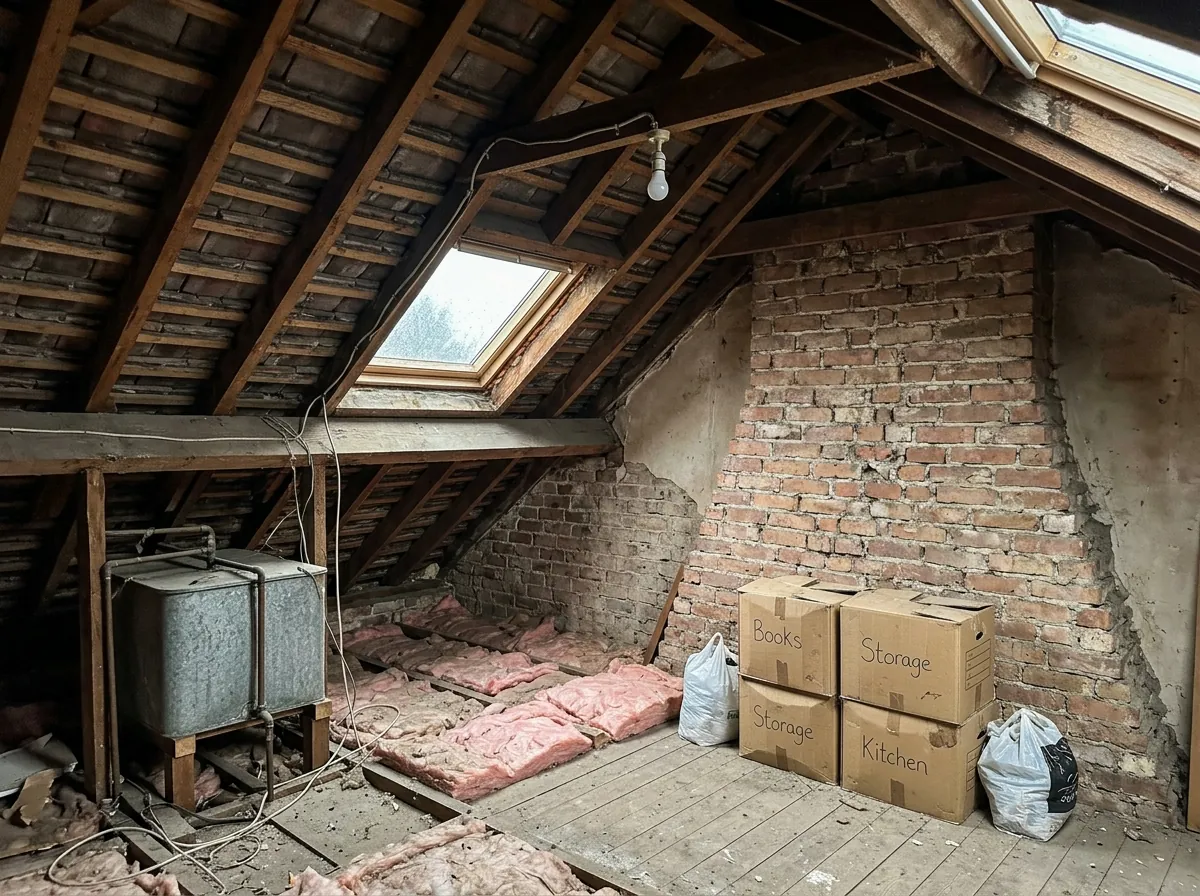
Typical Newcastle approval timelines
All three councils target 8 weeks from the date the application is validated to a decision on a householder application. Validation itself takes 5 to 10 working days if everything is in order, longer if the council asks for more information.
Realistic 2026 timeline from "I want a loft" to "first day on site":
- Weeks 1 to 2: designer measures up, produces drawings, prepares application pack.
- Week 3: application submitted via Planning Portal, fee paid.
- Weeks 3 to 4: council validates the application. The 21-day public consultation starts on validation.
- Weeks 4 to 8: case officer assesses, consults conservation team if applicable, sometimes asks for amendments.
- Weeks 8 to 12: decision issued. Most straightforward householder applications in Newcastle land at week 8 to 10. Conservation area cases and anything requiring committee can push to week 12 or beyond.
- Plus a 6 week judicial review window before the decision is fully unchallengeable, though most homeowners start work on issue of the decision notice.
If you go the PD route with a Lawful Development Certificate, the same 8 week target applies but the assessment is narrower: it is just "does this fit the rules" rather than "is this a good design." LDCs tend to come back faster, often inside 6 weeks.
If refused, you have 12 weeks to appeal to the Planning Inspectorate, but most homeowners revise and resubmit instead, which is faster and free if the resubmission goes in within 12 months of the original refusal.
The how long does a loft conversion take blog post covers the build timeline that follows planning.
Newcastle-specific planning gotchas
Three things catch Newcastle homeowners out more than anything else.
Rear dormers visible from public realm. A standard rear box dormer is normally PD on a terrace. Newcastle's grid of back lanes means the "rear" of a Heaton or Jesmond terrace is often visible from a publicly accessible lane, which case officers sometimes treat as a public-realm issue even outside conservation areas. The fix is usually to set the dormer back further from the eaves, slim the cheeks down, and use a slate-grey finish that reads as roof rather than wall. Pre-application advice is worth the £100 here.
Mansards in conservation patches. Mansard conversions give you more head height and floor area than a dormer, but they alter the roof profile dramatically. Inside Jesmond Dene, South Jesmond, Gosforth Conservation Area or Tynemouth Village a mansard application is a hard sell and routinely refused. The exception is where the street already has a precedent of historic mansards, mainly in parts of Grainger Town. For most conservation area homeowners, a discreet rear dormer is the only realistic loft route. See the mansard loft conversion page for what works locally.
Hip-to-gable on semi-detached pairs. Common across Gosforth, Fenham, Walker and Forest Hall, a hip-to-gable converts the sloped end of a semi-detached roof to a vertical gable, then often pairs with a rear dormer. Under PD this is allowed on a semi, but the gable end materials must match the existing house. In Gosforth Conservation Area and parts of South Gosforth the council will want the gable in matching brick rather than rendered or cladded. See the hip-to-gable page.
There are smaller traps. Side rooflights overlooking a neighbour need obscure glazing. Party Wall Act notices must be served to attached neighbours at least 2 months before structural work begins, which is separate from planning and easy to forget. Trees with TPOs on your plot or on the boundary can constrain access scaffolding.
Building Regulations through Newcastle Building Control
Planning permission and Building Regulations are two separate approvals. Even if your loft is full PD with no planning needed, Building Regulations always apply to loft conversions because you are creating a new habitable storey.
The Building Regs cover structural integrity (new floor joists, roof load), fire safety (30 minute fire doors on the new staircase, mains-wired smoke alarms on every storey, protected escape route), thermal performance (insulation in the new roof, U-values), stair design (minimum 600mm headroom over the pitch line, maximum 42 degree pitch), and electrical safety (Part P certification).
Newcastle Building Control (the council's in-house team) and approved private inspectors both serve all three boroughs. Fees in 2026 sit at £500 to £900 for a typical loft conversion, split into a plan check fee and an inspection fee. You can apply two ways:
- Full plans application - submit drawings, get them approved on paper before work starts. Slower but safer for complex jobs.
- Building notice - start work and inspections happen as you go. Faster but riskier if the inspector spots an issue late.
Most Newcastle builders use full plans for loft conversions because the structural calculations are non-trivial and getting them signed off in advance prevents expensive rework. Inspectors visit at foundation, first fix, pre-plaster and completion stages and issue a final completion certificate that your solicitor will want when you sell.
Fire-rated party wall construction matters more on Newcastle's Tyneside flats and back-to-back terraces than on suburban semis. The inspector will look closely at the new stair enclosure and the flue/chimney detail. Get this right at design stage with your builder.
For what the build itself involves regardless of council, see loft conversion mistakes to avoid and the general dormer loft conversion page.
Newcastle cost and value context
Tyneside is one of the most affordable regions in England for loft conversions. North East labour rates run roughly 12% below the UK average. Typical 2026 figures for Newcastle:
- Velux loft conversion: £20,000 to £30,000
- Rear dormer: £35,000 to £48,000
- Hip-to-gable: £42,000 to £58,000
- L-shaped dormer: £45,000 to £62,000
- Mansard: £55,000 to £75,000 (rare on Tyneside, mostly conservation patches that allow them)
Return on investment in Newcastle is healthy. Properties in Jesmond, Gosforth, Heaton and Tynemouth pick up 15% to 22% in market value from a well-executed loft conversion. Streets where most terraces already have dormers tend to penalise the un-converted house at sale, so the upside is partly defensive. The Newcastle loft conversion cost page has full pricing tables and the loft conversion ROI blog has the national context.
UK Loft Conversion offers a free home survey across all three Newcastle councils, a free written quote after the visit, and a 10 year workmanship warranty on every conversion we build. We build UK-wide, and we know the three Newcastle councils and how they handle applications in Jesmond, Heaton, Gosforth, Tynemouth, Whitley Bay and Low Fell.
Before you book
Frequently asked questions
Which Newcastle postcodes fall under which council?
Newcastle City Council covers NE1 to NE7 plus NE15 (city centre, Jesmond, Heaton, Gosforth, Fenham, Walker, Benwell, Lemington). North Tyneside Council covers NE25 to NE30 plus parts of NE12 and NE27 (Whitley Bay, Tynemouth, North Shields, Cullercoats, Wallsend). Gateshead Council covers NE8 to NE11 plus NE16, NE21 and parts of NE39 and NE40. Use the GOV.UK "Find your local council" tool for a definitive answer by postcode.
Do I need planning permission for a loft conversion in Jesmond?
Almost certainly yes. Most of Jesmond sits inside the South Jesmond, Old Jesmond or Jesmond Dene conservation areas, and Article 4 directions cover much of the wider Jesmond area. Permitted Development rights are removed or heavily restricted, so a full householder planning application to Newcastle City Council is the standard route. Rear dormers can be approved with sympathetic design, mansards usually cannot.
Can I build a rear dormer in Gosforth without planning permission?
It depends on the street. Outside the Gosforth Conservation Area (which covers Graham Park Road, The Drive, Elmfield Road and surrounding Edwardian streets) a rear dormer on a semi-detached house can normally be built under Permitted Development up to 50 cubic metres. Inside the conservation area you need full planning permission and the council will scrutinise materials and proportions. A Lawful Development Certificate is the safe option even when PD applies.
How long does a loft conversion planning application take in Newcastle?
All three Tyneside councils target 8 weeks from validation to decision on householder applications. Realistic end-to-end including validation, public consultation and assessment is 10 to 12 weeks. Conservation area cases or anything sent to committee can run to 14 weeks plus. A Lawful Development Certificate often comes back in 5 to 6 weeks.
What does Newcastle planning permission cost in 2026?
The England householder planning fee is £548 for a full application and £274 for a Lawful Development Certificate. Pre-application advice from Newcastle City Council costs £100 and is worth it for borderline cases or conservation areas. Building Regulations fees sit at £500 to £900 on top. Architects' fees for drawings are separate and typically £1,500 to £3,500.
Do conservation areas in Tynemouth allow loft conversions?
Tynemouth Village and Sacred Heart conservation areas allow loft conversions but require full planning permission and consultation with the North Tyneside conservation officer. Rear dormers facing private gardens are usually achievable with a sympathetic design. Front roof alterations, mansards and anything visible from Front Street or the seafront are routinely refused. Article 4 directions in these areas also remove minor PD rights such as window replacement.
Does a Lawful Development Certificate count as planning permission?
Not exactly. An LDC is a legal certificate that your works do not need planning permission because they fall within Permitted Development. It is not approval, it is confirmation that approval is not needed. Buyers, solicitors and lenders treat it as proof the conversion was lawful, which protects you on resale years later. If your scheme is PD, getting an LDC for £274 is cheap insurance compared to retrospective planning later.
Do I need Building Regulations approval even if planning is not required?
Yes. Building Regulations always apply to loft conversions because you are creating a new habitable storey. This is separate from planning. Newcastle Building Control or a private approved inspector will check structural calculations, fire safety, insulation, stair design and electrical work. Final completion certificate is required for resale. Budget £500 to £900 in fees.
Related pages
- Cities/Newcastle →
- Cities/Newcastle/Jesmond →
- Cities/Newcastle/Gosforth →
- Cities/Newcastle/Tynemouth →
- Cities/Newcastle/Whitley Bay →
- Cities/Newcastle/Dormer →
- Cities/Newcastle/Mansard →
- Cities/Newcastle/Hip To Gable →
- Cities/Newcastle/Cost →
- Loft Conversion Types →
- Blog/Conservation Area Rules Uk →
- Blog/Loft Conversion Roi Uk 2026 →
- Blog/How Long Does Loft Conversion Take →
- Blog/Loft Conversion Mistakes To Avoid →
Ready for a written quote?
Free home survey, a written quote itemised by stage, and a 10 year workmanship warranty.