Loft conversion costs in Whitley Bay (2026)
The North East runs roughly 12 percent below the UK average on loft conversion pricing, and Whitley Bay sits inside that band. Coastal-grade materials nudge the cost back up a small amount, but most homeowners here land between £38,000 and £58,000 for a full conversion.
Typical 2026 ranges for Whitley Bay houses:
- Velux or rooflight conversion (bungalows, terraces with generous loft): £22,000 to £35,000
- Rear dormer on a semi: £38,000 to £52,000
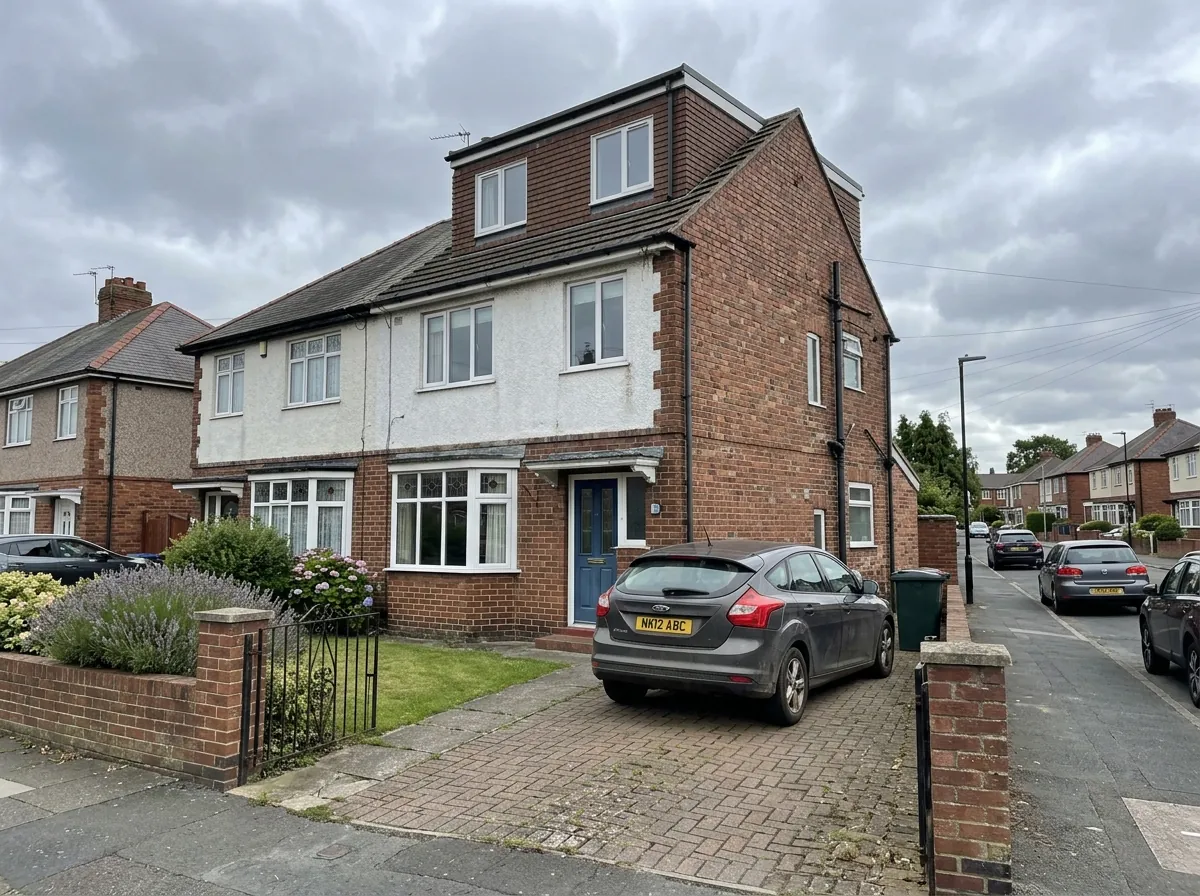
- Hip-to-gable plus rear dormer on a 1930s semi: £46,000 to £62,000
- L-shaped dormer on a larger semi or end-terrace: £48,000 to £62,000
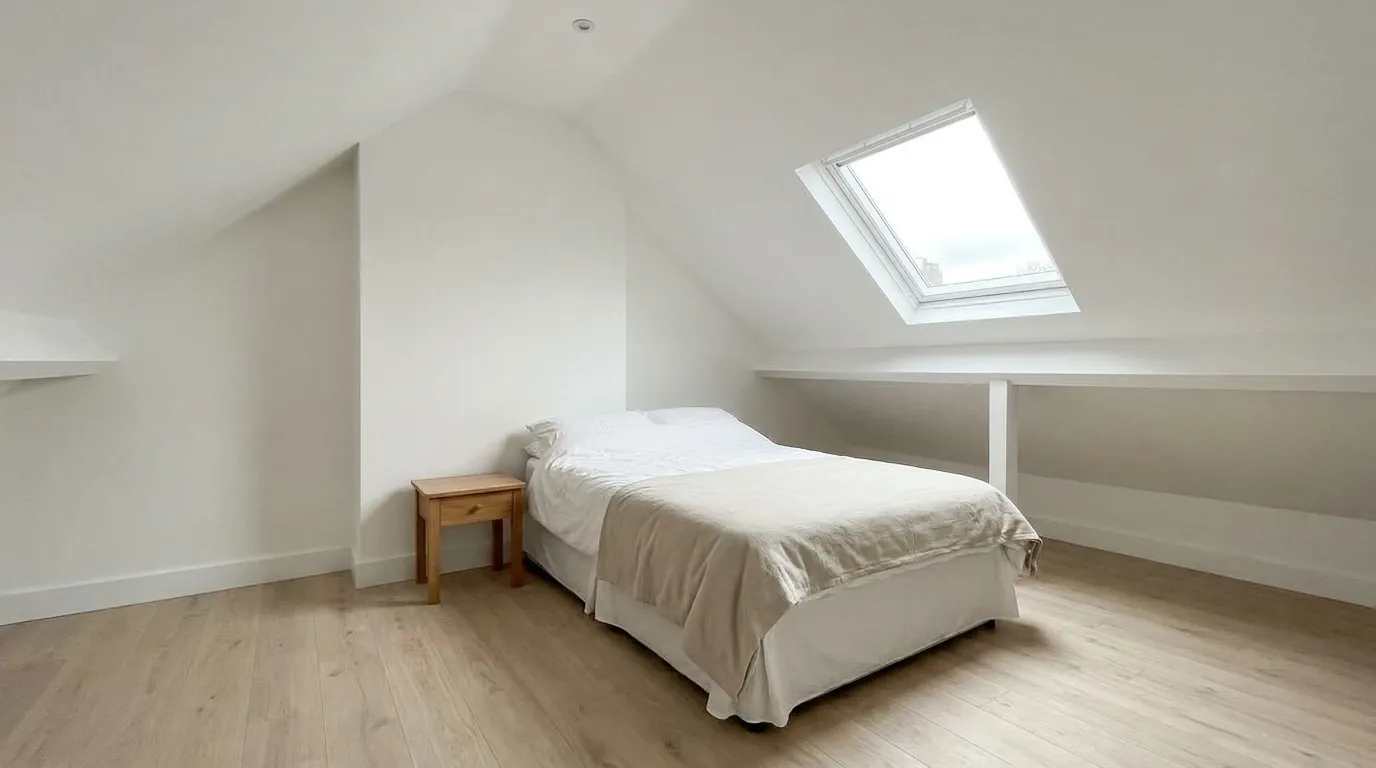
Those figures cover structural work, insulation, a fitted staircase, plastering, a new double bedroom, an en-suite shower room, electrics, and decoration to a clean handover. Custom joinery, marble bathrooms, and structural balconies sit outside the standard quote and we price them as named extras.
Per square metre, expect £920 to £1,200 for a Velux build, £1,670 to £2,200 for a dormer, and £2,000 to £2,400 for a hip-to-gable. The square-metre rate falls as the conversion gets bigger, since fixed costs like staircase, scaffolding, and Building Control are absorbed across more floor area.
What works on Whitley Bay housing stock
1930s semis (most of NE25)
The streets running back from the Links, around Park View, Beverley Gardens, and the wider Monkseaton fringe, are full of inter-war semis with hipped side roofs. These properties are textbook candidates for a hip-to-gable conversion. Squaring off the hipped side recovers the head height that a hipped roof eats into, and adding a rear dormer creates a wide, square room rather than a sloped attic. The end result is usually a double bedroom around 18 to 24 square metres with an en-suite. Almost all of these conversions stay inside Permitted Development.
Bungalows (scattered across NE25 and NE26)
Whitley Bay carries a decent stock of inter-war and post-war bungalows, especially through Monkseaton. The roof voids on these are often surprisingly generous. A Velux or rooflight conversion is usually enough to create a useable bedroom or studio, and it keeps the external roofline untouched. Where headroom is borderline at the ridge, a small rear dormer recovers enough height to satisfy Building Regs without changing the look from the street.
Seaside terraces (NE26, closer to the front)
The terraces near the Esplanade and the South Parade often have less roof volume to play with, sitting under the 40 cubic metre Permitted Development cap for terraced houses. A dormer at the rear is usually the right answer, sometimes combined with two Velux on the front pitch to bring in light. Party Wall notices to both neighbours are part of the standard process.
Edwardian and pre-war stock around the conservation areas
Whitley Bay has several conservation-sensitive pockets, particularly around the listed Spanish City and the historic coastal frontage. Conservation status does not block a conversion, but it does push the project into full planning rather than Permitted Development. The dormer is usually pulled inboard from the eaves and finished in materials that match the existing roof. Choosing the right dormer for a 1930s semi is mostly a headroom question, and comparing the dormer types is the quickest way to see which shape suits your roof.
Planning permission in Whitley Bay
Whitley Bay sits inside North Tyneside Council, which covers postcodes NE25 to NE30. The council runs its own planning portal and applies the standard England-wide rules, with local sensitivities for the coast and the conservation areas.
Under Permitted Development you can usually convert without a full planning application if:
- Your house is detached or semi-detached and the volume added stays under 50 cubic metres
- Your house is a terrace and the volume stays under 40 cubic metres
- No dormer extends forward of the original front roof slope
- Materials match the existing house in appearance
- No verandas, balconies, or raised platforms are added
- The roof does not exceed the height of the existing ridge
You will need a full planning application if the property is:
- A flat or maisonette
- Inside a conservation area (Spanish City frontage and parts of the historic coast)
- Subject to an Article 4 Direction (these strip away Permitted Development rights)
- A listed building
- Already at or near its PD volume limit from previous extensions
Building Regulations approval is required on every conversion, with no exceptions. Fees through North Tyneside Council typically land at £500 to £900 depending on the build value, and approval covers structural calculations, fire safety, insulation, staircase design, and sound separation.
For a step by step walk-through of the council process, see our Newcastle planning guide.
Coastal build considerations
Whitley Bay is exposed. The prevailing wind comes off the North Sea, and the salt content in the air sits well above inland levels. That changes the spec on a few small but important details, and any builder pricing a conversion here who ignores it is storing up a problem.
What we change on coastal builds:
- Fixings: stainless steel or marine-grade galvanised throughout. Standard zinc-coated fixings can show corrosion within a few years this close to the sea.
- Flashings: upgraded lead at all junctions, with code 5 minimum at exposed joints. Aluminium and plastic flashings degrade quickly in salt air.
- Velux glazing: self-cleaning coatings as standard. The salt film builds up quickly on the rear pitch facing the sea, and self-cleaning glass cuts the maintenance.
- External render and cladding: silicone-based or breathable mineral renders rather than acrylic. Marine-grade timber cladding where the design calls for it.
- Roof tiles and ridge: every tile is mechanically fixed across the whole roof. The easterlies will work loose anything that relies on weight alone.
- Insulation: we run a slightly heavier breathable membrane and pay close attention to wind-tight detailing at the eaves.
The extra cost on a coastal-spec build is usually 3 to 6 percent of the overall budget, and it adds years to the lifespan of the external finishes. We include it as standard on every Whitley Bay quote.
Build timeline
From first phone call to a completed room, a Whitley Bay conversion takes around 16 to 24 weeks.
What the phases look like:
- Week 1: free home survey on site, design conversation, agreed brief
- Weeks 2 to 4: detailed drawings, structural calculations, written quote itemised by stage
- Weeks 4 to 8: Building Regs submission, Party Wall notices to neighbours, planning application if needed
- Weeks 8 to 12: scaffolding up, roof opened, structural works
- Weeks 12 to 18: dormer or hip-to-gable construction, weather tightness, first fix
- Weeks 18 to 22: insulation, plasterboard, second fix, bathroom, decoration
- Week 22 to 24: Building Control sign-off, handover, snagging
A Velux on a bungalow compresses the on-site time to 4 to 6 weeks. A hip-to-gable with rear dormer on a 1930s semi runs 10 to 14 weeks on site. We try to keep the loft hatch sealed and the rest of the house liveable throughout, so families stay put while the work happens above them.
What we cover in NE25 and NE26
We work across both Whitley Bay postcodes and the surrounding North Tyneside catchment.
- NE25: Whitley Bay central, Monkseaton edge, the streets running back from the Links and the front
- NE26: Monkseaton proper, the seaside terraces along the Esplanade and South Parade, the streets around Whitley Bay Metro
Nearby coverage extends to Tynemouth (NE30), Cullercoats, Earsdon, and back into the wider Newcastle area. If you are weighing up which conversion type fits your roof, our pages on hip-to-gable conversions, dormer conversions, and Velux conversions walk through each option in detail. For a wider look at regional pricing, see our Newcastle cost page.
What you get when you book with us
We are a UK-wide loft conversion company. For Whitley Bay that means a North East crew who know the housing stock, the council, and the coastal conditions. Every project comes with:
- A free home survey
- A written quote, itemised by stage so you can see exactly what is included
- A 10 year workmanship warranty on every build
- Full project management from drawings through to handover
- Building Regs and Party Wall paperwork handled in-house
- Coastal-spec materials included as standard on every Whitley Bay quote
Book a survey through the form on this page or call the number at the top. We will come out, measure up, and give you a real answer on what your roof can do.
Before you book
Frequently asked questions
How much does a loft conversion cost in Whitley Bay?
Most Whitley Bay homeowners spend between £38,000 and £58,000. A Velux conversion on a Monkseaton bungalow sits at the lower end, around £22,000 to £32,000. A rear dormer on a 1930s semi runs £38,000 to £52,000. A hip-to-gable plus rear dormer, the common spec for NE25 semis with hipped roofs, lands at £46,000 to £62,000. Coastal-grade materials add roughly 3 to 6 percent.
Do I need planning permission for a loft conversion in Whitley Bay?
Most Whitley Bay houses can convert under Permitted Development through North Tyneside Council, with a 50 cubic metre allowance for detached and semi-detached homes and 40 cubic metres for terraces. Properties in conservation areas, flats, and any home with an Article 4 Direction need a full planning application. Building Regulations approval is always required, with fees typically £500 to £900.
How long does a loft conversion take in Whitley Bay?
A Velux conversion takes 4 to 6 weeks on site. A rear dormer takes 8 to 12 weeks. A hip-to-gable with dormer, the most popular spec for Whitley Bay semis, takes 10 to 14 weeks from scaffolding to handover. Add 6 to 10 weeks at the front for design, structural calculations, and Building Control sign-off.
Does coastal weather affect a loft conversion in Whitley Bay?
Yes. Salt air corrodes standard galvanised fixings faster than inland conditions, and prevailing easterlies push driven rain into roof junctions. We specify stainless steel or marine-grade fixings, upgraded lead flashings, and self-cleaning glazing for Velux units. Render and cladding need a coastal-spec finish. The extra cost is small, usually 3 to 6 percent on the build.
Can a 1930s semi in Whitley Bay take a hip-to-gable conversion?
Almost always yes. The 1930s semi with a hipped roof is the classic candidate for hip-to-gable. Squaring off the side roof creates full head height across the loft, and adding a rear dormer turns the space into a double bedroom with en-suite. Party Wall notices to the adjoining neighbour are required and we handle the paperwork.
Will a loft conversion add value to my Whitley Bay home?
Typically 15 to 25 percent. A £350,000 semi in NE25 gaining a fourth bedroom and en-suite usually adds £55,000 to £70,000 in market value. Sea-view conversions in NE26 closer to the front can add more, since the elevated room captures a coastline view that ground floors do not.
Are Monkseaton bungalows suitable for a loft conversion?
Most are. Monkseaton bungalows often have generous roof voids and shallow pitches that suit a Velux or rooflight conversion well. Where head height is tight, a partial dormer at the rear adds the inch or two needed for Building Regs. Bungalow conversions in NE25 generally finish at £22,000 to £36,000.
How do I get a quote for a Whitley Bay loft conversion?
Book a free home survey through our site. A local surveyor visits, measures the loft, checks the roof structure, and walks through the build options on site. You then receive a written quote, itemised by stage so you can see exactly what is included, and every build carries a 10 year workmanship warranty.
Related pages
- Cities/Newcastle →
- Cities/Newcastle/Tynemouth →
- Cities/Newcastle/Hip To Gable →
- Cities/Newcastle/Dormer →
- Cities/Newcastle/Velux →
- Cities/Newcastle/Cost →
- Cities/Newcastle/Planning Permission →
- Hip To Gable Loft Conversion →
- Dormer Loft Conversion →
- Velux Loft Conversion →
- Cities/Newcastle/Tyneside Flats →
- Cities/Newcastle/North Shields →
- Types Of Dormer →
- Cities/North Tyneside →
Ready for a written quote?
Free home survey, a written quote itemised by stage, and a 10 year workmanship warranty.