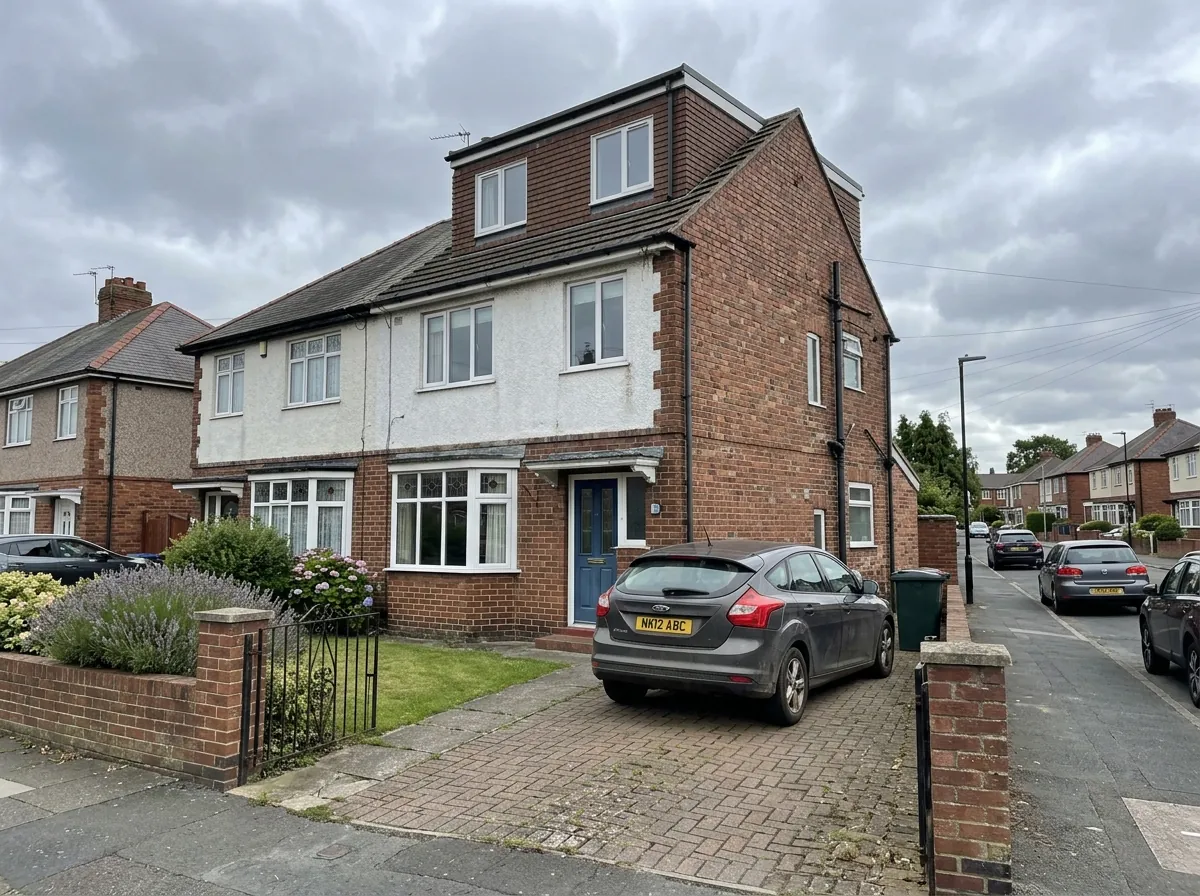
Why Ponteland and Darras Hall are a different market
Ponteland sits in Northumberland, beyond the green belt that separates it from Newcastle's suburbs, and that matters from the first form you fill in. Planning applications for the whole parish go to Northumberland County Council. Newcastle City Council has no role here at all, even though we run Ponteland surveys from the same North East team that covers Gosforth and Jesmond. This page lives under our Newcastle hub purely because that is where the team is based.
The housing splits into three broad groups. The old village core around Main Street holds stone cottages, 18 listed buildings and a medieval pele tower, all inside a conservation area designated in 1973. Around it sit the ordinary twentieth century streets of a market town, semis and detached family houses along Callerton Lane, Thornhill Road and the roads near the high school. Then there is Darras Hall, laid out from 1910 as 185 lots of roughly five acres each and often described as one of the largest private residential estates in England.
The money reflects the geography. Rightmove puts the overall average sale price in Darras Hall at £829,248 for the past year, and the estate is widely reported as the most expensive place to live in the North East. Bungalows start around £500,000, larger detached homes trade between £700,000 and £1,500,000, and individual sales on Darras Road and Runnymede Road have gone well beyond that. Demand is anchored by the Pele Trust schools. Ponteland High School and its feeder primaries, including Darras Hall Primary on Middle Drive and Richard Coates Church of England Primary on Thornhill Road, keep families in the parish long after they have outgrown the house they bought. Newcastle International Airport is a mile and a half east, which suits owners who travel for work.
Bungalow loft conversions: the Darras Hall staple
Darras Hall was largely built as a bungalow estate. Single storey homes in generous gardens filled the plots through the middle of the twentieth century, joined in the 1960s and 1970s by dormer bungalows and low detached houses on streets like Western Way, Middle Drive and The Rise. Whole roads still follow that pattern, even as plot-by-plot rebuilding replaces some bungalows with much larger houses.
For a loft conversion this stock is close to ideal. A detached bungalow puts its entire footprint under one roof, so a 140 to 180 square metre bungalow can hold more potential loft floor than a Newcastle semi gains from a full hip-to-gable. There are no upstairs neighbours, there is usually no party wall, and scaffolding stands on your own land.
Three checks decide feasibility:
- Head height. You want roughly 2.2m from the top of the ceiling joists to the underside of the ridge for the space to work without altering the roof. Plenty of 1960s bungalows have shallow pitches that fall short, which points the design toward a dormer across the rear.
- Roof structure. Older cut roofs with rafters and purlins open up readily. Trussed roofs, common from the late 1970s onward, use W-shaped webs that carry the roof load, and they have to be re-engineered with steels before the space can be cleared.
- The staircase. A bungalow has no stairwell, so the new stairs take a slice out of the ground floor, usually from a hallway, a study or the corner of a large living room. Settling this early drives the whole layout.
The finished article is usually chalet-style: two or three first floor bedrooms with en-suites in the roof, dormers to the rear for headroom, rooflights to the front. One estate-specific constraint shapes the design. The Darras Hall byelaws restrict ridge heights, so schemes that rely on raising the roof face committee scrutiny on top of a full planning application. Most successful conversions work within the existing ridge line. A bungalow roof can take several different dormer shapes, and the one you choose drives how much headroom you gain, so it helps to read through the dormer types first.
The Darras Hall covenant: a second approval on top of planning
Darras Hall began as a land scheme. In 1907 the Northern Allotment Society bought Darras Hall Farm and Little Callerton with Callerton Moor, over 1,000 acres in total, and divided the land into 185 large lots. The trust deed drawn up in 1910 still governs the estate today, administered by the Darras Hall Estate Committee from its office at Old Station Court, Ponteland NE20 9NT. Every property on the estate is bound by the deed and the byelaws made under it.
For a loft conversion the practical effect is a second approval system that operates alongside normal planning. Under the byelaws, any change or development to a property needs the consent of the committee, and the byelaws state that this applies even where council permission is not required. Garden sheds and boundary fencing are caught, so a dormer, a new gable window or a run of rooflights certainly is. Permitted development rights make no difference to this layer. They belong to the planning system, and the covenant is a private legal obligation that sits outside it.
Both systems must hold identical drawings. The committee requires that the plans it authorises match the plans the local authority holds, and any amendment after approval has to go back to both bodies. The estate charges its own application fee, payable to the estate office, and since October 2009 it has run staged independent inspections on new builds and demolition rebuilds at the applicant's cost.
Ignoring the committee gets expensive. A breach of covenant recorded against the property stops the committee considering any further plans, appears in conveyancing searches when you sell, and can end in a court injunction. The committee also reserves the right to notify mortgage lenders. None of this is theoretical. In a case reported by the Chronicle in 2016, a Darras Hall family's conversion plans were accepted by Northumberland County Council and then rejected by the Estate Committee, and solicitors' letters followed when demolition work started without estate consent.
Our approach on the estate is straightforward. Design to the byelaws from the first sketch, submit to the committee and the council in step, and start on site only when both consents are in writing.
Planning permission through Northumberland County Council
Every planning route in Ponteland runs through Northumberland County Council, and the council offers a genuinely useful householder enquiry service. For £50 a planning officer checks your permitted development rights and any restrictions on your property, with written advice inside 20 working days. On an estate where the covenant already complicates matters, that letter is cheap certainty.
The standard numbers for a loft conversion:
- Householder planning application: £548
- Lawful development certificate for proposed works: £274
- Planning Portal service charge on online submissions: £85
- Building regulations fees: £500 to £900
- Structural calculations and drawings: £1,200 to £2,500 on most schemes
Detached houses and bungalows get the full 50 cubic metre permitted development allowance for roof enlargements, which comfortably covers a large rear dormer on most Darras Hall properties, provided the work stays below the existing ridge and uses materials of similar appearance to the house. Two local points strengthen the permitted development position. Northumberland's Article 4 directions, the tool that strips permitted development rights, apply in conservation villages such as Whalton, Longhirst and Holy Island and in parts of Blyth and Berwick. Ponteland has none. And although the parish sits within the green belt, green belt policy bites on new buildings rather than on a householder roof alteration.
The exception is the Ponteland Conservation Area, a compact designation of about 10 hectares from 1973 covering the old village core. Within that boundary, permitted development on roofs is cut back and a householder application is needed for most alterations visible from the street.
One simplification offsets the covenant workload. Most Ponteland and Darras Hall properties are fully detached, so the party wall procedures that slow down terrace conversions in Jesmond or Heaton rarely apply. There is usually no shared structure and no notice to serve.
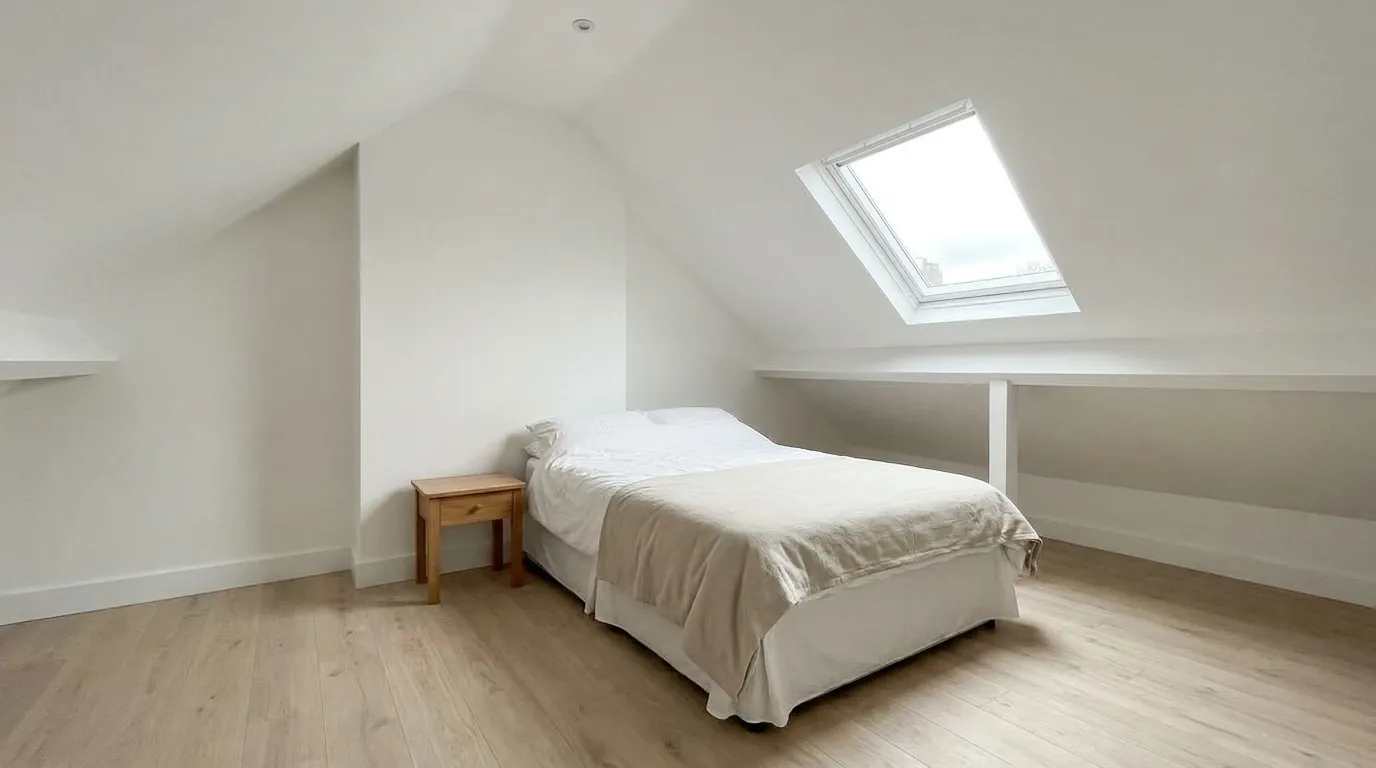
What a loft conversion costs in NE20
The cost base is the same North East labour market that prices Newcastle work about 12 percent below the UK average, but specification pulls Ponteland budgets up fast. Buyers at this end of the market expect en-suites as standard, fitted joinery, better glazing and a finish that matches the £900,000 house downstairs.
Realistic fully fitted ranges for NE20:
- Velux conversion where head height already exists: £25,000 to £35,000
- Rear dormer on a bungalow, one bedroom and en-suite: £45,000 to £60,000
- Chalet-style conversion of a full bungalow roof, two or three rooms: £60,000 to £80,000
- Large executive detached house, multiple rooms and two en-suites: £65,000 to £90,000
Those figures include structural steels and the new floor, the staircase, full electrics and plumbing, one en-suite, plastering and decoration, building regulations fees, and a 10 year workmanship warranty. On the estate you should also budget for the committee's application fee and for drawing revisions, since both approval bodies must hold identical plans.
What pushes a job toward the top of its range: a second en-suite, walk-in wardrobes and bespoke joinery, larger dormers with higher glazing specification, underfloor heating in the bathrooms, and a staircase built as a piece of furniture rather than a standard flight.
The value question reads differently here than in the city. Plot values are so high that some owners demolish and rebuild outright, and a £500,000 bungalow plot can carry a seven figure house. A loft conversion is the middle route. It takes a three bedroom bungalow to a five bedroom chalet home for £60,000 to £80,000, keeps the family in place through the work, and avoids the timeline and cost of a full rebuild. With the estate average sale price at £829,248, well designed extra bedrooms hold their value.
Ponteland village and the conservation area
Ponteland village predates the estate by centuries. The conservation area, designated in 1973, covers roughly 10 hectares of the historic core and takes in 18 listed buildings, the parish church and the medieval pele tower that gives the local school trust its name. Property here is stone built, slate roofed and tightly grouped, and the planning system treats it very differently from the estate half a mile away.
Loft work inside the boundary is achievable and regularly consented, but it follows conservation rules. Permitted development rights on roofs are reduced, so most dormers and any change to the roofline need a householder application, judged against the character of the conservation area. Designs that succeed keep dormers on rear slopes, hold them below the ridge, and use natural slate, painted timber and lead in place of modern substitutes. Rooflight-only conversions are the lowest friction option and often the right answer on the most sensitive streets, using conservation-grade flush rooflights.
Listed buildings need listed building consent for internal structural work as well as external change, which brings the new staircase and floor structure into the application. Budget extra time and drawing work for those projects.
Between the conservation area and the estate sits ordinary Ponteland: twentieth century semis and detached houses along Callerton Lane and the streets around the high school. These carry standard permitted development rights, and a rear dormer within the 50 cubic metre allowance usually proceeds on a lawful development certificate with no full application needed.
How we run a Ponteland job
- Free home survey. A surveyor measures ridge height and roof structure, checks where a staircase can land, and photographs the elevations both approval routes will need. On the estate we also confirm plot boundaries and building lines, because the committee measures from them.
- Written quote after the visit. Broken down by stage, with inclusions and exclusions listed.
- One drawing set for two approvals. On Darras Hall we prepare drawings that satisfy the Estate Committee's submission requirements and Northumberland County Council's validation list at the same time, then submit to both in step so neither body ever holds a different version.
- Structural design and building control. A structural engineer sizes the steels and the new floor, and the scheme goes to building control as a full plans application, which suits a high value property better than a building notice.
- Build. 8 to 14 weeks on site for most bungalow and chalet conversions. The roof opens in sections and is weathered back in within the first fortnight. Detached plots make scaffold and access straightforward.
- Sign-off. Building control completion certificate, estate compliance confirmed where the covenant applies, and the 10 year workmanship warranty issued in writing.
We are a nationwide loft conversion specialist, and Ponteland surveys are handled by the same North East team that covers our Gosforth and Jesmond pages.
Before you book
Frequently asked questions
How much does a loft conversion cost in Ponteland or Darras Hall?
Most Darras Hall bungalow conversions land between £45,000 and £80,000 fully fitted, depending on whether the design is a single rear dormer or a full chalet-style first floor. Larger executive detached houses with multiple rooms and two en-suites run £65,000 to £90,000, and a Velux-only conversion where head height already exists comes in between £25,000 and £35,000. Figures include structure, staircase, one en-suite, building regulations fees and a 10 year workmanship warranty. On estate properties, budget separately for the Darras Hall Estate Committee's application fee.
Do I need Darras Hall Estate Committee consent for a loft conversion?
Yes, for any scheme with an external element, which in practice means every loft conversion. The estate byelaws require committee consent for any change or development to a property, including items as small as sheds and boundary fencing, and the requirement applies even where planning permission is not needed. Dormers, gable windows and rooflights all fall within it. The committee operates from Old Station Court in Ponteland, charges its own application fee, and requires that the drawings it approves match the drawings held by Northumberland County Council.
Can a 1960s Darras Hall bungalow take a loft conversion?
Usually yes, and bungalows are among the best candidates anywhere because the roof spans the whole footprint. We check three things on survey: head height, which wants to be around 2.2m from joists to ridge; roof structure, since trussed roofs from the late 1970s onward need steel reinforcement where older cut roofs open up easily; and the staircase position, which takes space from the ground floor below. Where the pitch is shallow, a rear dormer restores the headroom. The estate byelaws restrict ridge heights, so we design within the existing ridge wherever possible.
Do I need planning permission for a loft conversion in Ponteland?
Applications go to Northumberland County Council. Outside the conservation area, detached houses and bungalows carry a 50 cubic metre permitted development allowance for roof enlargements, so a rear dormer that stays below the existing ridge often needs no full application, and a £274 lawful development certificate puts that in writing for your solicitor. Inside the Ponteland Conservation Area most visible roof alterations need a £548 householder application. On Darras Hall, permitted development has no effect on the covenant, so committee consent is required either way. The council also offers £50 written pre-application advice within 20 working days.
What happens if work starts on the estate without committee consent?
The committee records a breach of covenant against the property. While a breach is in place it will not consider any further plans, the breach shows up in conveyancing searches and makes the property hard to sell, and the committee can apply to court for an injunction and notify mortgage lenders. Council approval offers no protection on this front. In one 2016 case reported in the local press, plans accepted by Northumberland County Council were rejected by the Estate Committee, and solicitors' letters followed when work began regardless. Secure both consents in writing before anyone starts.
How long does a Ponteland loft conversion take?
Plan for four to six months end to end. Design and structural work typically take two to three weeks, and the Northumberland County Council determination runs up to eight weeks for a householder application, with the Darras Hall committee submission progressing alongside on estate properties. The build itself is 8 to 14 weeks depending on whether the scheme is a single dormer or a full chalet-style conversion. Conservation area and listed building projects in the village core need extra drawing and consultation time.
Will a loft conversion add value to a Darras Hall property?
The estate's average sale price over the past year was £829,248, and family buyers here pay for bedroom count, en-suites and finish. Taking a three bedroom bungalow to a five bedroom chalet home typically costs £60,000 to £80,000, a small fraction of what the finished house trades for on roads like Western Way or Darras Road. The caution is quality. Buyers at this price point expect a conversion that reads as original architecture, and a cheap boxy dormer can hurt a Darras Hall street presence instead of helping it.
Which areas around Ponteland do you cover?
The whole parish and its surroundings: Darras Hall and Ponteland village in NE20, the hamlets of Medburn, Milbourne and Kirkley, and out toward Stamfordham on the NE18 side. Surveys are booked through the same North East team that handles our Gosforth and Jesmond coverage, so one call handles any address in the area.
Related pages
- Cities/Newcastle →
- Cities/Newcastle/Gosforth →
- Cities/Newcastle/Jesmond →
- Cities/Newcastle/Dormer →
- Cities/Newcastle/Hip To Gable →
- Cities/Newcastle/Velux →
- Cities/Newcastle/Mansard →
- Cities/Newcastle/Cost →
- Cities/Newcastle/Planning Permission →
- Loft Conversion Cost →
- Loft Conversion Types →
- Loft Conversion Planning Permission →
- Types Of Dormer →
Ready for a written quote?
Free home survey, a written quote itemised by stage, and a 10 year workmanship warranty.