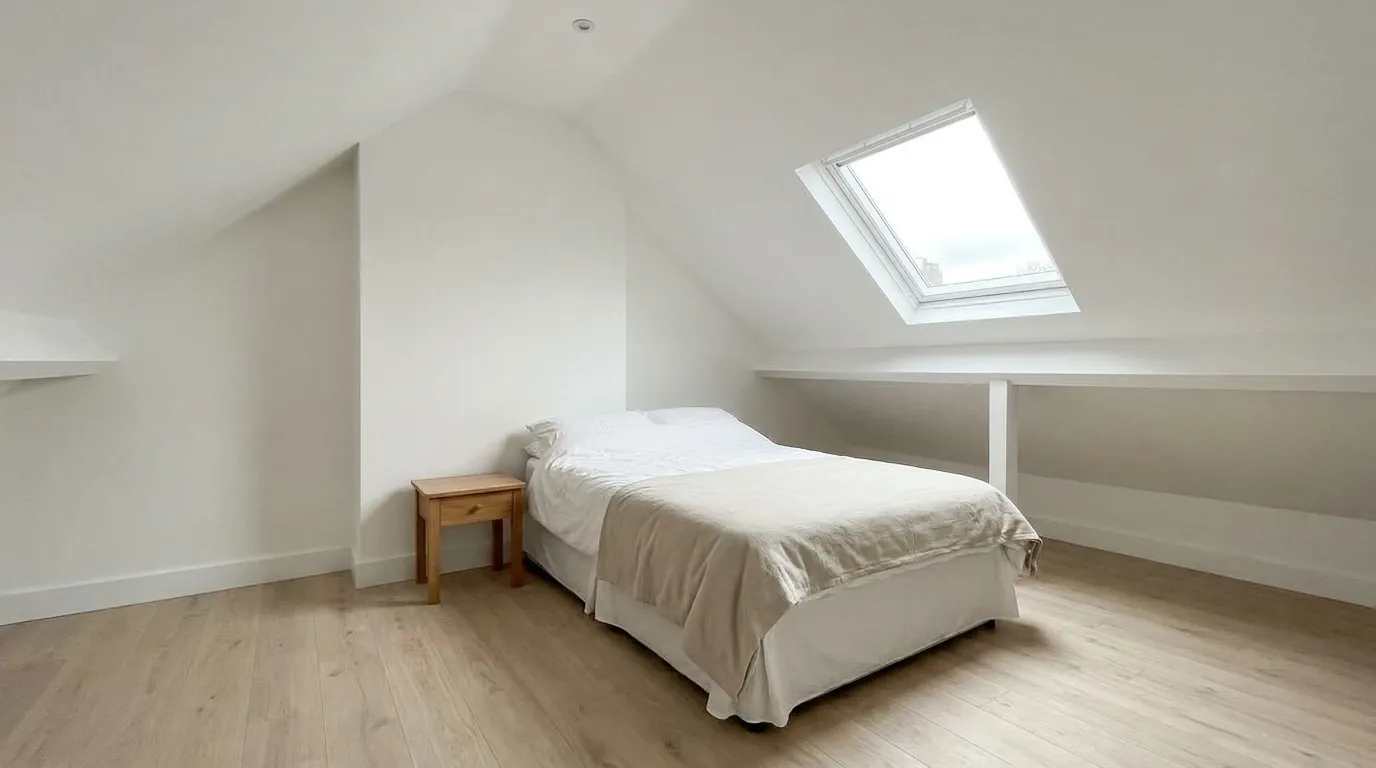
The headline number: what a Newcastle loft conversion actually costs in 2026
If you want a single figure to plan around, a standard rear dormer with a double bedroom and ensuite on a Newcastle terrace or semi costs £40,000 to £52,000 fitted in 2026. That is the range most Newcastle homeowners land inside.
The full picture is wider, because the type of conversion drives most of the price.
| Conversion type | Newcastle price range (2026) | UK average | Build time |
|---|---|---|---|
| Velux / rooflight | £20,000 - £35,000 | £22,000 - £38,000 | 4-6 weeks |
| Rear dormer | £35,000 - £52,000 | £40,000 - £60,000 | 8-12 weeks |
| Hip-to-gable | £40,000 - £58,000 | £45,000 - £65,000 | 10-14 weeks |
| L-shaped dormer | £42,000 - £60,000 | £45,000 - £65,000 | 10-14 weeks |
| Mansard | £50,000 - £70,000 | £55,000 - £85,000 | 12-16 weeks |
These figures are inclusive of VAT, mid-spec, and cover the structural steels, stairs, electrics, plumbing, insulation, plastering and decoration. Designer finishes such as book-matched joinery, stone-tiled bathrooms or underfloor heating sit on top and can add £10,000 to £18,000 at the upper end.
The North East gap comes down to labour. Day rates in Tyne and Wear come in 10 to 15% under the UK national figure, scaffold hire is cheaper, and there is no London premium on skilled trades. Materials cost roughly the same wherever you build, so on a job that is 50 to 60% labour by value, a 12% labour saving moves the headline by roughly £5,000 to £8,000.
Cost by property type: terrace, semi, detached, bungalow
The property shape changes the engineering and therefore the price. Newcastle has all four shapes in volume, so this matters.
Victorian and Edwardian terraces (Heaton, Jesmond, Sandyford, parts of Gosforth)
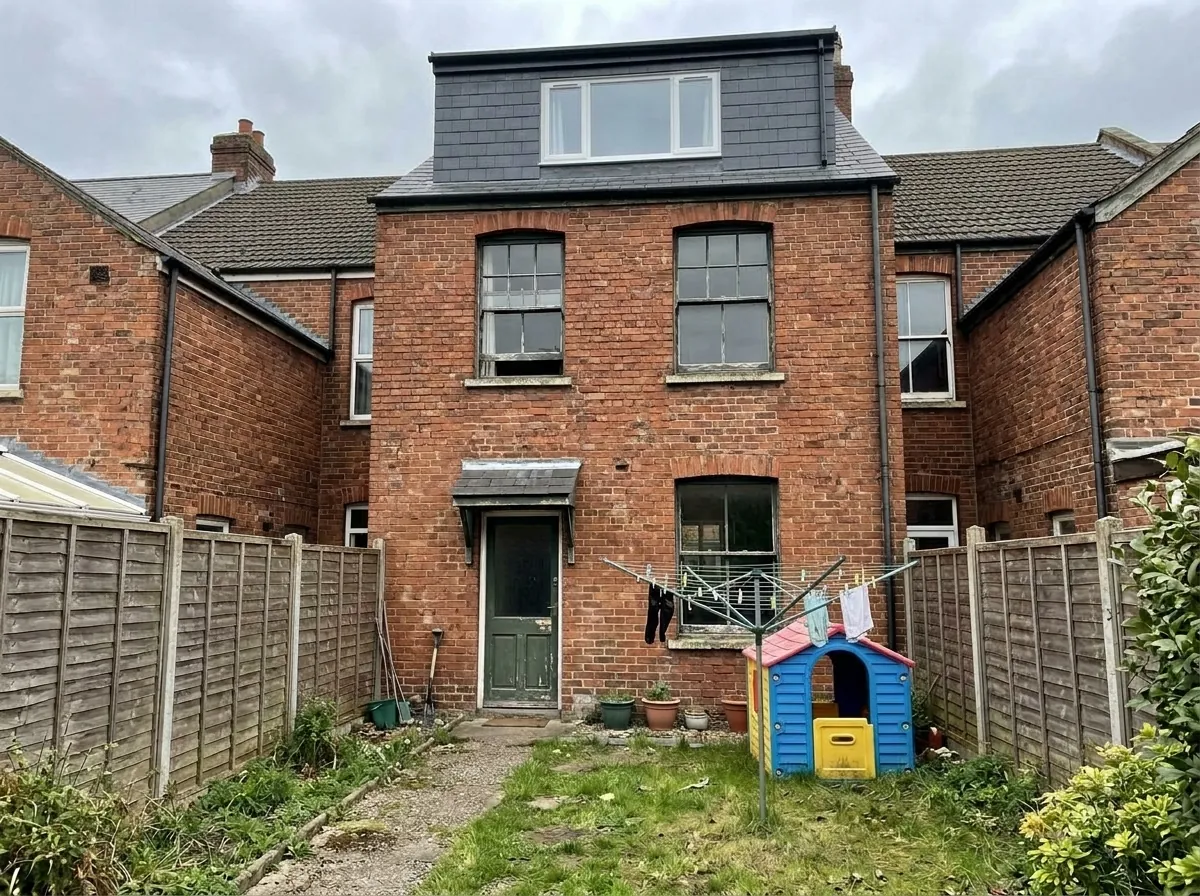
The classic Tyneside roof is a two-storey terrace with a pitched roof front and back and party walls on both sides. A rear dormer is the obvious move because it produces a full-height room with a flat roof and a vertical rear wall. Typical cost is £38,000 to £50,000 for one bedroom plus ensuite. Party wall agreements with both neighbours are nearly always required and add £1,800 to £3,600 in surveyor fees on top.
A Tyneside flat (the upper of two flats with separate front doors) sits in a different category. Loft rights belong to the upper flat in most cases, but the lease needs checking and freeholder consent is usually required. Build costs sit in the same range as the terrace, but the legal layer adds 6 to 10 weeks at the front.
1930s semis (Gosforth, parts of Whitley Bay, North Heaton)
Most have hipped roofs, which limits headroom on the hip side. A hip-to-gable conversion changes the hip into a vertical gable wall, then adds a rear dormer for the box. Typical cost is £45,000 to £58,000. This is the standard Gosforth job and it produces a generous double plus ensuite with proper headroom across the whole floor.
If the hip is only mild and the head height is already there, a straight rear dormer at £38,000 to £50,000 will save the cost of the gable rebuild.
Detached houses (parts of Jesmond, Gosforth, Darras Hall on the city fringe)
Detached homes give you more space and more options. A double hip-to-gable with a wider rear dormer typically lands at £50,000 to £65,000 and can produce two bedrooms plus a bathroom. Permitted development on detached homes allows 50 cubic metres rather than the 40 cubic metres available for terraces and semis, which gives the designer more room to work.
Bungalows (Whitley Bay, parts of Tynemouth, Forest Hall)
Bungalow conversions are price-sensitive to existing head height. A simple Velux scheme on a bungalow with a decent pitch costs £22,000 to £35,000. A dormer that lifts the roof line lands at £40,000 to £55,000. The big win on a bungalow is the value uplift, because adding a first floor to a single-storey home moves it into a different price bracket entirely.
Cost by Newcastle suburb: where the prices vary
Within Newcastle the headline trade prices are similar, but two suburb factors shift the final number: planning complexity and property value. Premium postcodes attract better finishes because the resale uplift justifies them.
Jesmond (NE2)
Jesmond carries a premium that has little to do with builder rates. The premium comes from planning. South Jesmond, Brandling Village and parts of West Jesmond sit in conservation areas, and the High West Jesmond and North Jesmond Article 4 Direction strips out permitted development. Almost every Jesmond loft job needs a full planning application to Newcastle City Council. Add 8 to 10 weeks at the front and £1,500 to £2,500 in architect and planning fees.
Jesmond owners also tend to specify higher finishes because the resale value supports it. Average finished cost is £48,000 to £62,000 for a rear dormer with ensuite. An extra bedroom in NE2 can add £70,000 to £90,000 to the asking price, which makes the ROI maths the most favourable in the city.
Gosforth (NE3)
This is the standard Newcastle loft suburb, dominated by 1930s semis with hipped roofs. Most jobs are hip-to-gable plus rear dormer at £45,000 to £58,000. Outside the Gosforth conservation area boundary, the work usually goes through permitted development with a Lawful Development Certificate. Build time start to finish is around 12 weeks. Good schools and the racecourse keep buyer demand strong, so the resale uplift is reliable.
Heaton (NE6)
Victorian terraces and Tyneside flats dominate. The Jesmond and Heaton HMO Article 4 Direction applies to the C3 to C4 change of use rather than to loft conversions specifically, but it signals tighter planning enforcement in the area. South Heaton and Heaton Park areas have conservation status in places. Rear dormers on terraces are £38,000 to £50,000. L-shaped dormers (which combine a rear dormer with a side dormer over the rear addition) are very popular here and cost £42,000 to £55,000.
Tynemouth (NE30, North Tyneside)
Large Victorian and Edwardian seaside townhouses. North Tyneside Council handles planning here, rather than Newcastle City Council. The conservation area covers the Front Street axis and the streets behind the Priory. Build costs sit at £42,000 to £58,000 for a dormer and higher specifications are common because the property values support them.
Whitley Bay (NE25/NE26, North Tyneside)
1930s semis, bungalows and a band of seaside terraces. Less conservation overlay than Tynemouth, so permitted development is in play for most jobs. Dormers are £35,000 to £48,000, bungalow conversions £40,000 to £52,000. North Tyneside Council handles building control.
Cost per square metre: the comparison most builders will not give you
Headline prices hide the floor area you actually get. A £45,000 conversion that produces 30 square metres is better value than a £40,000 conversion that produces 22 square metres. The per-square-metre figure is the honest comparison.
| Type | UK 2026 per m² | Typical floor area added |
|---|---|---|
| Velux | £920 - £1,200 | 18 - 25 m² |
| Rear dormer | £1,670 - £2,200 | 22 - 32 m² |
| Hip-to-gable | £2,000 - £2,400 | 25 - 35 m² |
| L-shaped dormer | £1,900 - £2,300 | 28 - 38 m² |
| Mansard | £2,170 - £2,800 | 30 - 42 m² |
In the North East the per-square-metre numbers run roughly 10 to 12% below these UK figures, which is consistent with the headline regional discount.
A Velux conversion is the cheapest per square metre of usable space if your existing roof has enough height. Where head height is short, a dormer becomes the value play because the extra cost buys you full standing room across the whole floor plate. Hip-to-gable and mansard cost more per square metre because they produce a step-change in volume on roof shapes that otherwise cannot give you a usable room.
What is actually inside the price
A written quote should itemise every line below. If any are missing, push back before signing.
Design and approvals (£1,500 to £3,500)
- Architectural drawings for Building Control and (if needed) planning
- Structural engineer calculations for steels and floor joists
- Building Control fees (Newcastle uses Tyne and Wear Building Control, or a private inspector)
- Lawful Development Certificate application if going down the permitted development route (£103 to Newcastle City Council in 2026)
Structure and shell (£15,000 to £25,000)
- Steel beams, padstones, joist hangers
- Floor structure, deck and acoustic insulation between the new floor and existing ceiling below
- Dormer construction (if applicable): timber frame, breathable membrane, slate or tile hanging or cladding
- Velux windows or dormer windows
- Roof tile alterations, leadwork, flashings
- Insulation to current Building Regs (Part L)
Stairs and openings (£3,500 to £6,500)
- New staircase, designed to fit the existing landing
- Loft hatch and bulkhead reworking
- Removal and reinstatement of the existing ceiling on the floor below where stairs land
First and second fix (£8,000 to £14,000)
- Electrical first fix and second fix, new consumer unit if needed
- Plumbing first fix and second fix for ensuite
- Plastering throughout
- Skirtings, architraves, internal doors
- Bathroom suite and tiling for ensuite
- Decoration
Site costs (£3,000 to £5,500)
- Scaffolding hire (usually 8 to 12 weeks)
- Skips and waste removal
- Site protection of the existing home during works
- VAT at 20% on the labour and materials
On a typical Newcastle £45,000 dormer the split is roughly 35% labour, 35% materials, 12% structural and design, 10% scaffolding and site costs, and 8% bathroom and finishes.
Hidden costs Newcastle homeowners get caught by
These are the line items that fall outside the headline price and are easy to miss. The good builders flag them at survey stage. Many do not.
Party Wall Act surveyor fees (£900 to £1,800 per neighbour) Nearly every Newcastle terrace and semi triggers the Party Wall Act because the new floor structure ties into the party wall. A formal notice goes to each adjoining owner with a 14-day reply window. If they dissent or do not reply, a party wall surveyor (often two, one each side) prepares an Award. On a mid-terrace Heaton job you can be paying for two surveyors.
Structural engineer fees outside the quote (£600 to £1,200) Some quotes assume an engineer is included and some do not. Confirm in writing.
Building Control fees (£500 to £900) Paid to Tyne and Wear Building Control or to a private Approved Inspector. Some loft companies include this and some itemise it separately.
Consumer unit upgrade (£600 to £1,000) Older properties often have a fuse board that cannot legally take an extra circuit. The electrician's first visit will tell you. It is worth budgeting for.
Redecoration on the floor below (£1,500 to £3,000) Cutting in the new staircase damages the existing landing ceiling and wall. The repair work is often included; the redecoration of the whole landing or stair hall usually is not. Walk the route the stairs will land in and price the paint.
Carpets, blinds, furniture (£2,500 to £6,000) These are easy to forget when budgeting the build.
Asbestos in older properties (£300 to £1,500) Newcastle has a lot of pre-2000 housing stock. If artex ceilings, old vinyl floor tiles or pipework lagging are disturbed, a survey and removal may be required. It is worth a brief check on a pre-1980 property.
Conservation area extras (£800 to £2,500) In South Jesmond, Brandling Village, Heaton Park or the Tynemouth conservation areas, the council may require natural slate to match the existing roof, cast iron rainwater goods, traditional sash windows on dormers, and a heritage statement with the planning application. Each of those adds money against a standard cement tile and uPVC build.
ROI: what a loft conversion does to a Newcastle home value
This is the question Newcastle owners ask first and the one that decides whether the job happens. The number is consistent across UK valuation data: a well finished double bedroom with ensuite added in the loft typically lifts the home's asking price by 15 to 25%.
Worked examples on real Newcastle stock:
Gosforth NE3 1930s semi, baseline £350,000. Hip-to-gable plus rear dormer at £50,000. Post-conversion asking price £405,000 to £435,000. Uplift £55,000 to £85,000 against a £50,000 spend. Net add of £5,000 to £35,000 in equity, plus the bedroom and bathroom you actually use.
Heaton NE6 Victorian terrace, baseline £225,000. Rear dormer at £42,000. Post-conversion asking price £260,000 to £285,000. Uplift £35,000 to £60,000 against a £42,000 spend. The headline uplift is similar in pound terms because the buyer pool for 3 to 4 bed Heaton terraces is deep, especially with University demand.
Jesmond NE2 Victorian terrace, baseline £475,000. Rear dormer with high-spec finish at £58,000. Post-conversion asking price £550,000 to £590,000. Uplift £75,000 to £115,000. Jesmond is the strongest ROI postcode in the city because the per-bedroom premium is the largest.
Whitley Bay NE25 bungalow, baseline £260,000. Dormer first-floor conversion at £48,000. Post-conversion asking price £320,000 to £350,000. Uplift £60,000 to £90,000. The bungalow-to-chalet step is the highest ROI single move in the city because the property changes category.
Three caveats sit behind these numbers. The uplift assumes a proper double with ensuite rather than a token single-bedroom conversion. It assumes the staircase lands somewhere sensible and does not block the existing bedroom. And it assumes a finish that survives a buyer's surveyor: building control sign-off, fire doors where required, and a proper escape window. A cheap conversion that fails on any of those will appraise below the figures above.
How to actually buy this work without overpaying
Three rules save Newcastle homeowners money without compromising the build.
Get a written quote rather than a verbal estimate. An estimate can move 30% by the time you finish. A written quote sets out the scope and is itemised by stage so you can see exactly what is included. We provide one free after a home visit.
Compare three quotes on the same scope. Apparent price gaps usually disappear once you read what is and is not in each quote. The cheap quote often excludes scaffolding, party wall fees, Building Control, or decoration, so you need to compare on the same scope.
Ask about the workmanship warranty. A 10 year workmanship warranty from the contractor is standard on a proper job. If the company will not put it in writing, that tells you something about the company.
Pay in stages tied to milestones rather than dates. Standard stages are 10% on contract, 20% on completion of structural shell, 30% on first fix, 30% on second fix, and 10% on practical completion with snagging clear. Never pay the full balance before snagging is signed off.
Check the planning route first. Most Newcastle suburbs allow permitted development on rear dormers with a Lawful Development Certificate, which is faster and cheaper than a full application. If you are in a conservation area such as South Jesmond, parts of Heaton, Tynemouth or the city centre, or under an Article 4 Direction, factor in 8 to 10 weeks of planning at the front and budget £1,500 to £2,500 for the application pack.
Ready to price your Newcastle loft? Book a free home visit and we will follow it with a written quote, broken down stage by stage, and the 10 year workmanship warranty in writing.
Before you book
Frequently asked questions
How much does a loft conversion cost in Newcastle in 2026?
Most Newcastle homeowners pay between £35,000 and £52,000 for a standard rear dormer conversion in 2026. A simple Velux scheme starts around £20,000, and a full mansard can reach £70,000 on a larger Tyneside property. The North East runs roughly 12% below the UK average, which is why a job that costs £45,000 here would cost around £58,000 in London.
Is Newcastle really cheaper than the rest of the UK for loft work?
Yes, and the gap is consistent across trade data from Checkatrade, MyJobQuote and TradeMatch. Labour day rates in Tyne and Wear sit about 10 to 15% under the national figure, scaffolding hire is cheaper, and skilled subcontractors are easier to book. Materials cost roughly the same as anywhere else in the UK, so the saving comes from the labour side of the bill.
Will my Jesmond or Heaton terrace need planning permission?
Probably yes if it is in a conservation area. Newcastle has 12 conservation areas and Article 4 Directions covering parts of Jesmond, High West Jesmond, North Jesmond, Heaton and Sandyford. Inside those boundaries the permitted development right for dormers is removed, so a full householder application to Newcastle City Council is required. Outside those zones a rear dormer on a terrace usually falls under permitted development within the 40 cubic metre allowance.
Does a loft conversion add value to a Newcastle home?
A well finished double bedroom with ensuite typically lifts the asking price by 15 to 25%. On a £350,000 Gosforth semi that is around £60,000 of uplift against a £45,000 spend. In premium NE2 and NE3 postcodes the uplift can be higher because the buyer pool is competing for school catchments and proximity to the Town Moor.
What hidden costs catch Newcastle homeowners out?
The five that come up most often are party wall surveyor fees on terraces and semis (£900 to £1,800 per neighbour), structural engineer calculations (£600 to £1,200), Building Control fees with Tyne and Wear or a private inspector (£500 to £900), redecorating the rooms below after structural work (£1,500 to £3,000), and a new consumer unit if the existing one cannot take the load (£600 to £1,000).
How long does a Newcastle loft conversion take from quote to finish?
From signed quote to handover, expect 4 to 6 weeks for a Velux scheme, 8 to 12 weeks for a rear dormer, 10 to 14 weeks for a hip-to-gable on a Gosforth semi, and 12 to 16 weeks for a mansard. Add 8 to 10 weeks at the front if planning permission is needed in a conservation area such as South Jesmond.
Can I get a written quote before work starts?
Yes. We provide a free written quote after a home visit. It is broken down stage by stage and lists structural calculations, steels, joists, floor, stairs, dormer cheeks, windows, first and second fix, plastering and decoration. Anything that is not listed on the quote is not included in the price. The 10 year workmanship warranty is included on every job.
What is the cheapest loft conversion type for a Newcastle home?
A Velux or rooflight conversion at £20,000 to £35,000, provided the existing roof has enough head height. It avoids the structural cost of building a dormer box, keeps planning simple, and finishes in 4 to 6 weeks. The trade off is less floor space with full standing height. On most Newcastle terraces a rear dormer gives better value per square metre even though the headline figure is higher.
Related pages
- Cities/Newcastle →
- Cities/Newcastle/Jesmond →
- Cities/Newcastle/Gosforth →
- Cities/Newcastle/Heaton →
- Cities/Newcastle/Tynemouth →
- Cities/Newcastle/Whitley Bay →
- Cities/Newcastle/Dormer →
- Cities/Newcastle/Mansard →
- Cities/Newcastle/Hip To Gable →
- Cities/Newcastle/Velux →
- Cities/Newcastle/Planning Permission →
- Loft Conversion Cost →
- Loft Conversion Planning Permission →
- Loft Conversion Types →
- Dormer Loft Conversion →
- Mansard Loft Conversion →
- Hip To Gable Loft Conversion →
- Velux Loft Conversion →
- Cities/London →
- Cities/Leeds →
- Cities/Newcastle/Gateshead →
- Cities/Newcastle/Tyneside Flats →
Ready for a written quote?
Free home survey, a written quote itemised by stage, and a 10 year workmanship warranty.