Why Heaton is different from the rest of Newcastle
Walk down Chillingham Road, Heaton Road or any of the streets either side of Heaton Park and you will see the same pattern repeating. Two front doors side by side, two doorbells, one house split horizontally into a ground-floor flat and a first-floor flat. That is the Tyneside flat, and it is unique to the North East.
The arrangement matters because the roof space sits above the upper flat, but ownership of that loft is almost never automatic. Under the standard North Tyneside flat lease, each owner holds the freehold of the other flat and the leasehold of their own. The loft is usually outside the demise of either lease. In plain English, if you live in the upper flat and assume the loft is yours, you are probably wrong until you check the title.
That changes the project. It starts as a legal matter and becomes a building matter only once the paperwork is settled.
The rest of Heaton is more conventional. Two-storey Victorian terraces near Heaton Road, Edwardian terraces around Mowbray Street, and larger semis on the fringes by Jesmond Vale and South Gosforth. These behave like terraces anywhere else in Newcastle and follow the usual rear dormer or Velux route.
Loft conversion on a Tyneside flat: what actually happens
If you own the upper Tyneside flat in Heaton and want to convert the loft, here is the realistic sequence.
1. Check the lease and title first. Get your conveyancer or a property solicitor to read the lease and confirm whether the loft and roof airspace fall inside your demise. In the vast majority of Tyneside flats they do not. The freeholder of the upper flat (your downstairs neighbour) owns the roof structure, and the airspace above it is unallocated.
2. Negotiate a deed of variation or a transfer of the loft space. This is the step most owners underestimate. Your downstairs neighbour has to agree, in writing, to vary the lease so the loft and airspace come into your demise. They are not obliged to say yes. Most do, in exchange for a payment that reflects the value the conversion adds. Expect solicitor fees on both sides of around £1,500 to £3,000.
3. Apply for planning permission. Flats do not have permitted development rights. Every Tyneside flat loft conversion in Heaton needs a full planning application to Newcastle City Council, even for a simple Velux job. Fees start from £548 for a householder application.
4. Building Regs and party wall. Both of these still apply on top of planning. Building Regs fees in Newcastle typically run £500 to £900, and a Party Wall notice has to go to the downstairs neighbour and to attached neighbours on either side.
5. The build. Usually a rear dormer or a Velux conversion, since hip-to-gable or mansard would change the front elevation and rarely get past Newcastle planners on a terraced street.
This does not make the project a bad idea. It just means you need to add three to six months at the front end before any builder sets foot on site.
What it costs in Heaton in 2026
Heaton sits in the North East regional band, which runs around 12 percent below the UK average for the same scope of work. Typical NE6 figures for 2026:
- Velux or rooflight conversion (upper Tyneside flat or terrace): £20,000 to £30,000
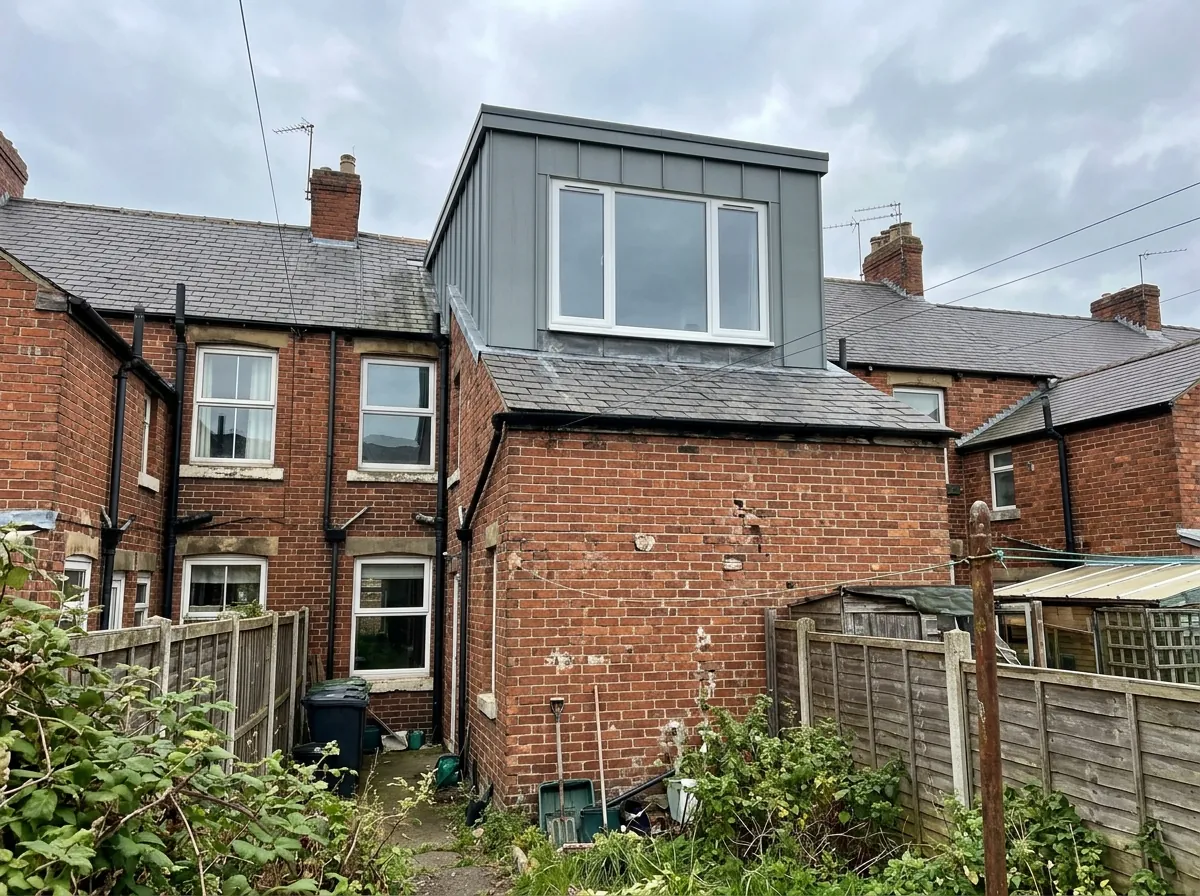
- Rear dormer on a Victorian terrace: £35,000 to £48,000
- L-shaped dormer over a back addition: £42,000 to £55,000
- Hip-to-gable (only on the larger semis near Jesmond Vale or Heaton Park edge): £45,000 to £58,000
The typical Heaton range comes in around £35k to £55k once dormer or rear extension work is included, which lines up with what most NE6 owners end up paying.
On top of the build, budget for:
- Planning application fee: £548 (householder) or higher for flats
- Building Regs: £500 to £900
- Structural engineer: £600 to £1,200
- Party Wall surveyor (if a neighbour dissents): £900 to £1,500 per wall
- For Tyneside flats only, deed of variation and freeholder payment: £3,000 to £15,000 depending on what the downstairs owner agrees to
A typical Heaton Victorian terrace worth around £280,000 to £340,000 gains 15 to 20 percent on a well-executed dormer. On the maths, a £42,000 dormer that adds £55,000 to £65,000 of value still leaves you ahead, and you get the extra bedroom in the meantime.
Conservation areas and Article 4 in NE6
Most of Heaton sits outside Newcastle's named conservation areas, which is good news. The big conservation pockets in the city are in Jesmond, Sandyford, Gosforth and the city centre. Heaton has limited conservation coverage, mainly around small historic clusters near Heaton Park and parts of the older Victorian core.
If your property is in a conservation area or covered by an Article 4 Direction, permitted development rights are removed and every external change needs planning permission, including a rooflight that would normally be permitted. Newcastle's Design Guide for Household Extensions states that scale, materials and detailing should match the original dwelling in conservation settings, which usually rules out contemporary cladding or aluminium dormer cheeks.
Check the postcode against Newcastle City Council's conservation area maps before commissioning drawings. The £100 pre-application enquiry fee from the council is worth paying if there is any doubt.
Tyneside flats and the HMO landlord angle
A lot of Heaton's housing stock is rented to Newcastle University students and young professionals working at the Newcastle Quayside. Many of the Tyneside flats and terraces operate as HMOs under Newcastle's selective licensing scheme.
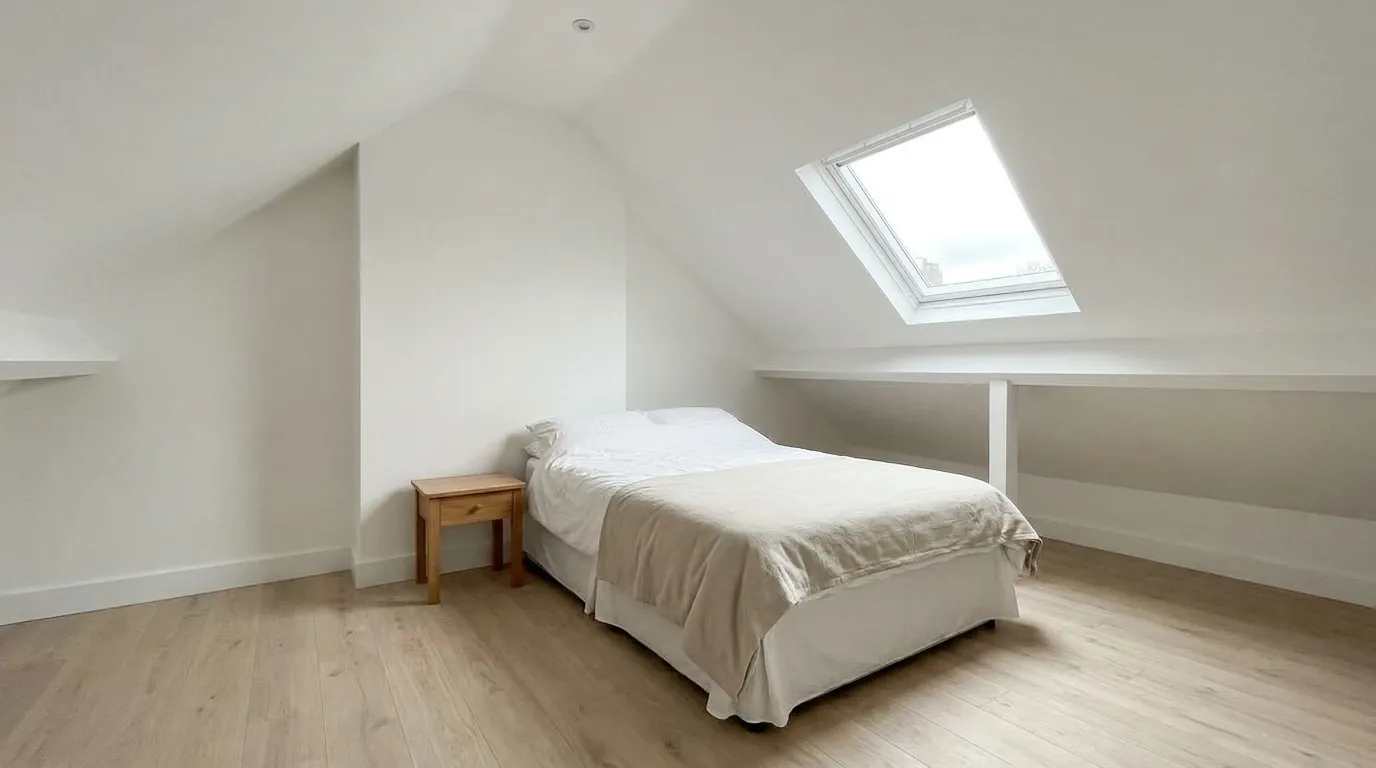
For landlords, a loft conversion can take a three-bed HMO to a four-bed and shift the rental maths meaningfully. A four-bed HMO in NE6 currently lets at roughly £1,600 to £2,000 per month against a three-bed at £1,200 to £1,500. On a £40,000 dormer conversion, the additional rent pays back in five to six years before factoring in capital uplift.
The complications are worth knowing about up front:
- HMO licence variation will be needed before the new room can be let
- The room has to meet Newcastle's minimum room sizes for HMOs (currently 6.51 sq m for a single, 10.22 sq m for a double)
- Fire safety upgrades will be more demanding, including a full protected staircase and interlinked mains-wired alarms throughout
- If the property is on the Tyneside flat arrangement, the freeholder consent step still applies regardless of HMO status
We handle HMO-compliant specifications routinely and can build to the licensing standard from day one rather than retrofitting.
Choosing dormer or Velux in Heaton
For most Heaton properties the choice comes down to two options.
Velux or rooflight conversion keeps the roofline unchanged. It comes in cheaper at £20,000 to £30,000, builds faster at 4 to 6 weeks, and on a house it usually falls under permitted development. The trade-off is headroom. You only get usable floor area where the existing ridge gives you 2.3 metres or more, which on a Heaton Victorian terrace is often a strip down the middle of the loft.
Rear dormer adds a flat-roofed box to the back of the property. You gain full standing headroom across most of the new floor, which is the difference between a usable double bedroom and a glorified attic. The work runs around £35,000 to £48,000 in NE6 over 8 to 12 weeks on site. On a house it is usually permitted development up to 40 cubic metres, and on a Tyneside flat it always needs planning.
For terraces near Chillingham Road and Heaton Park, the rear dormer is the workhorse choice. For top-floor Tyneside flat owners on a tighter budget, Velux is a reasonable starting point if the existing ridge height supports it.
Working with us in Heaton
UK Loft Conversion builds across Newcastle, and we know the Tyneside flat arrangement and the NE6 housing stock. Here is what you get:
- Free home survey at a time that suits you
- Written quote itemised by stage so you can see exactly what is included
- 10 year workmanship warranty on the build
- Single point of contact through planning, party wall and construction
- For Tyneside flats: introduction to a solicitor who handles the deed of variation work routinely, so you do not start the process cold
We will tell you honestly if the project does not stack up. Some Heaton lofts have ridge heights below 2.2 metres and will never make a usable habitable room, and some Tyneside flat freeholder relationships make the legal step prohibitive. It is better to know that in week one of the enquiry than after ten weeks of fees and drawings.
Before you book
Frequently asked questions
Can I do a loft conversion on the upper flat of a Tyneside flat in Heaton?
Usually yes, but you almost certainly need a deed of variation first. The roof space and airspace are rarely part of your demise under the standard Tyneside flat lease. Your downstairs neighbour holds the freehold and has to agree in writing before you can convert. Add three to six months and £3,000 to £15,000 in legal and consent costs to the front of the project.
Do I need planning permission for a loft conversion in Heaton?
If you own the whole house, often you do not. Rear dormers and Velux conversions on terraces and semis usually fall under permitted development if they meet the 40 cubic metre limit and the property is not in a conservation area. For any flat, including a Tyneside flat, planning permission is always required because flats do not hold permitted development rights.
How much does a loft conversion cost in Heaton in 2026?
Realistic 2026 figures are £20,000 to £30,000 for a Velux conversion, £35,000 to £48,000 for a rear dormer, and £42,000 to £55,000 for an L-shaped dormer. The North East runs roughly 12 percent below UK average for the same spec. Add planning fees, Building Regs and structural engineer costs of around £1,500 to £2,500 on top.
How long does a loft conversion take in Heaton?
Velux runs 4 to 6 weeks on site, rear dormer 8 to 12 weeks, and hip-to-gable 10 to 14 weeks. Add 8 to 12 weeks before the build for planning permission if required, and add 3 to 6 months on top of that for a Tyneside flat to handle freeholder consent and deed of variation.
Is a loft conversion worth it for an HMO landlord in Heaton?
Usually yes. A four-bed HMO in NE6 currently lets at roughly £1,600 to £2,000 per month against a three-bed at £1,200 to £1,500. On a £40,000 dormer the rent uplift pays back in five to six years before counting capital value. You will need to vary the HMO licence and build the new room to Newcastle's selective licensing standards.
Is Heaton in a conservation area?
Most of Heaton sits outside Newcastle's named conservation areas, but there are small protected clusters around Heaton Park and parts of the older Victorian core. Check the postcode against Newcastle City Council's conservation area maps before committing to a design. If you are inside one, permitted development rights are removed and full planning is needed for any external roof change.
What is the most popular loft conversion type in Heaton?
Rear dormer on Victorian terraces, by a clear margin. It gives full standing headroom across most of the new floor and turns the loft into a proper double bedroom with ensuite, rather than a low-ceiling box. For top-floor Tyneside flat owners on tighter budgets, Velux is a sensible starting point if the existing ridge supports it.
Do I need party wall agreements in Heaton?
Yes, on almost every Heaton terrace and Tyneside flat. The Party Wall Act requires you to notify attached neighbours two months before work starts on shared walls. If a neighbour dissents you appoint a surveyor. Budget £900 to £1,500 per wall if it goes to a formal award.
Related pages
- Cities/Newcastle →
- Cities/Newcastle/Jesmond →
- Cities/Newcastle/Gosforth →
- Cities/Newcastle/Dormer →
- Cities/Newcastle/Velux →
- Cities/Newcastle/Cost →
- Cities/Newcastle/Planning Permission →
- Dormer Loft Conversion →
- Velux Loft Conversion →
- Loft Conversion Cost →
- Loft Conversion Planning Permission →
- Cities/Newcastle/Tyneside Flats →
Ready for a written quote?
Free home survey, a written quote itemised by stage, and a 10 year workmanship warranty.