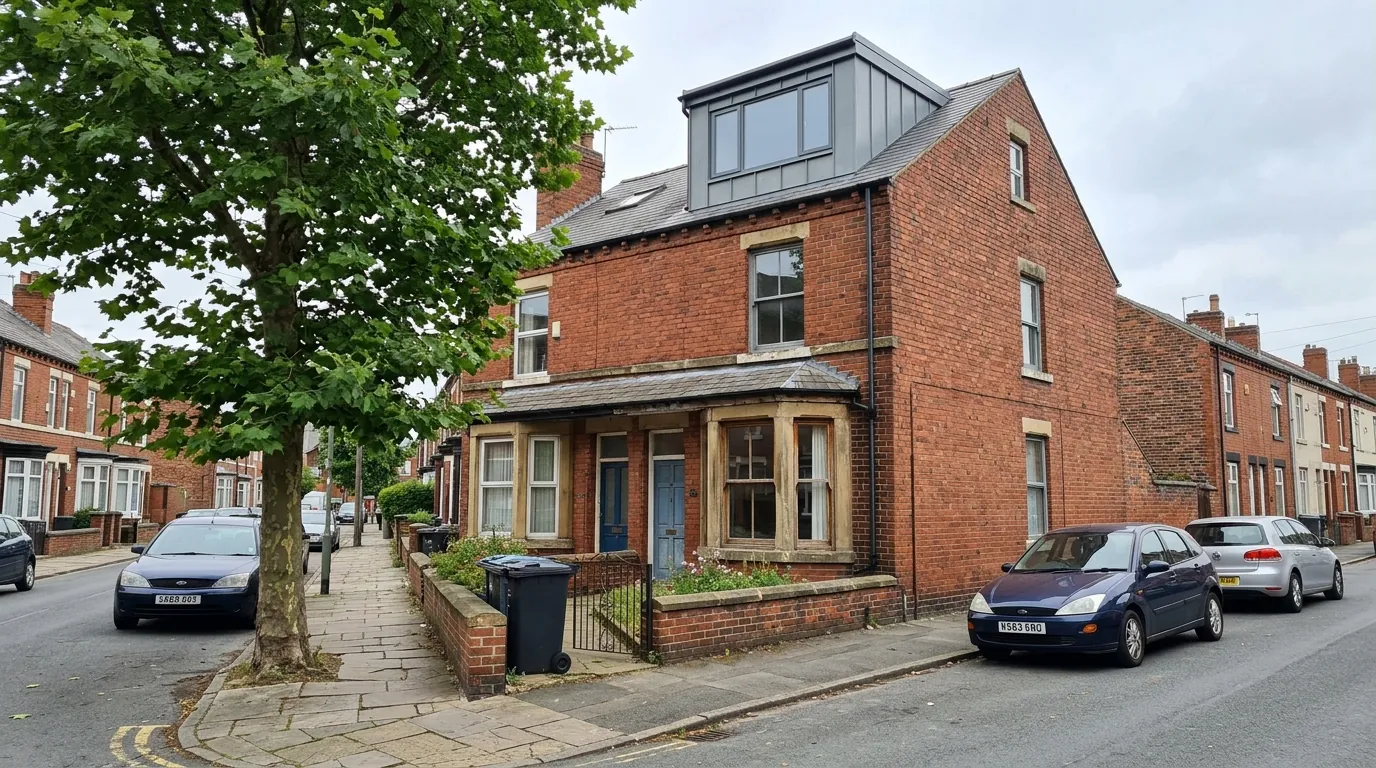
Newcastle Loft Conversion Costs in 2026
The North East is one of the more affordable regions in the UK for loft work. Labour rates sit roughly 12% below the UK average, and material costs are broadly in line with the rest of the country. That gap is why a rear dormer in Newcastle typically lands at £35,000 to £48,000, while the same job in inner London can clear £75,000.
Here is what you should budget for a mid-spec, fully fitted Newcastle conversion in 2026:
- Velux or rooflight conversion: £20,000 to £30,000
- Rear dormer (the Tyneside workhorse): £35,000 to £48,000
- Hip-to-gable (1930s semis in Gosforth, Whitley Bay): £40,000 to £55,000
- L-shaped dormer (rear two-storey terraces): £45,000 to £60,000
- Mansard (rare locally, conservation areas only): £52,000 to £72,000
Per square metre, expect £920 to £1,200 for Velux work, £1,670 to £2,200 for a dormer, and £2,000 to £2,400 for hip-to-gable. Building Regulations fees on top sit at £500 to £900 depending on your council. A Party Wall surveyor, common for terraces in Heaton or Jesmond, adds another £900 to £1,500 per neighbour if an award is needed.
Return on investment is the reason most Newcastle owners go ahead. Local agents put the value uplift at 15% to 25% on a well-executed conversion. On a £350,000 family home in NE3, a £45,000 spend often returns £60,000 or more at sale, and a proper third or fourth bedroom changes the buyer pool entirely.
For a full regional and type-by-type breakdown, see our Newcastle cost guide and the UK loft conversion cost page.
Newcastle Housing Stock by Postcode
Newcastle is not one housing market. It is several stitched together by the Metro. The right conversion changes from street to street.
NE1 (City Centre) is mostly flats, Georgian and Victorian conversions above retail, and modern apartments. Loft conversions on flats are rare and always need full planning permission plus freeholder consent. Most enquiries here are for top-floor maisonettes where the airspace is owned.
NE2 (Jesmond) is the postcode that drives a lot of our local volume. Tall Victorian and Edwardian terraces with steep pitched roofs and generous head height. Many sit inside or close to the Jesmond Conservation Area, which means Permitted Development is restricted and a full planning application is the norm. Rear dormers and L-shaped dormers are the typical answer, designed to sit behind the ridge so they read as discreet from the street.
NE3 (Gosforth) is 1930s semi country. Hipped roofs are common across the area. Hip-to-gable conversions are the obvious move, often paired with a rear dormer to maximise floor area for a master suite. Family buyers in Gosforth pay a premium for a proper fourth bedroom with an en-suite, and the maths usually works.
NE4 (Fenham, Arthur's Hill) is a mix of late Victorian terraces and post-war semis. Dormer conversions dominate, with some hip-to-gable on the semis. Prices here run at the lower end of the Newcastle band.
NE5 (Westerhope, Blakelaw) is post-war housing, often with shallow pitches that rule out Velux-only conversions. Rear dormers or hip-to-gable extensions are the workable options.
NE6 (Heaton, Byker, Walker) is Tyneside flat territory. These purpose-built upper and lower flats have their own quirks: shared roofs, party structures on every side, and a planning history that the council understands well. Most conversions here are for the upper flat, with the lower flat owner's consent and a Party Wall award. Victorian terraces around Heaton Park are prime dormer territory.
NE7 (High Heaton, Benton) is 1930s and post-war semis with hipped or half-hipped roofs. Hip-to-gable plus rear dormer is the standard combination.
NE15 (Denton, Lemington, Newburn) sits at the western edge of the city. A mix of inter-war and post-war housing, often with larger plots, which opens up two-storey rear extensions alongside loft work for owners who want both.
For a deeper street-level look, see our suburb pages for Jesmond, Gosforth and Heaton.
Which Conversion Suits Which House
The roof shapes the brief more than the wishlist does. Three quick rules cover most of Newcastle:
- If your house has a hipped roof (sloping on three or four sides), you almost certainly need a hip-to-gable conversion to gain usable head height. This is the default for Gosforth, High Heaton, parts of Whitley Bay, and most 1930s semis across the region.
- If your house has a steep pitched roof with gable ends (typical Victorian terrace), a rear dormer gives you the most floor area for the money. This is the workhorse conversion across Jesmond, Heaton, Fenham and most of inner Newcastle.
- If you already have decent head height under an existing pitched roof, a Velux conversion keeps the roofline untouched, finishes in 4 to 6 weeks, and comes in around £20,000 to £30,000 locally. It is the cheapest route and the only option in some conservation streets where any dormer would be refused.
Mansards are uncommon in Newcastle. They appear occasionally in conservation areas where a dormer would not be permitted, but the cost and planning burden mean most owners pick a different path. If you are weighing options, our loft conversion types page sets out the trade-offs in one place.
Newcastle Planning: Three Councils, Three Sets of Rules
Greater Newcastle is covered by three separate planning authorities, and which one applies to your address makes a real difference to how the job is permitted.
Newcastle City Council covers NE1 to NE7 and NE15. This is the main authority for the city proper, including Jesmond, Gosforth, Heaton, Fenham and Denton. The council operates a number of conservation areas (Jesmond, Brandling Village, parts of Gosforth, Leazes), and several streets sit under Article 4 directions which remove Permitted Development rights. If your home falls inside one of these areas, a full householder planning application is almost always required, with a typical 8 week determination period and a fee around £548.
North Tyneside Council covers NE25 to NE30, which includes Tynemouth, Whitley Bay, Cullercoats and Wallsend. Tynemouth has substantial conservation area coverage protecting the Victorian and Edwardian seafront stock, and a separate set of policies on roof alterations facing the coast.
Gateshead Council covers NE8 to NE11, the south side of the Tyne. Most loft conversions here proceed under Permitted Development on family housing, with conservation areas in Saltwell, Bensham and parts of Low Fell that require planning.
For most Newcastle homes outside a conservation area, a rear dormer falls within Permitted Development limits: 40 cubic metres of additional roof space on a terrace, 50 cubic metres on a semi or detached, set back at least 20 centimetres from the original eaves, and not extending above the ridge. A Lawful Development Certificate (around £274) is worth applying for so you have a paper record on resale.
Building Regulations approval is required on every loft conversion regardless of planning route. This is non-negotiable and covers structural calculations, fire escape, insulation, and stair design. Plan for £500 to £900 in council fees plus structural engineer drawings.
Full detail on what triggers planning, where the conservation areas sit, and how to read the Permitted Development rules is on our Newcastle planning permission page and the national planning guide.
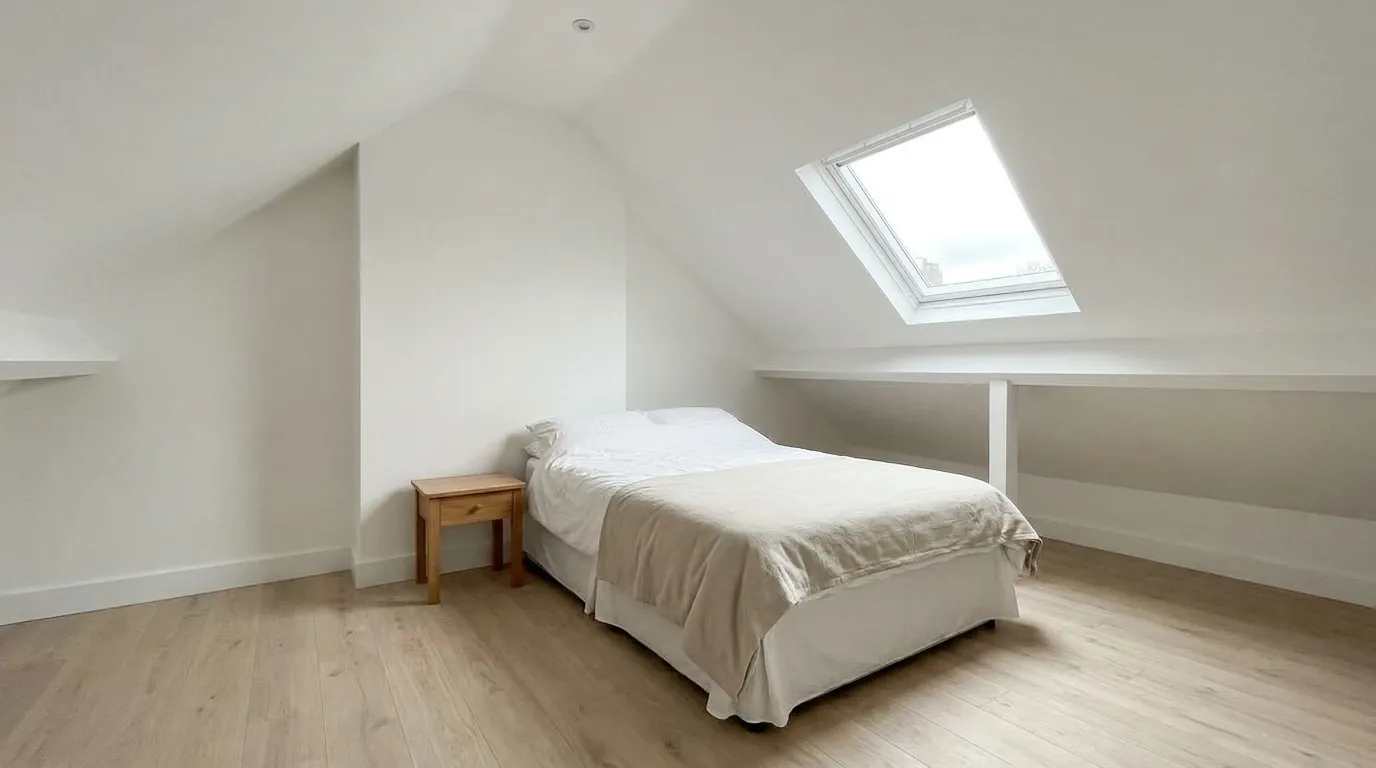
Build Timelines for Newcastle Conversions
From the moment scaffolding goes up to the day you move furniture in, here is what to plan for in 2026:
- Velux or rooflight: 4 to 6 weeks on site
- Rear dormer: 8 to 12 weeks on site
- Hip-to-gable: 10 to 14 weeks on site
- L-shaped dormer: 10 to 14 weeks on site
- Mansard: 12 to 16 weeks on site
Those are the build windows. Add to that the design and approvals phase. A typical Newcastle dormer under Permitted Development takes 2 to 3 weeks from survey to drawings, plus a Lawful Development Certificate decision (8 weeks statutory). A full planning application in Jesmond or Tynemouth Conservation Area runs 8 to 10 weeks for determination, sometimes longer if revisions are needed.
A realistic end-to-end timeline from first call to handover: 4 to 5 months on Permitted Development jobs, 6 to 8 months where full planning is needed.
Weather rarely stops a Newcastle build. Scaffold and tarpaulin handle most of what the North East throws at a roof. The early roof-strip days are the only point where heavy rain causes a delay, and good contractors plan around the forecast for that window.
How UK Loft Conversion Works
We build UK-wide. When you enquire from a Newcastle postcode, your job is handled by our team working in NE postcodes day in, day out. The same model runs in London, Manchester, Birmingham and Leeds, and Newcastle is the city where we build most and keep the closest oversight on quality.
Every quote we send comes with:
- A free home survey at a time that suits you
- A written quote, itemised by stage so you can see exactly what is included
- A 10 year workmanship warranty on the completed work
- Building Regulations sign-off handled by the contractor
- Clear staged payments tied to milestones, rather than weekly invoices
We do not charge for the survey or the written quote.
Newcastle Suburbs We Cover
Pick your area for a closer look at the housing stock, the typical conversions, and recent examples:
- Jesmond (NE2): Victorian and Edwardian terraces, conservation area considerations
- Gosforth (NE3): 1930s semis, hip-to-gable territory
- Heaton (NE6): Tyneside flats and Victorian terraces
- Tynemouth (NE30): Victorian seaside townhouses, North Tyneside Council
- Whitley Bay (NE25, NE26): 1930s semis and coastal terraces
Outside those five we still cover all NE postcodes. Send us your postcode and we will book the survey.
Before you book
Frequently asked questions
How much does a loft conversion cost in Newcastle in 2026?
A mid-spec rear dormer in Newcastle typically costs £35,000 to £48,000 fully fitted in 2026, around 12% below the UK average. Velux conversions run £20,000 to £30,000, hip-to-gable £40,000 to £55,000, and L-shaped dormers £45,000 to £60,000. Building Regulations fees of £500 to £900 sit on top.
Do I need planning permission for a loft conversion in Newcastle?
Most rear dormers on family houses in Newcastle fall within Permitted Development: 40 cubic metres on terraces, 50 cubic metres on semis or detached. You will need full planning permission if your home is in a conservation area (Jesmond, Tynemouth, parts of Gosforth), under an Article 4 direction, in a flat, or if you want a mansard. Building Regulations approval is always required.
Which council covers my Newcastle postcode?
Newcastle City Council covers NE1 to NE7 and NE15. North Tyneside Council covers NE25 to NE30 (Tynemouth, Whitley Bay, Cullercoats). Gateshead Council covers NE8 to NE11 on the south side of the Tyne. Each runs its own planning portal and fee structure.
How long does a Newcastle loft conversion take to build?
Build times on site: Velux 4 to 6 weeks, rear dormer 8 to 12 weeks, hip-to-gable 10 to 14 weeks, mansard 12 to 16 weeks. Add 2 to 3 weeks for design and a Lawful Development Certificate on Permitted Development jobs, or 8 to 10 weeks for full planning. End-to-end, expect 4 to 5 months for most Newcastle dormer jobs.
What loft conversion suits a 1930s semi in Gosforth?
Most 1930s semis in Gosforth have hipped roofs, which limits usable head height under the existing roofline. A hip-to-gable conversion squares off the side slope into a gable wall, often combined with a rear dormer to create a full master suite with en-suite. Budget £40,000 to £55,000 for the combined work.
Will a loft conversion add value to my Newcastle home?
Yes. Local agents see a 15% to 25% uplift on a well-executed conversion. On a £350,000 home in NE2 or NE3, a £45,000 dormer often returns £60,000 or more at sale, and the move from three to four bedrooms widens the buyer pool to families who would not have considered the property at three.
Do I need a Party Wall agreement for a Newcastle terrace conversion?
In most cases yes. Victorian terraces in Jesmond, Heaton, Fenham and across inner Newcastle share party walls with neighbours on one or both sides. The Party Wall etc. Act 1996 requires notice and, if a neighbour disputes, a Party Wall award by a surveyor. Budget £900 to £1,500 per neighbour where a surveyor is needed.
How do I get a quote from UK Loft Conversion?
Send us your postcode and a quick brief. We book a free home survey at a time that suits you, take the measurements and structural assessment on site, and return a written quote, itemised by stage so you can see exactly what is included. The quote covers the 10 year workmanship warranty and the cost of Building Regulations sign-off.
Related pages
- Cities/Newcastle/Jesmond →
- Cities/Newcastle/Gosforth →
- Cities/Newcastle/Heaton →
- Cities/Newcastle/Tynemouth →
- Cities/Newcastle/Whitley Bay →
- Cities/Newcastle/Dormer →
- Cities/Newcastle/Hip To Gable →
- Cities/Newcastle/Velux →
- Cities/Newcastle/Cost →
- Cities/Newcastle/Planning Permission →
- Loft Conversion Cost →
- Loft Conversion Planning Permission →
- Loft Conversion Types →
- Cities/London →
- Cities/Manchester →
- Cities/Birmingham →
- Cities/Leeds →
- Cities/Newcastle/Gateshead →
- Cities/Newcastle/North Shields →
- Cities/Newcastle/Sunderland →
- Cities/Newcastle/Ponteland →
- Cities/Newcastle/Tyneside Flats →
- Cities/South Tyneside →
- Cities/North Tyneside →
Ready for a written quote?
Free home survey, a written quote itemised by stage, and a 10 year workmanship warranty.