Tynemouth in one paragraph (and why the roof matters)
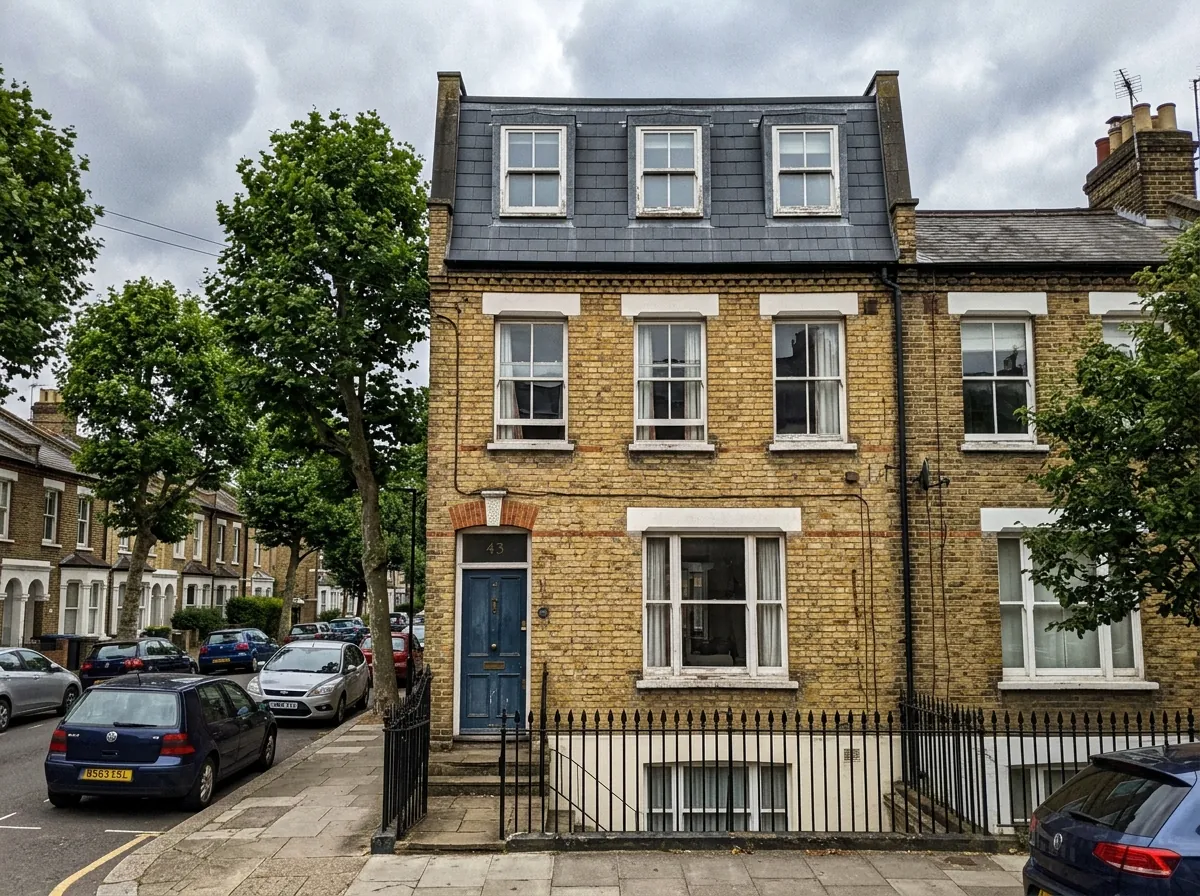
Tynemouth is roughly a square mile of coast and village wrapped around the Priory ruins, Front Street and the long sweep of Longsands beach. The housing is dominated by tall Victorian and Edwardian townhouses, many three storeys already, with substantial roof voids and chimney stacks that often need to stay. A meaningful share of the stock has been split into flats over the decades, particularly along Percy Park, Front Street and the streets behind Longsands. The point of converting a loft here is rarely just extra floor space. It is the view. From the right roof on Percy Park, Beverley Terrace, Hotspur Street or Manor Road you can pick up the North Sea, the Priory headland or the Longsands curve, and that view changes both the design brief and the eventual valuation.
What loft conversion costs in Tynemouth NE30
The North East sits about 12% under the UK average for loft conversions, but Tynemouth itself runs slightly above the regional baseline because of the housing stock and the conservation work involved. Expect these 2026 ranges for a finished, fitted conversion on a Tynemouth townhouse:
- Velux/rooflight conversion with sea-facing windows: £22,000 to £35,000
- Rear dormer on a Victorian terrace: £40,000 to £55,000
- L-shaped dormer (rear plus side return): £48,000 to £65,000
- Mansard with sea views (full roof rebuild): £58,000 to £75,000
- Hip-to-gable on the few semi-detached plots inland: £45,000 to £62,000
The brief at the top of the page, £45,000 to £70,000, is what most NE30 homeowners actually spend once you factor in a dormer or mansard with a proper sea-facing window package, a structural opening for the new staircase, and the finish level a Tynemouth townhouse expects. A simple Velux scheme on a property outside the conservation area can come in well under that. A mansard inside Tynemouth Village will usually sit at the top end.
Building Regulations fees in North Tyneside run £500 to £900 on top, and a Party Wall surveyor is almost always needed because terraced and semi-detached townhouses share a wall on at least one side.
The sea-view angle: rooflights, mansards and where the view actually is
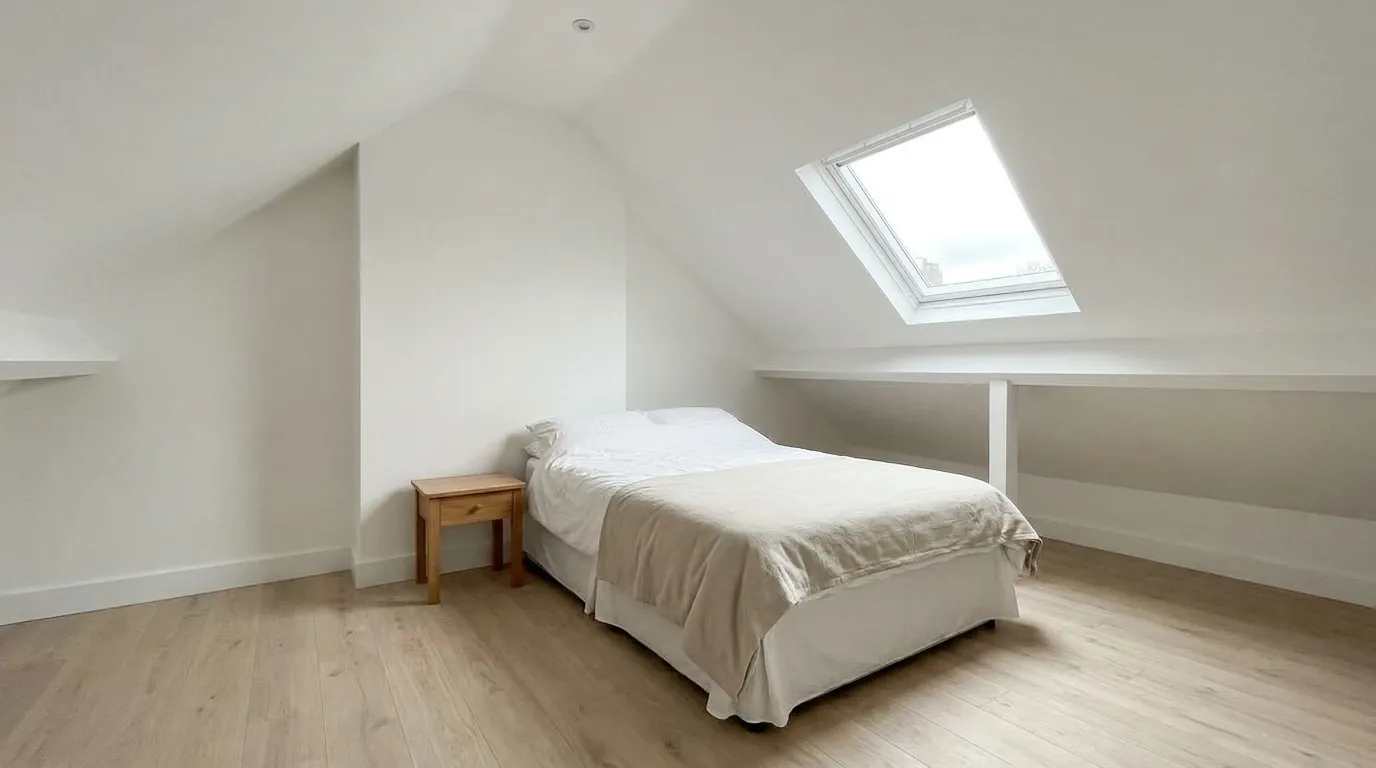
This is the part most national loft companies get wrong. In Tynemouth the view sits at roof level rather than at first-floor windows, because the mature trees on Percy Gardens, Manor Road and the streets off Tynemouth Road block sightlines from below. A well-placed rooflight or a mansard with east-facing windows often turns a flat sea horizon into the defining feature of the room.
Three approaches work well in NE30:
- Sea-facing Velux scheme. Two or three large rooflights in the rear or side roof slope, sized and placed to frame the horizon from a desk or a bed. Works on properties outside Tynemouth Village conservation area where Permitted Development still applies. Quickest build, lowest cost, least planning friction.
- Rear dormer with picture window. A full-width dormer at the back gives a bedroom plus en-suite and a single large east-facing window. On the streets running roughly east to west (Percy Park, Manor Road, parts of Hotspur Street) the rear roof slope often points toward the sea.
- Mansard with sea views. Inside the conservation area a mansard is sometimes the only way to get usable head height across the full footprint, and it can be designed with a sequence of small dormers that face the coast. This is the most expensive option and always needs planning permission, but it adds the most floor space and the strongest valuation uplift.
The survey decides which one fits. Ridge height, chimney position, neighbouring rooflines and the angle of the property to the sea all matter more than the homeowner's preference at the brief stage. If you are weighing a rooflight scheme against a box or full-width dormer, our guide to the types of dormer shows how each shape behaves on a coastal roof.
Planning permission in Tynemouth: conservation area and Article 4
This is non-negotiable reading for any NE30 homeowner. Most of Tynemouth is in the Tynemouth Village Conservation Area, designated by North Tyneside Council. Within and adjacent to that, five sub-areas carry an Article 4 Direction that removes some Permitted Development rights:
- Tynemouth Village
- Sacred Heart
- Preston Park
- New Quay
- Spanish Battery
If your property falls inside one of these Article 4 zones, you should assume planning permission is required for any external roof alteration, including a rear dormer that would otherwise be Permitted Development on an identical house in, say, North Shields.
Outside the Article 4 zones but still inside the wider Tynemouth Village Conservation Area, most Permitted Development rights remain. The General Permitted Development Order 2015 still applies, with the usual conservation-area restriction that side-facing dormers and cladding changes are tighter. Rear dormers up to 40 cubic metres on a terrace, or 50 cubic metres on a detached or semi, are usually still allowed without a planning application, but you need a Lawful Development Certificate from North Tyneside to confirm it in writing before you start.
Flats are a separate case. If your property is a flat, even on the ground or first floor of a Tynemouth townhouse, Permitted Development does not apply and a full planning application is always required.
Building Regulations approval from North Tyneside is required for every loft conversion regardless of planning route.
Streets and stock: what works where
A short tour of the typical NE30 brief by area:
- Front Street and the village core. Mostly mixed-use with flats above shops. Conversion work here is heavily restricted and usually limited to internal Velux schemes that do not alter the front elevation.
- Percy Park, Percy Gardens, Manor Road. Large Victorian villas, several already three storeys. Mansards and rear dormers with sea views are the typical brief. Conservation area rules apply and most schemes need planning permission.
- Hotspur Street, Manor Road, Tynemouth Road. Edwardian terraces. Rear dormers are the most common conversion type. Some plots fall outside the Article 4 boundary, which keeps Permitted Development on the table.
- Streets behind Longsands and toward Cullercoats. Quieter Edwardian and 1920s terraces, often outside the conservation area. Velux and rear dormers with the cleanest planning path.
- Preston Park (Article 4). Inter-war housing with strong original character. Any external alteration needs planning permission. Conversions here have to respect the area's roofline carefully.
The right starting point in every case is the postcode check against the conservation and Article 4 boundary, which we do as part of the free home survey.
Build duration and what to expect on a Tynemouth street
Build timings for a Tynemouth NE30 conversion run close to the UK averages, with a small allowance for coastal weather and the narrower access on some village streets:
- Velux scheme: 5 to 7 weeks
- Rear dormer: 9 to 12 weeks
- L-shaped dormer: 10 to 14 weeks
- Hip-to-gable: 11 to 14 weeks
- Mansard: 13 to 16 weeks
The practical points unique to Tynemouth are scaffold permits from North Tyneside if the scaffold sits on the public highway, salt-resistant fixings and flashing because the coastal air shortens the life of standard mild steel, and a higher specification of insulation in the rafters than inland Newcastle because of prevailing easterly wind off the North Sea. A good specifier will use a breathable warm-roof build-up with at least 200mm of PIR equivalent between and over the rafters.
Party Wall agreements are almost always required because most NE30 townhouses share a wall on one or both sides. Two months lead time on the Party Wall notice is normal, so a homeowner who wants to start work in August should be serving notice by May.
What you get back: valuation uplift in NE30
Loft conversions across the UK typically add 15% to 25% to home value. In Tynemouth the upper end of that range is realistic for two reasons. The original housing stock is already at the top of the North Tyneside market, so a percentage uplift on a higher base produces a bigger absolute gain. And the addition of a sea view turns a notional bedroom into the headline feature of the listing.
On a £450,000 Tynemouth townhouse, a £55,000 dormer or mansard with a usable sea view commonly adds £80,000 to £110,000 to asking price at next sale, and shortens time on market. That maths is the reason most NE30 conversions sit at the top of the £45,000 to £70,000 budget band rather than the bottom. Spending an extra £8,000 on better windows and a sea-facing layout pays for itself many times over at resale.
How we work in Tynemouth
UK Loft Conversion is a UK-wide brand that routes Tynemouth enquiries to local surveyors and builders who already work in NE30 and know the North Tyneside planning team. Every quote includes:
- A free home survey
- A written quote itemised by stage so you can see exactly what is included
- A planning route assessment, including whether the property falls inside the Article 4 boundary
- A 10 year workmanship warranty on the conversion
- Building Regulations sign-off coordinated with North Tyneside
- Party Wall coordination where required
We do not start work until planning route is confirmed in writing and the Party Wall position is settled. That is the difference between a conversion that finishes on time and one that stops halfway.
Before you book
Frequently asked questions
Do I need planning permission for a loft conversion in Tynemouth?
It depends on the exact street. Five Tynemouth sub-areas (Tynemouth Village, Sacred Heart, Preston Park, New Quay, Spanish Battery) carry an Article 4 Direction from North Tyneside Council, which removes Permitted Development rights. Inside those zones, assume planning permission is required for any external roof work. Outside Article 4 but still inside the wider Tynemouth Village Conservation Area, most Permitted Development rights remain, but you should still apply for a Lawful Development Certificate to confirm it in writing. Flats always need full planning permission.
How much does a loft conversion cost in Tynemouth?
Realistic 2026 budgets are £22,000 to £35,000 for a Velux scheme, £40,000 to £55,000 for a rear dormer, £48,000 to £65,000 for an L-shaped dormer, and £58,000 to £75,000 for a mansard. Most NE30 jobs land between £45,000 and £70,000 once a proper sea-facing window package is included. Building Regulations fees add £500 to £900.
Can I get a sea view from my loft conversion in NE30?
Often yes, depending on the property's orientation and ridge height. The view sits at roof level on most Tynemouth streets because mature trees block sightlines from lower floors. The strongest sea views come from rear-facing dormers and rooflights on streets running east to west (Percy Park, Manor Road, Hotspur Street and similar). A survey is the only way to confirm what the view looks like from your specific roof slope.
How long does a Tynemouth loft conversion take to build?
5 to 7 weeks for a Velux scheme, 9 to 12 weeks for a rear dormer, 10 to 14 weeks for an L-shaped dormer, 11 to 14 weeks for hip-to-gable, and 13 to 16 weeks for a mansard. Add 8 to 12 weeks at the front end if planning permission is required, which it usually is inside the Article 4 boundary.
Is a mansard worth the extra cost in Tynemouth?
Inside the conservation area a mansard is sometimes the only way to get usable head height across the full footprint, and it gives the most floor space of any loft type. Cost runs £58,000 to £75,000 on a typical NE30 townhouse, but the valuation uplift on a Tynemouth property tends to be at the top of the 15% to 25% UK range, so the absolute return is strong. It always needs planning permission.
What about salt air and coastal weather, does that affect the build?
Yes. Coastal builds need salt-resistant fixings and flashing because standard mild steel corrodes faster in NE30 air. Insulation specs should be higher than inland Newcastle, with at least 200mm PIR equivalent in a warm-roof build-up to handle the easterly wind. We build on this coast, so we specify this as standard. A national contractor sometimes will not.
Do I need a Party Wall agreement?
For terraced and semi-detached townhouses, almost always yes. Most Tynemouth streets are terraced, so a Party Wall notice to one or both neighbours is standard. Serve notice at least two months before work starts, and use a Party Wall surveyor if your neighbour dissents or does not reply within 14 days.
Can I convert the loft of a flat in Tynemouth?
Only if you own the top-floor flat and the freehold or a long lease that includes the roof void. Permitted Development does not apply to flats, so full planning permission is required, plus freeholder consent and usually consent from leaseholders below. The structural and access work is also more complex because the staircase has to fit inside your demise. Many top-floor Tynemouth flats are convertible, but the legal and planning route is longer than for a house.
Related pages
- Cities/Newcastle →
- Cities/Newcastle/Whitley Bay →
- Cities/Newcastle/Jesmond →
- Cities/Newcastle/Mansard →
- Cities/Newcastle/Dormer →
- Cities/Newcastle/Velux →
- Cities/Newcastle/Planning Permission →
- Cities/Newcastle/Cost →
- Mansard Loft Conversion →
- Velux Loft Conversion →
- Loft Conversion Planning Permission →
- Cities/Newcastle/North Shields →
- Cities/Newcastle/Tyneside Flats →
- Types Of Dormer →
- Cities/North Tyneside →
Ready for a written quote?
Free home survey, a written quote itemised by stage, and a 10 year workmanship warranty.