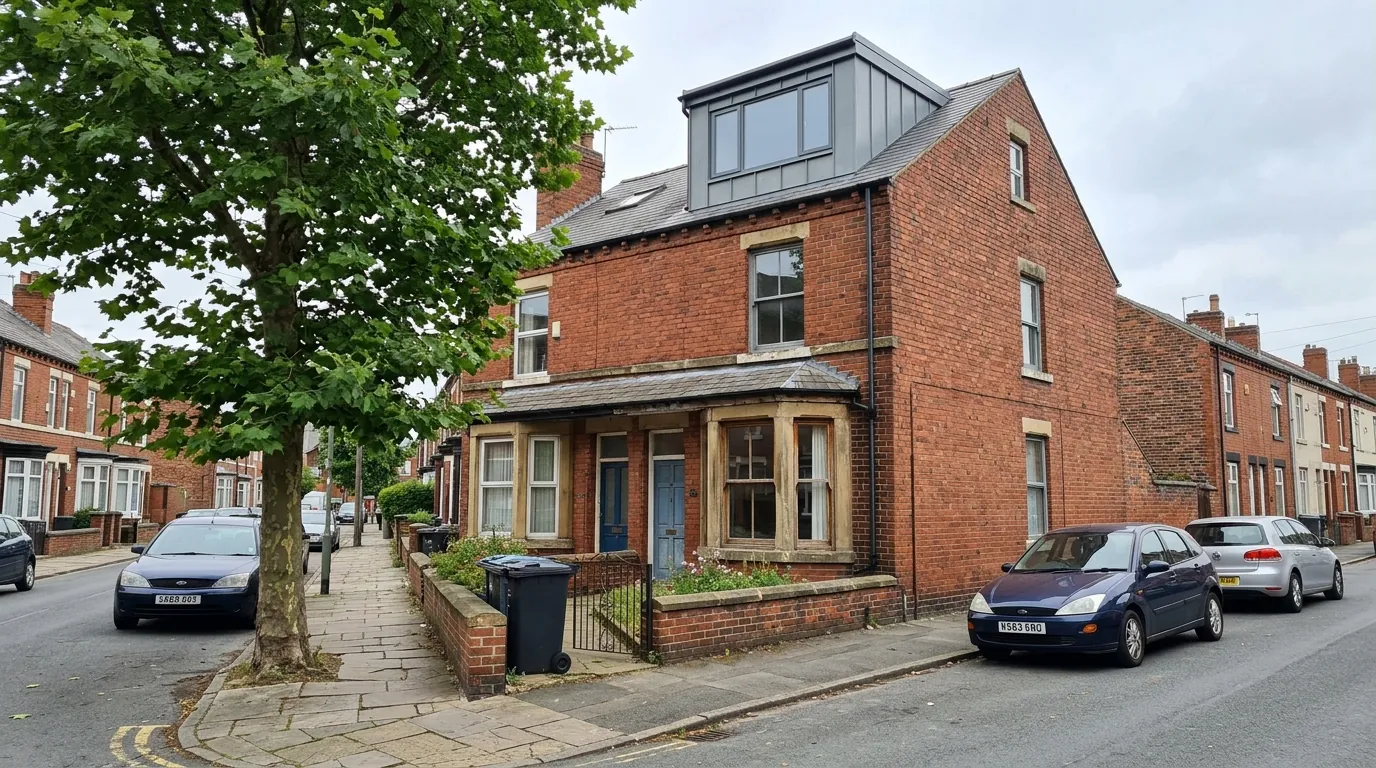
London loft conversion costs in 2026
London prices sit 25 to 40 percent above the UK average. The capital pays more for skilled labour, scaffolding, waste removal, and parking suspensions. Most projects also carry party wall costs that buyers in Manchester or Leeds rarely face.
Typical fitted prices for a London property:
- Velux or rooflight conversion: £28,000 to £40,000
- Rear dormer (Victorian terrace, mid-spec): £52,000 to £75,000
- Hip-to-gable (semi or end-of-terrace): £58,000 to £80,000
- L-shaped dormer (rear dormer plus side return at roof level): £70,000 to £95,000
- Mansard (full roof rebuild): £80,000 to £120,000 in inner London
The numbers above are mid-spec, include VAT, and assume a standard en-suite bedroom layout. Strip-out specifications, bespoke joinery, and high-end bathrooms push prices higher. Period properties in Kensington, Chelsea, Westminster, or central Camden routinely hit £140,000-plus on a mansard with conservation-grade roof finishes.
Add-ons that London buyers should budget for separately:
- Party wall surveyor fees: £1,500 to £4,500 typical, up to £6,000 on a mid-terrace with two dissenting neighbours
- Structural engineer: £900 to £1,800
- Architect and planning drawings: £2,500 to £6,000
- Building Regulations fees: £500 to £900
- Planning application (if required): £548 householder fee plus drawings
A standard rear dormer on a London terrace, all-in with party wall and professional fees, lands at £60,000 to £82,000 in 2026.
Planning permission in London: Article 4, conservation areas, and PD
London is the most planning-controlled part of the UK. The simple rule is that the further inside the M25 you sit, the less likely permitted development applies to your roof.
Permitted development. A rear dormer up to 40m3 on a terraced house, or 50m3 on a semi or detached, is permitted development across most of outer London. Velux rooflights to the rear are usually fine too. This is the default for boroughs like Bromley, Bexley, Havering, Hillingdon, and large parts of Croydon, Enfield, Barnet, Redbridge, and Sutton.
Conservation areas. Inner London is dense with conservation areas. Camden has more than 40. Islington, Hackney, Westminster, Lambeth, Southwark, Tower Hamlets, Wandsworth, and Hammersmith and Fulham all have large conservation coverage. Inside a conservation area you cannot put a dormer on a side elevation under PD, and front-facing rooflights need planning permission.
Article 4 directions. These remove permitted development rights inside specific areas. The Royal Borough of Kensington and Chelsea has an Article 4 direction covering basements borough-wide, and conservation-area Article 4 directions across roughly 70 percent of its land area. Camden has Article 4 directions in Hampstead, South Hampstead, Belsize, Primrose Hill, Dartmouth Park, South Hill Park, Fitzjohns and Netherhall, Redington and Frognal, and several others. Inside an Article 4 zone you need planning permission for changes that would normally be permitted, including most dormers and any visible roof alteration.
Always need planning permission in London:
- Mansard conversions (every borough)
- Flats and maisonettes (PD does not apply to flats)
- Listed buildings (and Listed Building Consent on top)
- Any conservation-area side dormer or front-facing alteration
- Any property inside an Article 4 direction
Building Regulations. Required on every conversion in every borough.
Party wall agreements: the London tax
The Party Wall etc. Act 1996 catches almost every London loft conversion. Steel beams in a dormer typically bear into the party walls. Chimney breast removal involves party wall masonry. Both trigger Section 2 of the Act.
You must serve notice on each adjoining owner at least two months before work starts. On a mid-terrace that means both neighbours. On a semi or end-of-terrace, one neighbour. Flats add freeholder notices on top.
Three outcomes are possible:
- Both neighbours consent in writing. No surveyor needed and no fee to pay. This is uncommon but does happen when you start the conversation early and bring drawings.
- Agreed surveyor route. Both sides appoint one impartial surveyor. Expect £900 to £1,500 plus VAT in 2026. This is faster and cheaper, and the route we encourage clients to push for.
- Two surveyors. Each side appoints their own. You pay for both. £1,800 to £3,500 is typical, rising to £6,000 if neighbours on both sides dissent.
The best way to keep costs down is a friendly conversation with neighbours eight weeks before formal notice lands. Cold notices through the letterbox trigger reflex dissent and add thousands to the bill. We have seen the same project swing by £3,000 on neighbour relations alone.
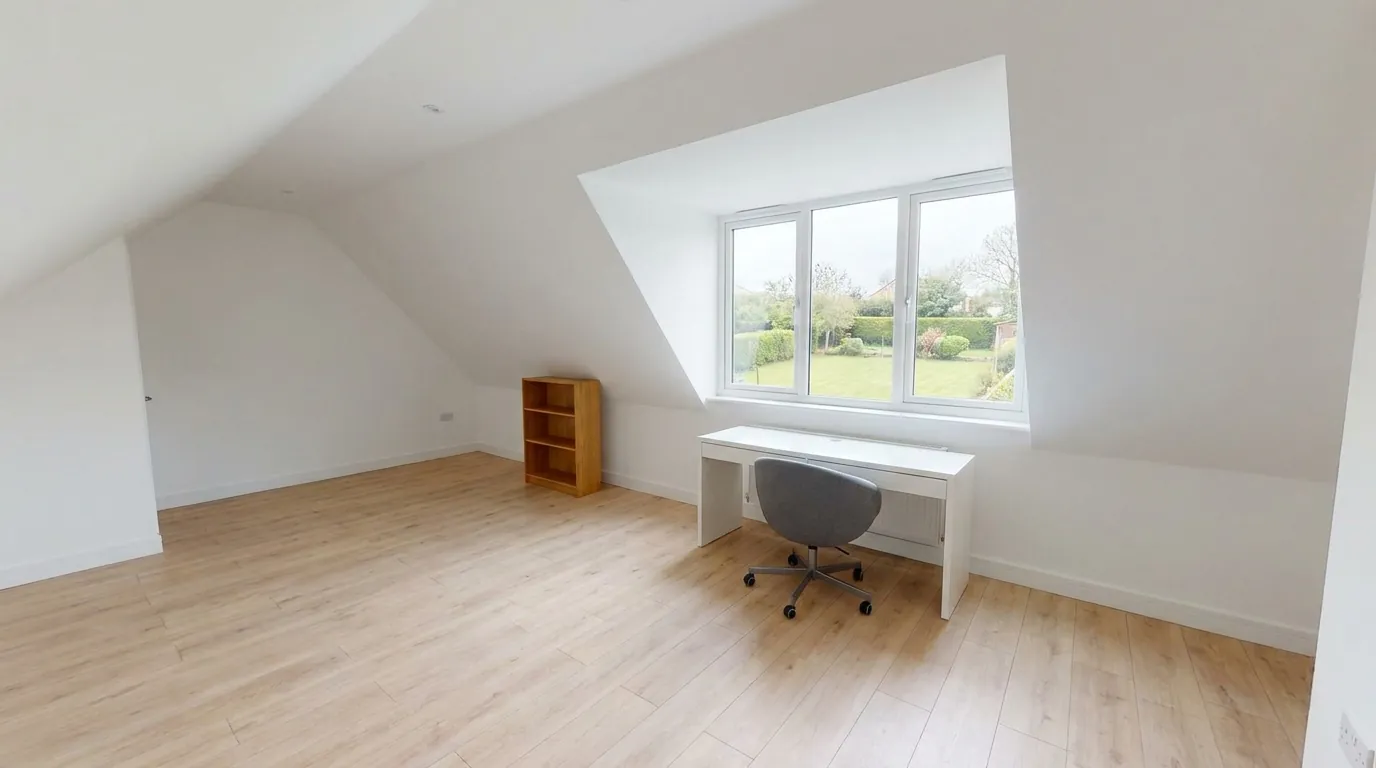
Zones we cover and what to expect by area
We work across all London zones from 2 to 6, and the picture changes by borough.
- North London (Islington, Camden, Haringey, Barnet, Enfield): Victorian and Edwardian terraces dominate. Camden Article 4 zones common in NW3 and NW6. Expect £55,000 to £78,000 for a rear dormer outside conservation areas.
- East London (Hackney, Tower Hamlets, Newham, Waltham Forest, Redbridge): mix of Victorian terraces and 1930s semis. Generally lighter planning controls in outer postcodes. £50,000 to £72,000 for a rear dormer.
- South London (Lambeth, Southwark, Lewisham, Wandsworth, Bromley, Croydon, Greenwich): heavy Victorian terrace stock in inner postcodes, post-war semis further out. £52,000 to £75,000 typical.
- West London (Hammersmith and Fulham, Ealing, Hounslow, Brent): mix of Victorian terraces, Edwardian semis, and Tudorbethan stock. £55,000 to £80,000.
- Central London (Westminster, Kensington and Chelsea, City): listed buildings, stucco terraces, near-total Article 4 coverage in RBKC. Mansards from £100,000 to £160,000. Most projects need planning permission and conservation officer input.
Build timelines run 8 to 12 weeks for a dormer once planning and party wall are settled. Mansards run 12 to 16 weeks. Add 8 to 12 weeks for planning permission where required, plus the two-month party wall notice period running in parallel.
What you get from us
We are a UK-wide loft conversion company building across London. Every quote includes:
- Free home visit to survey the loft
- Written quote itemised by stage, VAT-inclusive
- 10 year workmanship warranty on the conversion
- Architectural drawings and Building Regulations submission included
- Party wall guidance and surveyor introductions where needed
- Project management from survey through sign-off
We keep one team per borough cluster so response times stay tight. If we cannot get to you we tell you straight, rather than passing your details to a national call centre.
Before you book
Frequently asked questions
How much does a loft conversion cost in London?
A rear dormer on a typical London terrace costs £52,000 to £75,000 in 2026, all-in with VAT. Mansards run £80,000 to £120,000 in inner London. Velux conversions start around £28,000. Add £1,500 to £4,500 for party wall surveyor fees and £900 to £1,800 for a structural engineer.
Do I need planning permission for a London loft conversion?
It depends on borough and roof type. Rear dormers up to 40m3 on terraced houses are permitted development across most of outer London. You need planning permission for mansards, flats, listed buildings, anything in a conservation area side or front elevation, and anything inside an Article 4 direction (which covers most of Kensington and Chelsea plus large parts of Camden).
What is Article 4 and why does it matter in London?
An Article 4 direction is a borough-level rule that removes permitted development rights inside a defined area. The Royal Borough of Kensington and Chelsea has Article 4 directions covering roughly 70 percent of its land. Camden has Article 4 directions in Hampstead, Belsize, Primrose Hill, Dartmouth Park, and several other zones. Inside these areas any visible roof alteration needs full planning permission.
Do I need a party wall agreement for a London loft conversion?
Almost certainly yes. Around 95 percent of London loft conversions trigger party wall obligations because steel beams bear on party walls and chimney breast removal involves party wall masonry. You must serve notice on adjoining owners at least two months before work starts. Costs run £900 to £1,500 with an agreed surveyor, or £1,800 to £6,000 if neighbours dissent.
How long does a London loft conversion take?
Build time runs 8 to 12 weeks for a dormer and 12 to 16 weeks for a mansard. Add 8 to 12 weeks for planning permission where required, and a 2 month party wall notice period that usually runs in parallel with planning. Total elapsed time from first survey to handover is typically 4 to 7 months.
Will a loft conversion add value to my London home?
A well-executed loft conversion in London typically adds 15 to 25 percent to the property value. On a £750,000 London terrace, that is £110,000 to £190,000 in uplift against a £60,000 to £80,000 conversion cost. Mansards in inner postcodes can add more because they create a full extra floor with proper head height.
Which London boroughs have the heaviest planning controls?
Kensington and Chelsea is the most restricted, with conservation area coverage across roughly 70 percent of the borough and a borough-wide Article 4 on basements. Westminster and Camden are close behind. Hammersmith and Fulham, Islington, and Hackney have heavy conservation coverage in their central wards. Outer boroughs like Bromley, Bexley, and Havering are far more permissive.
Related pages
Ready for a written quote?
Free home survey, a written quote itemised by stage, and a 10 year workmanship warranty.