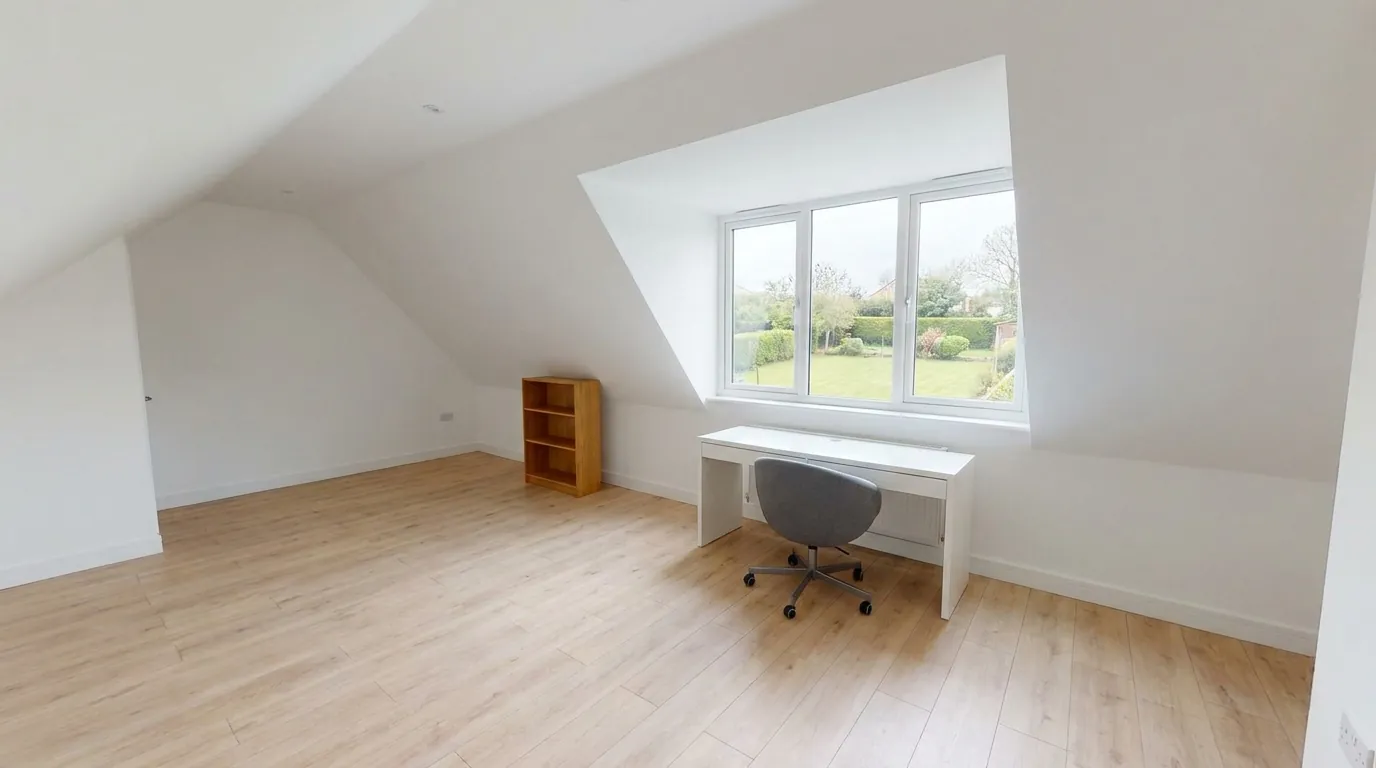
What changes the moment your postcode lands in a conservation area
There are around 10,000 conservation areas in England alone, plus several thousand more across Scotland, Wales and Northern Ireland. Most British cities have multiple. London alone has over 1,000. Outside the capital you find them protecting Georgian terraces in Bath and Edinburgh New Town, Victorian streets in Jesmond and Heaton in Newcastle, Edwardian villa belts in south Manchester, the grid of Headingley in Leeds and large parts of central Birmingham. If you do not know whether your house is inside one, search your council's planning map by postcode before you do anything else.
The legal mechanism is the Town and Country Planning (General Permitted Development) (England) Order 2015. Conservation areas fall within Article 2(3) designated land, which removes some of the loft permitted development rights you would otherwise rely on. The headline change is that dormer windows that enlarge the roof are not permitted development on any roof slope that fronts a highway, and many councils interpret 'fronts a highway' broadly. Cladding, render and certain extension types also lose their PD status. Rooflights stay on the table provided they sit no more than 150mm above the slope and below the original ridge.
The practical effect is straightforward. Assume planning permission is required until the council confirms otherwise in writing.
Article 4 directions: the extra layer most homeowners miss
An Article 4 direction is the council's tool for closing the remaining PD gaps inside a conservation area. It does not change national planning policy. It removes specific permitted development rights across a defined area, named street or even a single side of one road. Article 4s on roof alterations are now routine in the better-protected London boroughs and increasingly common in Newcastle's NE2 Jesmond conservation area, Headingley in Leeds, Moseley in Birmingham and the Chorlton and Didsbury conservation areas in Manchester.
What an Article 4 typically removes for a loft project:
- All dormer and roof extension PD rights, including rear dormers that would otherwise be allowed
- Replacement of original sash or casement windows without a like-for-like specification
- Roof covering changes, so a slate-to-tile swap needs permission
- Painting or rendering of brick or stone elevations
- Hard-surfacing of front gardens and the loss of boundary walls
Article 4s are postcode-specific. Two houses on the same street can have different rules if the conservation area boundary cuts down the middle. Check by typing your full postcode into the council's interactive planning map and reading the constraints layer. If a roof Article 4 applies, the only safe route is a full householder planning application supported by a heritage-aware design.
Common conservation areas across the UK and what they protect
Every conservation area has its own character appraisal document that spells out what the council wants protected. Skim this document before you draw a single line. Patterns across the UK:
- London: Hampstead, Highgate, Belsize, Bedford Park, Brixton, conservation areas in Camden, Islington, Lambeth and Hackney almost always have Article 4 directions on roof works. Mansards are often the preferred form in flat-fronted Georgian and early Victorian terraces.
- Newcastle and North Tyneside: NE2 Jesmond protects Victorian and Edwardian terraces and villas. NE3 Gosforth has conservation pockets around the High Street and West Avenue. NE30 Tynemouth covers the Front Street area and the seaside townhouses near the Priory. Article 4 cover varies by sub-area.
- Manchester: Didsbury Village, Chorlton Green, Whalley Range and parts of West Didsbury sit inside conservation areas with active Article 4s on roof works and window replacements.
- Leeds: Headingley Hill, Far Headingley, Chapel Allerton and parts of Roundhay carry conservation status. Rear dormers are normally the only viable form.
- Birmingham: Moseley, Edgbaston, Sutton Coldfield town centre and the Jewellery Quarter sit inside conservation areas with strong material rules.
- Edinburgh, Bath, York and Oxford: tight controls citywide. Mansards and concealed rooflights are usually the only routes.
The character appraisal will tell you whether dormers exist already on the street, whether mansards are part of the area's identity and which materials the conservation officer expects.
What you usually can build, and what gets refused on sight
Conservation area loft conversions follow clear patterns once you have read a few committee reports. The outcomes are largely predictable.
Usually approvable
- A small to medium rear dormer set well below the original ridge, well in from the eaves and the party walls, with a pitched, hipped or low-pitched zinc-clad top. Slate or natural-slate-effect tile cheeks, dark-painted timber or aluminium windows aligned vertically with the storey below, lead flashing in traditional detail.
- Conservation-style Velux or Fakro rooflights on the rear slope. The black-framed, central-bar conservation models read as historic skylights and rarely attract objection. Limit them to one per bedroom and keep them well below the ridge.
- A full-width rear mansard on a Georgian or early Victorian terrace where mansards already form part of the street's roofscape. Officers often prefer a properly detailed mansard to a clumsy box dormer.
- A small Juliet balcony at first floor where there is no projecting platform.
Usually refused
- Large white-PVC front dormers visible from any public vantage point.
- Full-height side dormers on the gable of an end-of-terrace or semi where the gable reads as part of the street scene.
- Roof terraces and raised platforms. The privacy and overlooking arguments are very hard to overcome.
- Dormer cheeks finished in render, white UPVC or smooth fibre cement.
- A dormer that wraps around the ridge of a hipped roof or sits flush with the eaves.
- Any change of roof material from natural slate to concrete tile without a strong justification.
How to maximise your chance of approval
Conservation area applications turn on dialogue and detail. Six things move the odds.
- Book pre-application advice early. Most councils offer a paid pre-app service for householders. You get a written steer from a conservation officer on dormer scale, materials and any street-specific concerns. Fees usually sit between £100 and £400. A pre-app response is the single biggest predictor of a clean approval.
- Commission a short Design and Access Statement. Even where it is not strictly required, a 2-3 page statement showing how your scheme respects the area's character appraisal makes the case officer's job easy. Reference the appraisal by paragraph number. Include cross-section drawings showing the ridge, eaves and any visibility from the street.
- Specify sympathetic materials in writing. Natural slate, lead or zinc flat tops, dark-painted timber or powder-coated aluminium windows in a colour that matches the existing joinery, traditional sliding sash proportions where the rest of the house has them. Avoid white UPVC anywhere visible.
- Set the dormer back from every edge. A 500mm setback from the party walls, a 1m setback from the front face of the roof and at least 300mm below the original ridge will normally satisfy the standard officer test. Larger setbacks help further.
- Use conservation-grade rooflights only. Conservation Velux units cost £100 to £200 more per window than the standard models. On a planning application that single line item often makes the difference.
- Speak to your neighbours before the consultation letter arrives. Conservation area applications are publicly notified for 21 days. A neighbour objection rarely sinks a well-designed scheme on its own, but a stack of them changes the political weather around the decision. A coffee and a copy of the drawings goes a long way.
Cost and timeline implications of being in a conservation area
The conservation overlay adds three things to the project: a longer planning timeline, a tighter material specification and a slightly higher design fee. The headline build cost stays close to UK norms, though the contingency you should hold shifts upward.
- Planning timeline: 10 to 12 weeks from validation to decision, against 8 weeks for a standard householder application. Add 4 to 6 weeks for pre-app advice if you use it.
- Material premium: natural slate cheeks and conservation rooflights typically add £1,500 to £3,500 to a rear dormer build against a standard tile-and-felt specification.
- Design fees: a Design and Access Statement and a heritage-aware drawing pack usually adds £500 to £1,200 to your architect's fee.
- Build cost: the body of the build sits inside the UK norms. A rear dormer runs £35,000 to £60,000 nationally, rising to £52,000 to £75,000 in London and the South East. A rear mansard, often the conservation area answer in inner London, runs £55,000 to £85,000 and frequently exceeds £100,000 in central boroughs.
- Build duration: 8 to 12 weeks for a rear dormer, 12 to 16 weeks for a mansard.
The return is unchanged. A well-designed conservation area loft still typically lifts the property value by 15 to 25 per cent, and the conservation address often commands a premium that more than absorbs the material upgrade.
Newcastle, Jesmond and the North East: a local lens
Newcastle's conservation cover is concentrated in NE2 Jesmond, parts of NE3 Gosforth around the High Street, NE6 Heaton's Tyneside flats, and along the coast in NE30 Tynemouth and parts of Whitley Bay. Newcastle is governed by three different planning authorities depending on postcode: Newcastle City Council covers NE1 to NE7 and NE15, North Tyneside Council covers NE25 to NE30, and Gateshead Council covers NE8 to NE11. Each has its own conservation officers and slightly different design preferences.
In Jesmond's Victorian terraces, small rear dormers in natural slate with sash-proportion timber windows are the standard approved form. Front dormers are almost never accepted. In Gosforth's 1930s hipped-roof semis, hip-to-gable conversions need to consider the rhythm of the street, with conservation officers often preferring a partial hip-to-gable that preserves a visible hip from the road. Heaton's Tyneside flats raise their own structural and party-wall questions before you even reach the planning stage.
If you are starting a project in any of these areas, get a written pre-application response from the council before you instruct an architect to produce planning drawings. The two hours and the small fee pay for themselves many times over.
Before you book
Frequently asked questions
Do I always need planning permission for a loft conversion in a conservation area?
Most of the time, yes. Conservation areas sit on what the GPDO calls Article 2(3) designated land, which strips back the standard loft permitted development rules. Even where some rights survive on paper, many councils have added an Article 4 direction that removes them entirely. The safe assumption is that you need a full householder planning application for any dormer, mansard, hip-to-gable or roof terrace. Rooflights on a rear slope are often the only thing left under PD, and even then the council can call it in if your road has an Article 4.
What is an Article 4 direction and how do I check if one applies to my street?
An Article 4 direction is a local rule, made under Article 4 of the General Permitted Development Order, that withdraws specified permitted development rights from a defined area. It is the council's tool for stopping cumulative damage to a conservation area's character. Article 4s can target roof alterations, window replacements, materials, render and front extensions. To check, search your council's website for your conservation area name plus Article 4, or look at the interactive planning map. Two houses on the same street can have different rules, so confirm by postcode.
What kind of dormer is most likely to get approved in a conservation area?
A small rear dormer set well below the ridge, well in from the eaves and the party walls, with a pitched or hipped roof and traditional materials gives the best odds. Slate cheeks, lead or zinc flat tops where allowed, dark-painted timber or aluminium windows aligned with the storey windows below. In streets with a mansard tradition, a full rear mansard often reads more sympathetically than a flat-roof box and is sometimes the preferred option. Anything that breaks the original ridge line, wraps a hip or shows from the street will struggle.
Can I install Velux windows in a conservation area without planning permission?
It depends on the slope and whether an Article 4 direction has removed the right. On a rear slope with no Article 4 in force, a rooflight can sit within permitted development provided it is no more than 150mm above the roof slope and stays below the original ridge. Conservation-style Velux windows, which are taller than they are wide and have a central glazing bar, almost always pass design scrutiny where rooflights are accepted. On front slopes facing a highway and on most Article 4 streets you still need planning permission, so check before you buy the units.
What is pre-application advice and is it worth paying for?
Pre-application advice is a paid service from your local planning authority where a conservation or planning officer reviews your draft scheme and tells you what is likely to be approved. Fees in England usually sit between £100 and £400 for a householder scheme. For a conservation area loft it is almost always worth it. You get a written steer on dormer size, materials, rooflight placement and any design statement points the officer will look for. Submitting cold without this dialogue is the most common reason conservation area applications get refused first time.
How long does a conservation area planning application take?
A householder application has a statutory determination period of 8 weeks. Conservation areas often run closer to 10 to 12 weeks because of the extra consultation with the council's conservation officer and a 21-day neighbour and public notification period. Building Regulations approval runs alongside and adds nothing to the planning timeline. Plan your build start date around the decision notice, not the submission date, and add a week or two of contingency in case the officer asks for revisions.
Does a refusal in a conservation area mean the loft conversion is dead?
In most cases there is a clear route forward. Most refusals are about one or two specific issues such as dormer width, material choice or a roof terrace, rather than the principle of converting the loft. You can submit a revised scheme that addresses the officer's reasons for refusal, often without paying a second application fee if it goes in within 12 months. An appeal to the Planning Inspectorate is the alternative route, but in conservation areas the design-led revision route tends to win quicker.
Related pages
Ready for a written quote?
Free home survey, a written quote itemised by stage, and a 10 year workmanship warranty.