What a Dormer Loft Conversion Actually Is
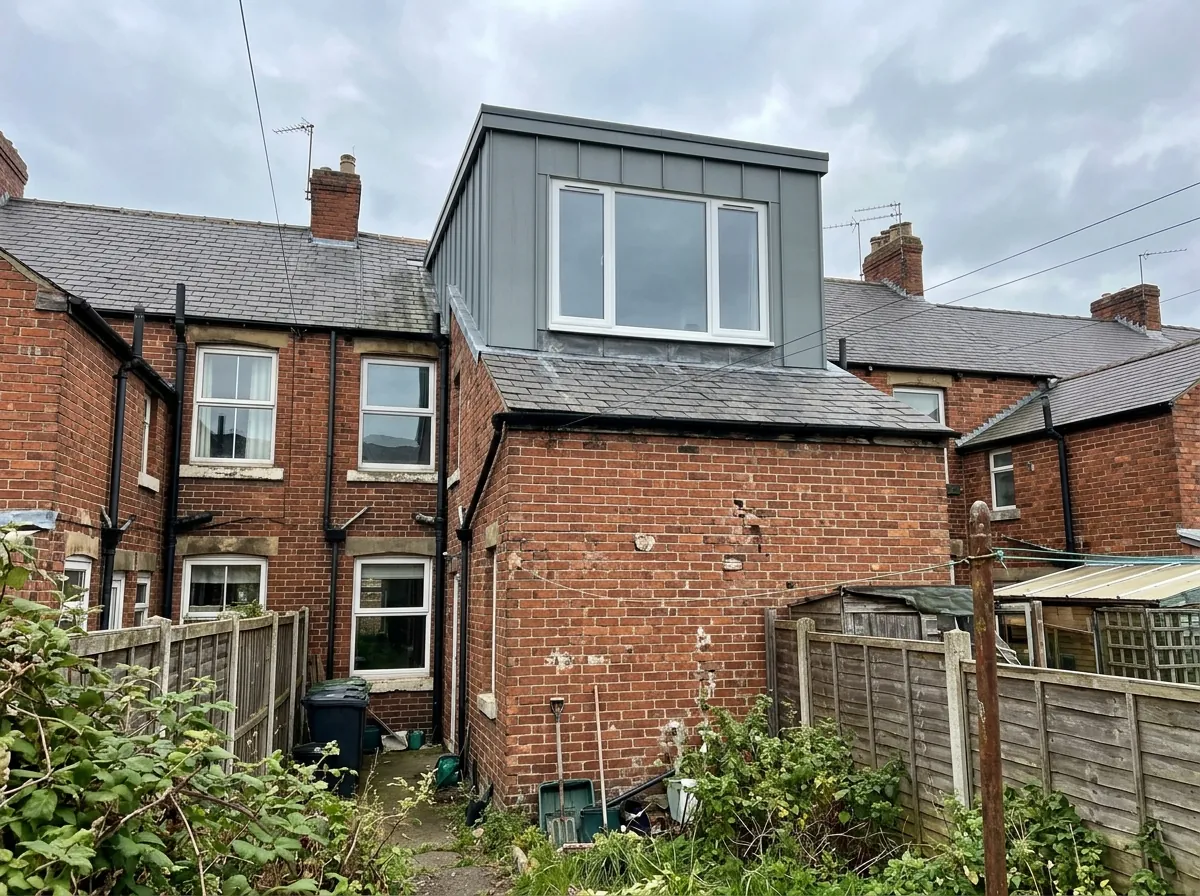
A dormer is a structural extension that projects vertically from a sloping roof. It creates a flat or pitched roof box with vertical walls and a window. Inside, the floor area gains full standing headroom across most of the new room rather than sloping ceilings you can only use for storage.
This matters because a standard pitched roof gives you very little usable floor space once you account for building regulations headroom requirements (1.9m minimum over the stairs, typically 2.3m+ across most of the room). A rear dormer typically adds 15 to 30 square metres of genuinely usable floor space on a standard three-bed semi or terrace. That is enough for a double bedroom and an en-suite, a large master suite, or a bedroom plus home office.
A dormer is built up out of the existing roof. The roof slope is opened up, new structural timbers go in, and the box is framed, weatherproofed, insulated and finished. The original roof pitch on the front of the house usually stays untouched, which is one reason rear dormers tend to fall within permitted development on most houses.
The Five Dormer Types Used in the UK
Not all dormers look the same. The shape you pick depends on your roof, your budget, and what you want the space to do.
Rear Dormer (the most common)
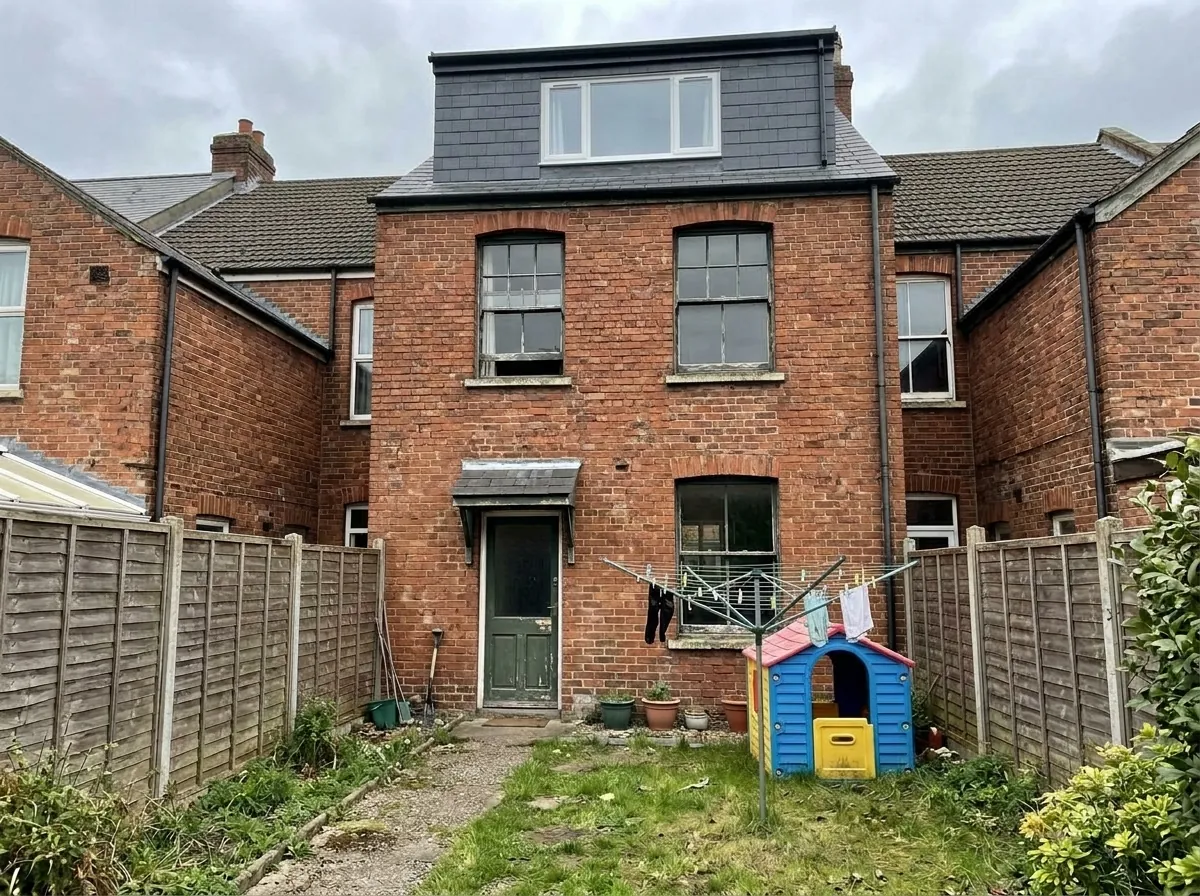
A flat-roof box on the back slope of the roof. This is the standard UK dormer. It sits at the rear so it does not face the street, which keeps it within permitted development on most houses. Build time is typically 8 to 10 weeks. Cost sits in the £35,000 to £60,000 range for a mid-spec finish across most of the UK, with London and the South East running £52,000 to £75,000.
Good for: terraces, semis and detached houses where the existing rear roof has reasonable depth and you want one large room with en-suite.
L-Shaped Dormer
Two dormers joined at right angles, typically over the main rear roof and over a rear outrigger. This is the classic Victorian and Edwardian terrace solution where the property has that distinctive rear back-addition. An L-shape can add 25 to 40 square metres of floor space, enough for two bedrooms and a bathroom, or a master suite with a dressing area and en-suite.
L-shaped dormers usually need planning permission because the side leg of the L often pushes through the 40m3 terraced house volume cap or affects the side elevation. Cost runs £45,000 to £65,000 nationally, £55,000 to £75,000 in London. Build time is 10 to 12 weeks.
Full-Width Dormer
A dormer that runs the entire width of the rear roof slope, from party wall to party wall. This gives you the maximum floor area from a single dormer. It looks visually heavier than a rear box dormer and is more likely to attract a planning officer's attention. On terraces, the 40m3 volume cap is the binding constraint. On semis and detached houses, you have more room (50m3) to fit a full-width dormer within permitted development.
Full-width dormers add the most usable space per square foot of roof but the trade-off is the appearance from the rear. Some councils and conservation areas push back hard on full-width designs.
Side Dormer
A dormer on the side slope of the roof. On a semi-detached or end-terrace with a hipped side roof, a side dormer can free up space where there was effectively none. Side dormers are usually combined with a hip-to-gable conversion (which rebuilds the hipped slope as a vertical wall) for maximum space.
Side dormers facing a highway or principal elevation always need planning permission. They are also subject to the obscure-glazing rule on windows facing a side boundary.
Double Dormer
Two separate dormers on the same roof slope. This is used where you want to create two distinct rooms with their own light and outlook rather than one big room. Common on wider detached houses. Less common than the other four types because most homeowners prefer the open feel of one larger dormer.
UK Costs in 2026: Real Numbers
Pricing is the question every homeowner wants answered first. Here are realistic 2026 figures for a fitted, mid-spec dormer loft conversion in the UK, including design, structural engineering, building regulations fees and a finished bedroom with en-suite.
By dormer type (UK average, mid-spec)
- Velux only (for comparison): £20,000 to £35,000
- Rear dormer: £35,000 to £60,000
- L-shaped dormer: £45,000 to £65,000
- Hip-to-gable plus rear dormer: £45,000 to £65,000
- Mansard: £55,000 to £85,000 (inner London often £100,000+)
By region (rear dormer baseline)
- London and South East: £52,000 to £75,000 (25 to 40% above UK average)
- Midlands: £40,000 to £55,000 (UK average)
- North West and Yorkshire: £37,000 to £52,000 (around 7% below average)
- North East (Newcastle, Gateshead, Sunderland): £35,000 to £48,000 (around 12% below average)
- Scotland: £38,000 to £53,000
Per square metre
A cleaner way to compare apples to apples is cost per m2 of new floor space.
- Velux: £920 to £1,200 per m2
- Dormer: £1,670 to £2,200 per m2
- Hip-to-gable: £2,000 to £2,400 per m2
- Mansard: £2,170 to £2,800 per m2
Dormers sit in the middle of the cost range and at the top of the value range, which is the main reason they are the default UK choice.
What pushes a quote up
Steel sizes (some properties need a steel ring beam), party wall surveyors on terraces, complex en-suite plumbing routes, high-end bathroom and joinery specifications, hard access for materials and skips, and any structural surprises in the existing roof. A written quote after a home visit is the only way to know your real number before you commit.
Planning Permission: When You Need It (And When You Do Not)
Most rear dormers on houses in England do not need planning permission. They fall under permitted development rights set out in Schedule 2, Part 1, Class B of the Town and Country Planning (General Permitted Development) Order 2015.
The permitted development limits for dormers
- 40 cubic metres of additional roof volume for terraced houses
- 50 cubic metres of additional roof volume for semi-detached and detached houses
- The dormer must not exceed the highest point of the existing roof ridge
- No extension beyond the plane of the existing roof on the principal elevation (the side facing the highway)
- Materials must be similar in appearance to the existing house
- The eaves of the original roof must be maintained, with any enlargement set back at least 20cm from the original eaves
- No verandas, balconies or raised platforms
- Side-facing windows must be obscure-glazed if they face a side boundary
A typical rear dormer on a three-bed semi might use 35 to 45m3 of the 50m3 allowance. Run the numbers before assuming you have headroom for an L-shape or a hip-to-gable on top.
When you always need planning permission
- Flats and maisonettes (permitted development does not apply at all)
- Houses in conservation areas, National Parks, Areas of Outstanding Natural Beauty or World Heritage Sites
- Properties subject to an Article 4 Direction (the local council has withdrawn permitted development rights)
- Listed buildings (you also need listed building consent)
- Front-facing or principal-elevation dormers
- Anything that exceeds the 40m3 or 50m3 volume cap
- Most L-shaped, mansard and full-width dormers
- Dormers with Juliet balconies
Building Regulations always apply
Even if your dormer is permitted development, Building Regulations approval is mandatory. Structural calculations, fire safety, escape routes, insulation, sound, the staircase to the new floor and the new windows all need sign-off from Building Control. Typical Building Regs fees run £500 to £900. Allow 4 to 8 weeks from drawings to approval.
Lawful Development Certificate
Even when you do not need planning permission, it is worth applying for a Lawful Development Certificate (LDC) from your council. Cost is around £103 (half a full planning fee). It gives you a formal document confirming the works were lawful, which buyers and solicitors will ask for when you sell.
Build Timeline: What Eight to Twelve Weeks Actually Looks Like
A standard rear dormer takes 8 to 12 weeks on site once work starts. L-shaped and hip-to-gable jobs typically run 10 to 14 weeks. Add 4 to 8 weeks for Building Regs drawings beforehand, plus 8 to 10 weeks if you need a full planning application.
A realistic week-by-week
- Weeks 1 to 2: Scaffold up. Roof opened, structural steels installed, dormer framing built and weatherproofed. Skip lands. Party Wall notices already served (for terraces and semis, 2 months ahead).
- Weeks 3 to 4: Roof tiling or membrane finish, windows fitted, external work complete. Property is watertight.
- Weeks 5 to 6: First fix electrics and plumbing, insulation, stud walls for any en-suite.
- Weeks 7 to 8: Plasterboard, plastering, staircase installation.
- Weeks 9 to 10: Second fix electrics, second fix plumbing, en-suite tiling, doors and skirtings.
- Weeks 11 to 12: Decoration, flooring, snagging, Building Control final inspection.
Most of the messy work happens in the first three weeks while the roof is open. After that, the disruption inside the house is limited to the new staircase opening, which usually drops into a landing on the floor below.
Disruption you should plan for
Expect noise during structural and roof work. A skip will sit outside the property for at least four weeks. You lose the loft space for storage from day one. There will be dust in the immediate area around the new staircase opening. Most families stay in the house throughout the build.
When a Dormer Is the Right Call (And When It Is Not)
Dormers are the default UK choice for good reason, but they are not always the best fit.
A dormer makes sense when
- You have a pitched roof with reasonable depth (typically 2.4m+ ridge height inside the loft)
- The rear of the property is not facing a highway
- You want a usable room with full standing height, not just a bedroom under sloping ceilings
- You need 15 to 30 square metres of additional space
- Your house qualifies for permitted development (which most houses outside conservation areas do)
- Budget sits in the £35,000 to £65,000 range
Consider a Velux instead when
- Your existing loft already has good headroom (rare but it happens)
- You are in a conservation area where dormers will not get consent but rooflights might
- Budget is closer to £20,000 to £30,000
- You only need a single bedroom or study without an en-suite
Consider a hip-to-gable plus dormer when
- You have a hipped roof (slopes on three or four sides) and the side slope is wasting space
- You want maximum floor area on a semi-detached or detached property
- Budget allows £45,000 to £65,000
Consider a mansard when
- You are in central London or a conservation area where mansards are the locally consented style
- You need maximum floor space across the entire roof footprint
- Budget is £55,000 to £85,000+
ROI: what a dormer adds to your home value
A dormer loft conversion typically adds 15 to 25% to your property value. On a £350,000 home, that is £52,500 to £87,500 in uplift from a £45,000 to £55,000 spend. That is one of the strongest returns in the UK home improvement market, which is why dormers consistently outperform extensions and kitchens on cost-to-value ratio.
Choosing a Builder: What to Ask Before You Sign
The biggest variable in any dormer project is the builder. The same drawings can produce a finished room you love or a snagging list that haunts you for two years.
Five things to confirm before you sign a contract
- Ask for a written quote itemised by stage rather than a loose estimate, and check there is a written variation process for anything you change once work is under way.
- Ask what warranty comes with the finished work, how long it runs and exactly what it covers, then get it in writing.
- Make sure Building Regulations sign-off is included as a deliverable and the builder handles the chase.
- Confirm Party Wall surveyor coordination for terraces and semis (the builder should help, even though the legal cost sits with you).
- Pin down a realistic start date with the dormer team named, so you know the crew that turns up is the crew you hired.
Red flags
- No VAT-registered company details
- No insurance documents shown on request
- A quote that is 20%+ below three other quotes for the same scope (someone is cutting a corner you will pay for later)
- Vague timelines and no week-by-week programme
At UK Loft Conversion we run a free home visit, send a written quote itemised by stage, and back every job with a 10 year workmanship warranty. We cover Newcastle, Gateshead, North Tyneside and the wider UK.
Before you book
Frequently asked questions
How much does a dormer loft conversion cost in the UK in 2026?
A standard rear dormer loft conversion costs £35,000 to £60,000 across most of the UK for a mid-spec finish with a bedroom and en-suite. London and the South East run £52,000 to £75,000. The North East (Newcastle, Gateshead, Sunderland) is typically £35,000 to £48,000. L-shaped dormers add roughly £10,000 to £15,000 on top of a rear dormer baseline.
Do I need planning permission for a rear dormer?
Usually no, if your property is a house (not a flat), is not in a conservation area or Article 4 zone, and the dormer stays within the volume cap (40 cubic metres for terraces, 50 cubic metres for semi-detached and detached). The dormer also must not face the highway, must not exceed the existing roof ridge, and must be set back at least 20cm from the eaves. Building Regulations approval is always required regardless of planning.
How long does a dormer loft conversion take to build?
8 to 12 weeks on site for a standard rear dormer once work starts. L-shaped and hip-to-gable variants typically run 10 to 14 weeks. Add 4 to 8 weeks beforehand for Building Regulations drawings, plus 8 to 10 weeks if you need a full planning application. The property is usually watertight within the first 3 to 4 weeks.
What is the difference between a rear dormer and an L-shaped dormer?
A rear dormer is a single box on the back slope of the roof. An L-shaped dormer joins two dormers at right angles, typically over the main rear roof and over a rear outrigger (common on Victorian and Edwardian terraces). L-shaped conversions add 25 to 40 square metres of floor space versus 15 to 30 for a rear dormer, but they usually need planning permission and cost £10,000 to £15,000 more.
Can I do a dormer loft conversion on a flat?
Permitted development rights do not apply to flats or maisonettes, so any loft alteration on a flat requires full planning permission and usually leasehold consent. The shared-roof structure and party wall issues also make flat conversions more complex. It is doable but the planning route is longer and the cost typically higher than the equivalent house conversion.
Does a dormer loft conversion add value to my home?
Yes. A dormer loft conversion typically adds 15 to 25% to property value in the UK. On a £350,000 home that is £52,500 to £87,500 of uplift from a £45,000 to £55,000 spend. It is one of the strongest return-on-investment home improvements available, particularly because it adds a bedroom (and often an en-suite) which directly affects valuation.
Do I need a Party Wall agreement for a dormer?
If you live in a terraced or semi-detached house, yes. Any work that affects the party wall (structural steels, new floor joists tying into the party wall, cutting into the party wall) triggers the Party Wall etc. Act 1996. You must serve notice on your neighbours at least 2 months before work starts. Surveyor costs typically run £700 to £1,500 per neighbour and are paid by the property owner doing the work.
What is the difference between a dormer and a mansard?
A dormer is a box that sticks out from one slope of an otherwise unchanged roof. A mansard replaces the entire roof structure with a near-vertical wall on each side, creating a flat-roofed top floor across the whole house. Mansards give you more floor space but cost £55,000 to £85,000+, take 12 to 16 weeks to build, and always need planning permission. Mansards are common in central London terraces where they are the locally consented style.
Is a dormer loft conversion worth it?
For most UK homes, yes. A rear dormer typically costs £35,000 to £60,000 fitted and adds a proper double bedroom, usually with an en-suite, which lifts the value of a 3-bed house by roughly 15 to 20 per cent. On a £300,000 semi that is £45,000 to £60,000 of value against a £45,000 to £50,000 spend, plus you avoid the £35,000 to £60,000 round-trip cost of moving to a bigger house. The maths gets tighter on lower-value properties, so check local sold prices for 3-bed versus 4-bed homes on your street before committing. A free home visit and a written quote tell you both sides of that equation before you spend anything.
Related pages
- Loft Conversion Cost →
- Loft Conversion Planning Permission →
- Loft Conversion Types →
- Mansard Loft Conversion →
- Hip To Gable Loft Conversion →
- Velux Loft Conversion →
- Cities/Newcastle →
- Cities/Newcastle/Dormer →
- Cities/Newcastle/Jesmond →
- Cities/Newcastle/Gosforth →
- Cities/Newcastle/Cost →
- Cities/Newcastle/Planning Permission →
- Cities/London →
- Cities/Manchester →
- Cities/Leeds →
- Bungalow Loft Conversion →
- Types Of Dormer →
Ready for a written quote?
Free home survey, a written quote itemised by stage, and a 10 year workmanship warranty.