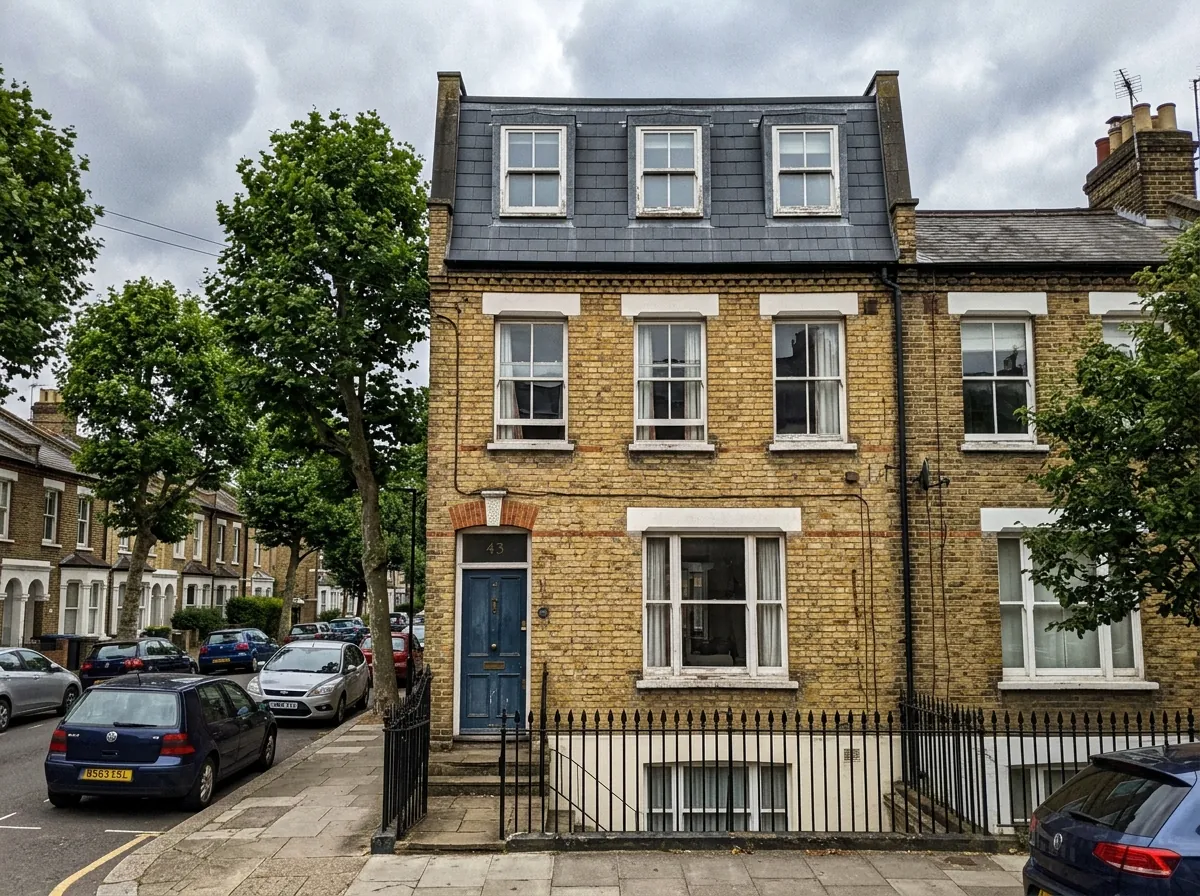
What a mansard loft conversion actually is
The mansard takes its name from 17th-century French architect Francois Mansart, and the shape has been used on London townhouses for more than two centuries. The defining feature is the roof angle. The new walls rise at roughly 70 to 72 degrees from the existing party walls, almost vertical but tilted just enough to read as a roof shape. The very top of the structure is flat or near-flat, which is what creates so much full-height headroom inside.
In practice your builder strips the original roof back to the joists, raises the party walls in matching brick, then frames the new mansard structure on top. The rear wall normally takes traditional timber sash windows or a dormer cheek. The front pitch, where visible from the street, almost always gets slate or zinc to match the existing terrace. Inside you end up with near-vertical walls on both sides of the room, which means usable floor space goes right out to the edges instead of dying off under a sloping ceiling.
For a standard London Victorian terrace, a mansard typically adds 30 to 45 square metres of full-height living space. That is enough for two double bedrooms and an en-suite, or a generous master suite with dressing room and bathroom, depending on the footprint of the house below.
Mansard cost in the UK in 2026
A mansard loft conversion in the UK costs between £55,000 and £85,000 inc VAT for a mid-spec build outside London. Inner London schemes regularly come in at £100,000 and up, and a heritage-grade mansard in zones 1 and 2 can land between £110,000 and £140,000 once professional fees, party wall costs, and high-end finishes are included. On a per square metre basis, a UK mansard works out at £2,170 to £2,800.
A realistic breakdown for a London mansard on a 4-bed Victorian terrace:
- Full roof strip and rebuild: £35,000 to £55,000
- Slate or zinc finish to match the terrace: £8,000 to £15,000
- Sash windows or dormer cheeks: £6,000 to £12,000
- Two new bathrooms: £14,000 to £22,000
- New staircase and reworked first-floor landing: £9,000 to £14,000
- Planning, party wall, structural fees: £6,000 to £11,000
The mansard is the most expensive loft type for several reasons. The roof comes off completely, which is closer to an extension than an alteration. The party walls have to be raised in matching brick. The planning, heritage, and party wall process around it is heavier than for a dormer or hip-to-gable. A rear dormer on the same house might cost £45,000 to £60,000 and finish in 10 weeks, where a mansard on the same house runs 12 to 16 weeks and roughly double the structural work.
What you get for that extra spend is a flat-ceilinged room with vertical walls, larger floor area, and a roof that reads as part of the original architecture instead of an obvious addition.
Planning permission: a mansard always needs it
Permitted development rights under Class B let you add up to 40 cubic metres on a terraced house, or 50 cubic metres on a semi-detached or detached house, without a planning application. A mansard exceeds both caps and rebuilds the highest part of the roof, which knocks the scheme out of permitted development on every property type in the UK.
That means a full householder planning application every time. The householder application fee in England rose from £258 to £528 in April 2025, and that figure will rise with CPI inflation annually from April 2026. Determination typically takes 8 to 13 weeks once the council validates the application. You should budget another £1,500 to £3,500 for architect or planning drawings, plus £500 to £1,200 for a heritage statement if you sit in a conservation area, and £800 to £2,000 for a planning consultant on anything complex.
Approval rates vary significantly from street to street. The single best predictor of whether your mansard will get consent is whether other mansards on the same terrace have been approved in the last 24 months. If your neighbours either side already have consented mansards, your odds are excellent. If yours would be the first on the street, expect a much harder ride from the case officer, especially in inner London.
Before you commit, run a planning portal search for your street and the two streets either side, filtered to the last two years. Look for applications using the words mansard, roof extension, and additional storey. Note both approvals and refusals, and read the case officer's report on any refusal. That report tells you exactly what the local planning policy will and will not accept.
Conservation areas and the mansard advantage
London has more than 1,000 conservation areas across its 33 boroughs. If your property sits inside one, your permitted development rights for roof alterations are restricted or removed entirely, and the design will be looked at carefully by an officer focused on preserving the character of the street. Many inner London boroughs, including Camden, Islington, Hackney, Kensington and Chelsea, and Westminster, have also issued Article 4 directions that strip out specific permitted development rights in particular zones.
The counterintuitive bit is that inside a conservation area a well-detailed mansard is often the loft option planning officers are most likely to accept. A flat-roofed box dormer at the rear can be refused for breaking the rhythm of a Victorian roofscape. A mansard, finished in natural slate with traditional sash windows and proper lead detailing, can read as a sympathetic addition because the form already belongs to the period the area is trying to protect.
This is why Camden, Islington, Southwark, and Lambeth see so many mansards on streets where almost nothing else gets consent. The brief becomes design-led, with proportions and materials carrying as much weight as the floor area you are trying to add. Get the proportions wrong, use the wrong slate, or skimp on the lead flashings and the application will be refused on heritage grounds. A properly designed scheme gives you a roof the council actively wants on the street.
If you are in a conservation area or under an Article 4 direction, pre-application advice from your borough is worth the £50 to £250 fee. The case officer's pre-app response gives you written guidance on materials, proportions, and any street precedent that will shape the formal application.
Mansard or dormer: how to choose
Most UK loft conversions are rear dormers. The mansard is the right call in specific situations and overkill in others.
A mansard is the better answer when:
- You own a Victorian or Edwardian terrace in inner London where other mansards already exist on the street
- You sit in a conservation area where flat-roofed dormers are likely to be refused
- You want two bedrooms plus an en-suite rather than a single bedroom
- The property is at a price point where the extra £30,000 to £50,000 of build cost is recovered by the larger floor area at resale
- You plan to stay long enough to enjoy the extra room, or you are renovating to a high specification for the area
A rear dormer is the better answer when:
- Your house is outside London, or in a London suburb without conservation area protection
- Your street has no mansard precedent in the last two years
- You want one good-sized bedroom and a bathroom
- Permitted development under Class B is available to you, so you can avoid a planning application entirely
- Your budget tops out around £55,000 to £65,000
There is also a middle option for some properties. An L-shaped dormer on a Victorian rear projection can deliver close to mansard floor area at dormer cost, provided permitted development applies. This works on a lot of Victorian terraces in Manchester, Leeds, and the outer London boroughs.
Build duration also matters when you are choosing. A rear dormer is 8 to 12 weeks on site. A hip-to-gable runs 10 to 14 weeks. A mansard sits at 12 to 16 weeks of construction, plus the 8 to 13 weeks of planning determination before any of that starts. The total programme from instructing an architect to handover is typically 6 to 9 months.
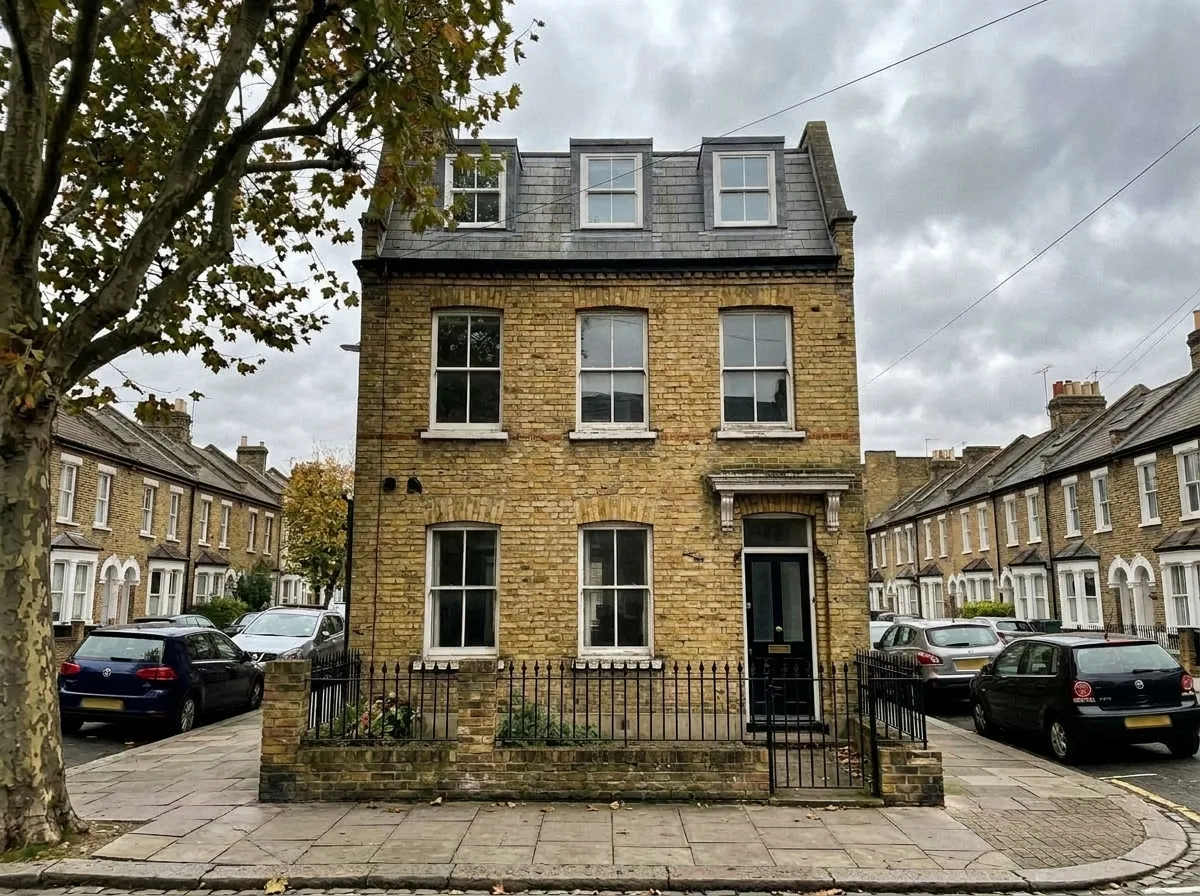
The mansard build week by week
On a London Victorian terrace, the typical mansard programme looks like this:
- Weeks 1 to 2: Scaffold, full external wrap, strip roof coverings, expose existing rafters and joists
- Weeks 3 to 4: Remove old roof structure, raise party walls in matching brick, install new steel beams
- Weeks 5 to 6: Frame the new mansard structure, fit roof rafters, lay first-fix on the flat top
- Weeks 7 to 8: External slating or zinc, lead flashings, sash window installation
- Weeks 9 to 10: New staircase installation, internal partitions, first-fix plumbing and electrics
- Weeks 11 to 12: Plasterboard, second-fix electrics, bathroom installation, plastering
- Weeks 13 to 14: Second-fix carpentry, tiling, decoration
- Weeks 15 to 16: Snagging, building control sign-off, scaffold strike, handover
A party wall agreement with both neighbours is essential for a terraced mansard, and you should serve notices at least two months before work starts. Building Regulations approval is required regardless of planning, and the typical fee is £500 to £900. Expect a building control officer to visit at the structural opening-up, mid-build, and pre-completion stages.
Return on investment: what a mansard adds to your home
A loft conversion in the UK typically adds 15 to 25 percent to a property's market value. A mansard usually sits at the upper end of that range because it adds more floor area than any other loft type and converts a 3-bedroom house into a genuine 4 or 5-bedroom home.
On a £750,000 inner London terrace, a £110,000 mansard converting the third floor into a master suite plus second bedroom can lift the asking price by £150,000 to £200,000 in a stable market. The same maths runs across the UK at proportionate values. A £450,000 period townhouse in a Northern English conservation area might see a £70,000 to £90,000 uplift from a £55,000 to £65,000 mansard.
What the mansard buys you that other lofts do not is full-height usable floor area and the perception of a proper additional storey rather than a converted loft. That perception matters at resale, particularly to family buyers who reject sloped-ceiling rooms as children's bedrooms but accept a vertically walled mansard as an equivalent first-floor bedroom.
What UK Loft Conversion offers
We quote and project-manage mansard loft conversions across the UK, with most of our work in Newcastle and steady availability in London, Manchester, Birmingham, and Leeds. Every quote we send includes:
- Free home survey, with a structural feasibility check and a planning precedent search on your street
- Written quote after the survey, itemised by stage so you can see exactly what is included
- 10 year workmanship warranty on all conversion work
- Full planning application handling for the £548 householder fee plus our drawings
- Party wall surveyor coordination for terraces and semis
- Building Regulations applications and sign-off
- Conservation area and Article 4 guidance where it applies
A mansard is the most demanding loft conversion to design and build. We will tell you honestly when a rear dormer or L-shaped dormer would give you a better return on your budget. If the mansard is the right call for your house and your street, we will build it to a standard that respects the original architecture and survives the planning process the first time.
Before you book
Frequently asked questions
How much does a mansard loft conversion cost in the UK in 2026?
Between £55,000 and £85,000 inc VAT for a mid-spec build outside London, and £100,000 to £140,000 for an inner London scheme on a Victorian or Edwardian terrace. The per square metre figure works out at £2,170 to £2,800. The headline cost depends on the size of your existing roof footprint, the finishing materials specified by the planning officer, and whether two bathrooms or one are included in the brief.
Does a mansard always need planning permission?
Yes. A mansard exceeds the 40 cubic metre permitted development cap on a terraced house and the 50 cubic metre cap on a semi-detached or detached house, and it rebuilds the highest part of the roof. Both factors put it outside Class B permitted development on every property type. The current householder application fee in England is £548, and the council has 8 to 13 weeks to issue a decision once your application is validated.
How long does a mansard loft conversion take to build?
Construction takes 12 to 16 weeks on site for a standard London Victorian terrace. Add 8 to 13 weeks of planning determination before that starts, plus 4 to 6 weeks for architect drawings and the application to be prepared and submitted. Total programme from your first design meeting to handover is typically 6 to 9 months.
What is the difference between a mansard and a dormer loft conversion?
A dormer adds a box-shaped projection to the rear roof slope, keeping most of the original roof in place. A mansard rebuilds the entire roof at a near-vertical 70 degree pitch with a flat top, raising the party walls in matching brick. The mansard delivers significantly more full-height floor area, costs roughly twice as much, takes around 4 weeks longer to build, and always needs planning permission. A rear dormer often qualifies for permitted development on standard houses outside conservation areas.
Can I get a mansard in a conservation area?
Often yes, and in many cases the mansard is the loft option a conservation area officer is most likely to approve. A well-designed mansard finished in natural slate with sash windows can sit better in a Victorian or Edwardian streetscape than a flat-roofed dormer. The decisive factor is precedent on your specific street. If neighbours already have consented mansards within the last two years, approval is realistic. If yours would be the first, expect closer scrutiny and budget for a heritage statement and pre-application advice.
How much value does a mansard add to a UK home?
Loft conversions typically lift UK property values by 15 to 25 percent, and a mansard usually sits at the upper end of that range because it adds the most full-height floor area of any loft type. On a £750,000 London terrace, a £110,000 mansard often returns £150,000 to £200,000 of value uplift in a stable market. The premium comes from buyers treating mansard rooms as proper bedrooms rather than converted loft space.
Do I need a party wall agreement for a mansard?
Almost always, if you live in a terrace or semi-detached house. Raising party walls in brick triggers the Party Wall Act, and you must serve notices on adjoining owners at least two months before work begins. A party wall surveyor coordinates the agreement, and typical fees run £1,000 to £3,000 per neighbour. We handle the surveyor appointments as part of our project management.
Is a mansard the right loft type for my house?
A mansard works best on Victorian or Edwardian terraces in inner London where other mansards already exist on the street, in conservation areas where flat-roofed dormers face refusal, and when your brief needs two bedrooms plus a bathroom rather than one. For a standard suburban semi or any house with permitted development still available and no street precedent for mansards, a rear dormer or L-shaped dormer almost always gives a better return on budget.
Related pages
- Loft Conversion Cost →
- Loft Conversion Planning Permission →
- Loft Conversion Types →
- Dormer Loft Conversion →
- Hip To Gable Loft Conversion →
- Velux Loft Conversion →
- Cities/London →
- Cities/Newcastle →
- Cities/Newcastle/Mansard →
- Cities/Newcastle/Cost →
- Cities/Newcastle/Planning Permission →
- Cities/Manchester →
- Cities/Leeds →
- Cities/Birmingham →
Ready for a written quote?
Free home survey, a written quote itemised by stage, and a 10 year workmanship warranty.