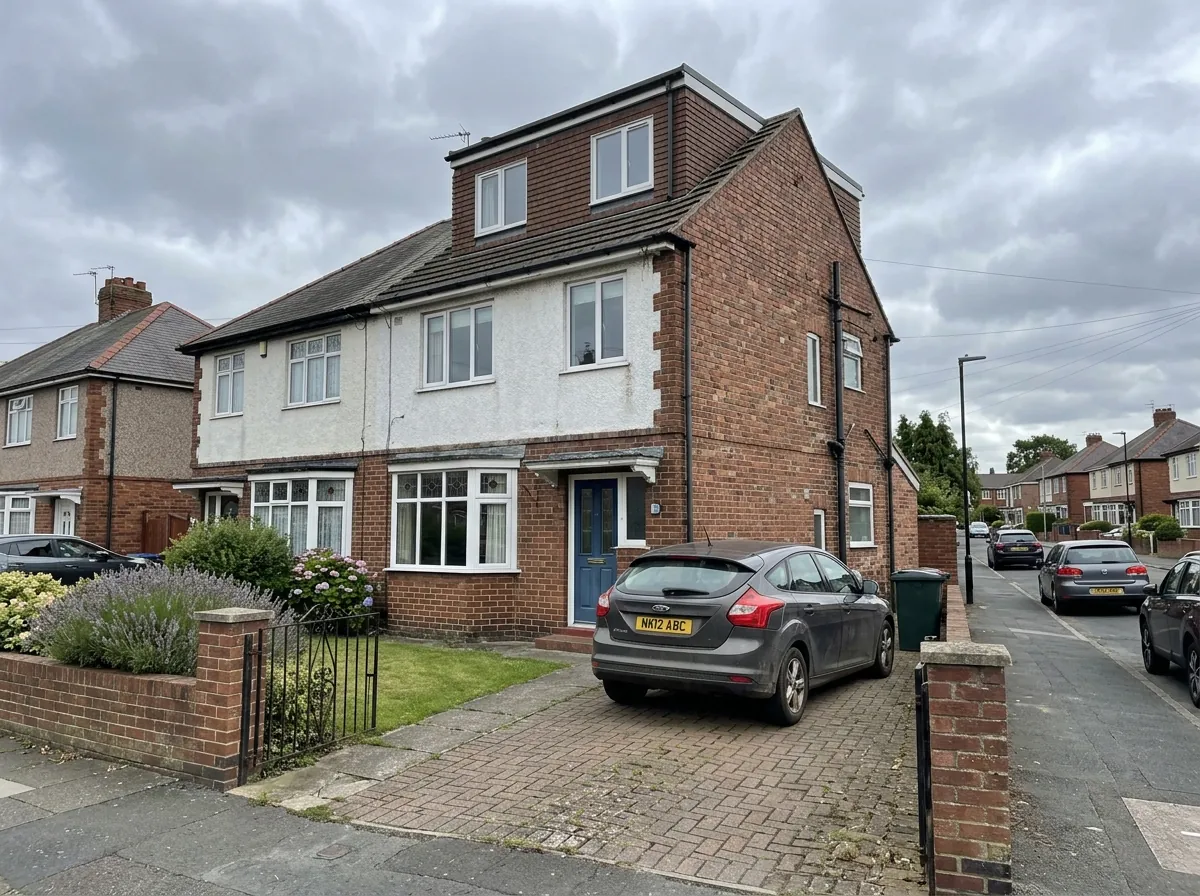
What a hip to gable loft conversion actually is
On a hipped roof, the side of the roof slopes inward toward the ridge instead of rising as a flat triangular wall. That sloping hip eats into the usable loft space below it. A hip to gable conversion removes that slope, builds a new vertical gable wall from the first floor up to the ridge line, and infills the roof so it sits over a much larger floor plate.
The outcome is more headroom across more of the floor, a useful side wall you can put a window or staircase against, and enough room to fit a proper bedroom with an en-suite where previously there was only a low-ceiling cupboard space.
It is most often combined with a rear dormer on the back of the roof. The hip to gable adds width across the floor plate while the dormer adds depth, and together they open up the full footprint of the loft. A standalone hip to gable on its own is less common because you are doing serious structural work and only gaining one side of the room.
Where it works
- 1930s and 1940s semi-detached houses with hipped side roofs
- Some interwar detached houses with all four sides hipped
- End-of-terrace properties where the end roof is hipped
- Bungalows with hipped roofs (subject to full roof restructuring)
Where it does not work
- Mid-terrace houses (no exposed side roof to convert)
- Houses with an existing gable end (you already have the vertical wall)
- Properties with shared roofs across both halves of a semi where the neighbour's hip stays put can still proceed, but the planning conversation gets harder. More on that below.
Hip to gable cost in 2026
Realistic UK pricing for a hip to gable conversion in 2026, mid-spec, fully fitted with bedroom, en-suite, staircase, and finishes:
| Option | UK average | Notes |
|---|---|---|
| Hip to gable alone | £45,000 to £65,000 | Smaller gain, single structural element |
| Hip to gable plus rear dormer | £55,000 to £75,000 | The common spec, biggest floor gain |
| Per square metre | £2,000 to £2,400 | Higher than a plain rear dormer due to gable rebuild |
Regional variation
London and the South East run 25 to 40 percent above UK average. A hip to gable with rear dormer in inner London commonly sits at £75,000 to £95,000, and tight access or party-wall complications push it higher.
The Midlands tracks the UK average. North West and Yorkshire come in around 7 percent under. The North East, including Newcastle, Gateshead and Sunderland, sits roughly 12 percent below UK average, so a hip to gable plus dormer in Gosforth or Whitley Bay typically lands in the £48,000 to £66,000 bracket. Scotland runs about 5 percent under UK average.
What sits inside the price
- Structural design and engineer's calculations
- New gable wall build (brick, block and render, or matching cladding)
- Roof restructuring at the hip end
- New floor joists sized for habitable load
- Staircase, often over the existing stair void
- Insulation to current building regs (typically PIR boards plus mineral wool)
- Plasterboard, skim, decoration
- En-suite with shower, basin, WC and tiling
- Two or three Velux rooflights or dormer windows
- Electrics, heating, fire alarms
- Building control fees and structural sign-off
What usually sits outside the headline price: custom joinery, premium tiles, walk-in showers, juliet balconies, and anything that needs scaffolding to stay up longer than the standard build window.
Build timeline: 10 to 14 weeks
A hip to gable is one of the slower loft conversion types because you are doing structural masonry on top of a finished house. Plain Velux conversions finish in 4 to 6 weeks. Rear dormers run 8 to 12 weeks. Hip to gable, with or without a dormer, typically runs 10 to 14 weeks on site.
Rough phase breakdown
- Week 1: Scaffold up, strip the hip end roof tiles
- Weeks 2 to 4: Build the new gable wall in brick or block, install steels, restructure the hip roof framing
- Weeks 5 to 6: Dormer construction if combined, weathering in, roof tiling, windows in
- Weeks 7 to 9: First fix carpentry, plumbing, electrics, insulation
- Weeks 10 to 11: Plasterboard, skim, second fix
- Weeks 12 to 14: En-suite tiling, decoration, staircase fit, snagging, building control sign-off
If planning permission is needed, add 8 to 10 weeks before any of this starts. If party wall agreements are required, that runs in parallel but needs to be served before structural work begins.
Planning permission: where most semi-detached owners get caught out
This is the section most homeowners skim and later regret. The rules around hip to gable conversions are genuinely different from rear dormers, and the difference matters most on semi-detached houses, which is the bulk of properties suitable for this conversion type in the first place.
The headline rules under permitted development
Under Schedule 2, Part 1, Class B of the Town and Country Planning (General Permitted Development) Order 2015, hip to gable conversions can fall within permitted development if:
- New volume is within 40m³ for terraces or 50m³ for semi-detached and detached houses
- The conversion does not extend forward of the principal elevation
- The new roof ridge does not exceed the existing ridge height
- Materials are similar in appearance to the existing house
- Side-facing windows are obscure-glazed and non-opening below 1.7m
- The property is not on designated land (conservation area, AONB, national park, world heritage site)
The semi-detached catch
On a semi-detached house where only your half of the hip becomes a gable, the visual asymmetry with your neighbour's still-hipped half is treated as a material planning consideration. In practice, most planning authorities will not confirm permitted development status for this and require a full householder planning application, even when the volume technically qualifies.
Detached houses and end-of-terrace properties are simpler. The hip is wholly yours, there is no asymmetry to argue about, and permitted development is the usual route if you stay within the limits.
Always required regardless
- Building Regulations approval and inspections (typical fees £500 to £900)
- Structural engineer's calculations and sign-off
- Party Wall agreements for any work affecting a shared wall (common on semis and terraces)
When planning is always required
- Conservation areas, AONBs, national parks
- Article 4 areas where PD rights have been withdrawn
- Listed buildings
- Flats and maisonettes (PD does not apply at all)
- Any volume increase above the PD limits
- Any rise in ridge height above the existing roof
A Lawful Development Certificate is worth the £100ish fee even when you are confident you fall inside PD. It locks in the legal status before you start and protects you on resale.
More detail on permissions across all loft types sits on the loft conversion planning permission hub.
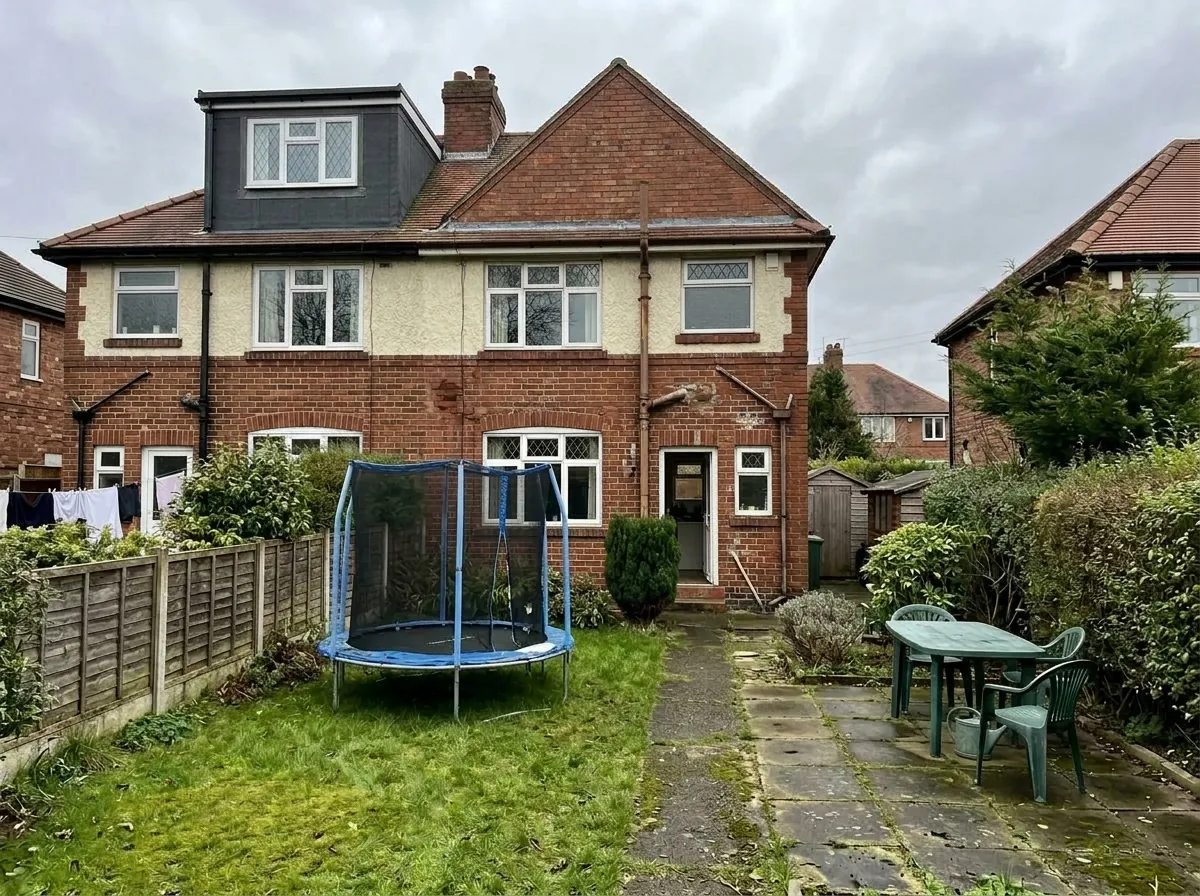
Hip to gable in Newcastle, Gosforth and the North East
Newcastle and the wider Tyne and Wear area is our deepest coverage zone, and the housing stock there is well suited to hip to gable conversions.
Gosforth NE3
1930s semi-detached houses with hipped side roofs are the dominant style across much of Gosforth. These are textbook hip to gable candidates. The typical project is hip to gable plus rear dormer, taking the loft from a low-headroom void to a primary bedroom with en-suite. Most projects fall within Newcastle City Council's permitted development interpretation if the semi-detached asymmetry case is argued well, though many owners opt for a planning application to remove doubt before committing the build budget.
Whitley Bay NE25 and NE26
Under North Tyneside Council. A mix of 1930s semis, bungalows and seaside terraces. Hipped roofs are common on the semis and a few of the detached properties. Costs run slightly under Newcastle proper.
Tynemouth NE30
Under North Tyneside Council. Victorian and Edwardian housing stock dominates, which is less hip to gable territory and more rear dormer or mansard. Some conservation area coverage near the Priory and Front Street, which removes PD rights entirely.
Jesmond NE2 and Heaton NE6
Mostly Victorian and Edwardian terraces with gable ends already in place. Hip to gable does not apply to these in the usual sense. Owners here typically go for a rear dormer or, in conservation areas, a Velux-only conversion.
The three Newcastle councils
- Newcastle City Council covers NE1 to NE7 and NE15
- North Tyneside Council covers NE25 to NE30
- Gateshead Council covers NE8 to NE11
Each has its own planning portal and policies. The semi-detached asymmetry interpretation varies slightly between them, which is worth knowing before submission. Full local detail on the Newcastle loft conversion hub and the Newcastle planning permission page.
Hip to gable vs the alternatives
Quick comparison if you are still deciding which conversion type fits your home and budget:
| Type | Cost range | Build time | Best for |
|---|---|---|---|
| Velux rooflight | £20,000 to £35,000 | 4 to 6 weeks | Tall lofts with good existing headroom |
| Rear dormer | £35,000 to £60,000 | 8 to 12 weeks | Terraces and semis with adequate ridge height |
| Hip to gable | £45,000 to £65,000 | 10 to 14 weeks | Hipped-roof semis and detached |
| Hip to gable plus rear dormer | £55,000 to £75,000 | 10 to 14 weeks | The big-room spec for 1930s semis |
| L-shaped dormer | £45,000 to £65,000 | 10 to 14 weeks | Victorian terraces with rear addition |
| Mansard | £55,000 to £85,000 | 12 to 16 weeks | London terraces, max floor area |
For the full breakdown of options, the loft conversion types page sets them side by side with example floor plans.
The rule of thumb on a hipped-roof semi: if your only goal is a single bedroom, a rear dormer alone usually does the job for less money. If you want a primary suite with en-suite and walk-in wardrobe, the hip to gable plus rear dormer combination is the right spec.
Return on investment
A loft conversion typically adds 15 to 25 percent to UK home value. On a £350,000 home, that is £52,000 to £87,000 of value uplift from a £45,000 to £55,000 spend. Hip to gable plus rear dormer on a Gosforth semi often clears the spend on paper before the family has even moved a wardrobe upstairs. Numbers vary by area and by what the upstairs configuration looks like once finished. The loft conversion cost hub goes deeper on the regional and per-type maths.
How we work
UK Loft Conversion is a UK-wide loft conversion specialist. Our deepest coverage is Newcastle and the North East, and we also build across London, Manchester, Birmingham and Leeds.
What you get
- Free home survey, no pressure to commit
- Written quote itemised by stage so you can see exactly what is included
- 10 year workmanship warranty on completed work
- Single point of contact through design, build and sign-off
- All structural calcs, building control and party wall paperwork handled in-house
We are new as a brand, so we will not pretend to have a 20-year track record behind us. What we offer is a written quote itemised by stage, one point of contact through design and build, and a 10 year workmanship warranty. The people doing the build work have their own histories on the tools. The brand is what is new.
Ready to find out if your roof is the right shape? Book a free home visit and we will tell you whether hip to gable is your best route, what it is likely to cost, and how long the build will take.
Before you book
Frequently asked questions
Can I have a hip to gable loft conversion on a semi-detached house?
Yes, if your half of the semi has a hipped side roof. The conversion itself is the same as on a detached house. The complication is planning: most councils treat the resulting visual asymmetry with your neighbour's still-hipped half as a material consideration and require a full householder planning application rather than permitted development. Budget 8 to 10 weeks for the planning decision before build starts.
How much does a hip to gable loft conversion cost in 2026?
UK average is £45,000 to £65,000 for a hip to gable alone, and £55,000 to £75,000 for hip to gable plus rear dormer, which is the more common spec. London and the South East run 25 to 40 percent above these figures. The North East runs about 12 percent below, so a Gosforth or Whitley Bay project typically lands at £48,000 to £66,000 for the combined spec.
How long does a hip to gable conversion take to build?
Plan for 10 to 14 weeks on site. If planning permission is needed, add 8 to 10 weeks for the decision before the build window starts. Party wall agreements run in parallel but must be served before structural work begins.
Do I need planning permission for a hip to gable conversion?
On a detached house or end-of-terrace, often no, provided you stay within the 50m³ volume limit (40m³ for end-of-terrace), do not raise the ridge, and use matching materials. On a semi-detached house, planning permission is usually required because of the visual asymmetry with the neighbour's hip. Conservation areas, Article 4 zones, listed buildings and flats always need full planning permission. Building Regulations approval is required in every case.
What is the difference between a hip to gable and a rear dormer?
A rear dormer projects out of the back roof slope to add headroom on the rear half of the loft. A hip to gable replaces a sloping side roof with a vertical gable wall to add width across the whole loft. On hipped-roof semis, the two are typically combined: the hip to gable widens the floor plate, the rear dormer deepens it, and together they open up the full footprint.
Will a hip to gable conversion add value to my home?
Yes. UK loft conversions typically add 15 to 25 percent to home value. On a £350,000 Newcastle home, that is £52,000 to £87,000 of value uplift against a £45,000 to £55,000 build spend. The exact uplift depends on local market conditions, finish quality, and whether the new room functions as a credible additional bedroom with adequate headroom and en-suite.
What if my roof is not hipped, can I still have a similar conversion?
No, hip to gable only applies where there is a hipped slope to convert. If your house already has a vertical gable end, the conversion is unnecessary. In that case, look at a rear dormer or, for Victorian terraces, an L-shaped dormer to gain the floor area instead.
Do I need party wall agreements for a hip to gable on a semi?
Almost always yes. Party wall agreements are required for any work that affects or is close to a shared wall, and the structural work on a hip to gable typically triggers this. Your neighbour does not have a right to refuse, but they must be served notice and given the chance to appoint a surveyor. Allow two months from notice to consent in the project schedule.
Related pages
Ready for a written quote?
Free home survey, a written quote itemised by stage, and a 10 year workmanship warranty.