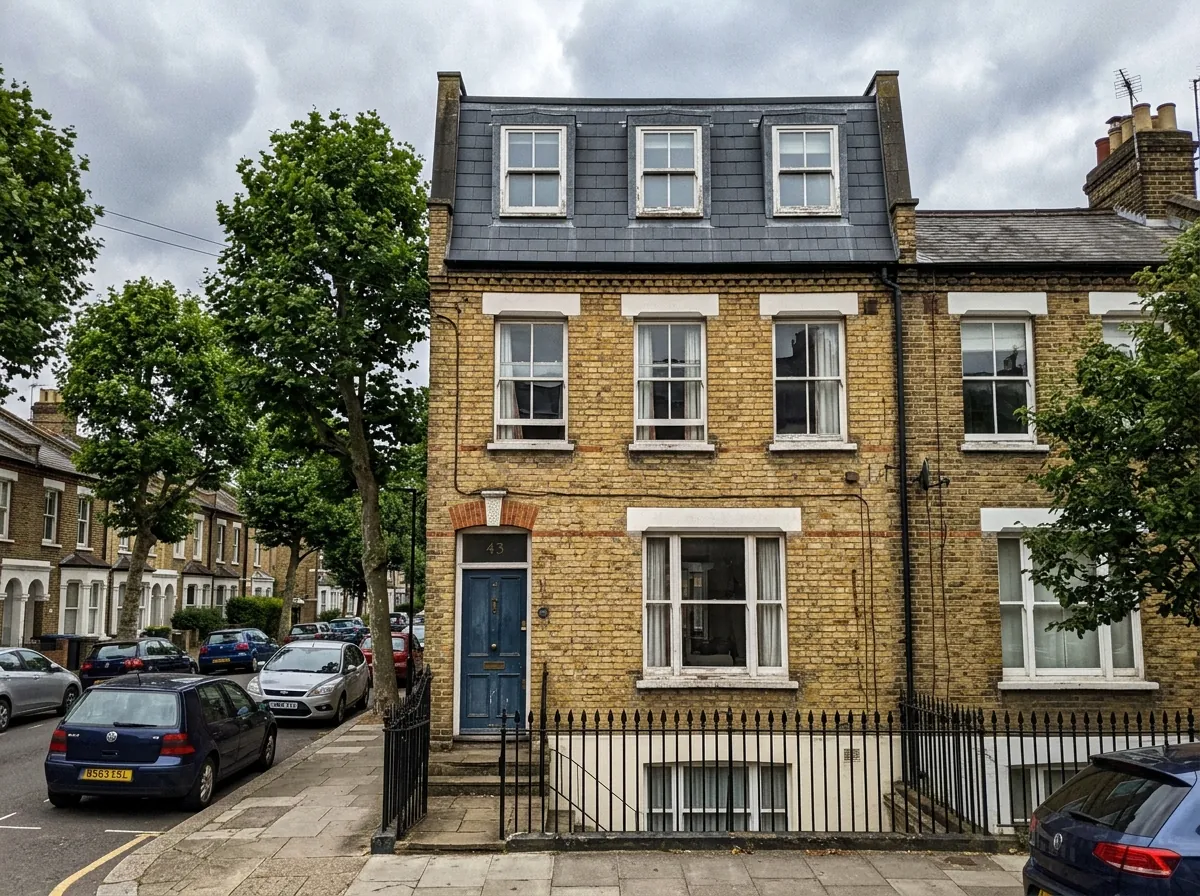
What a mansard actually involves
The existing rear roof structure is removed entirely. Both party walls are extended upward in brick to the new height. Steel beams carry the new floor and roof loads. A new flat or near-flat roof is built across the top, and the steep rear face is framed and clad, traditionally in slate on a Tyneside period property. Rooflights or small dormers are set into the new face.
On a substantial Victorian or Edwardian house here that geometry recovers roughly 25 to 35 square metres of usable floor, enough for a master suite with en-suite and a walk-in wardrobe or two bedrooms with a shared shower room. Unlike a dormer, the head height holds across nearly the whole footprint.
The trade-offs are real. A mansard is roughly twice the work of a rear dormer, almost always needs full planning permission, takes 12 to 16 weeks on site, and needs a contractor who has handled raised party walls, steels, slate work and a period-property planning application before.
What you get is the only loft type that suits a tall period roofline. On the right house it looks like the third storey the architect would have built if the budget had run to it.
The Westoe case: where mansards make sense in South Shields
The Westoe conservation area is the strongest mansard territory in the borough, and it needs handling with care.
Westoe was a village a mile south of South Shields, absorbed as the town expanded through the late 19th century. The conservation area was designated in 1971 and extended in 1975 and 1981. Its core is a run of 18th and 19th century houses in a green, tree-filled setting, built for the shipowners, colliery owners and industrialists who ran the town. The dominant type is large two-storey houses with pitched roofs along Westoe Village, Wood Terrace and Sunderland Road, and the historic environment record notes that most already carry an attic level, with some having semi-basements. Larger detached houses went up along Dean Road, Sunderland Road and what is now Westoe Drive. The architectural range is unusually wide: early Georgian houses, Gothick and Baroque mansions with towers, Queen Anne Revival, and Arts and Crafts houses with mock-Tudor framing, catslide roofs and Dutch gables.
The reading is twofold. On a house that already has an attic storey, ask first whether a rooflight conversion at a third of the price brings the existing space up to standard. On the substantial Victorian houses of Dean Road and Sunderland Road with no attic storey, a mansard is architecturally right in a way a flat-roofed dormer never will be, and those are the addresses worth the planning work. Note that 15 and 17 Dean Road appear individually on the council's Article 4 list, as do 34, 38, 56 and 58 Horsley Hill Road.
Whitburn, the Boldons and the seafront
Outside Westoe, three further pockets carry the kind of property a mansard suits.
Whitburn. The conservation area was designated in 1973 around a deep village green, holding mainly 18th and 19th century buildings. When Whitburn Colliery was sunk in the late 1870s the population went from around 800 people in 115 homes to 3,738 by 1891, and industrialists built large detached villas at The Bank on the north side of Front Street and along Church Lane, with more modest terraces at North Guards. Those villas are genuine mansard candidates on the rear elevation, and a long list of Front Street and North Guards addresses sits on the Article 4 list.
East and West Boldon. East Boldon's conservation area, designated in 1975 and extended in 1993 to take in Station Road, is a compact linear village where most buildings are one or two storeys. The later Victorian and Edwardian terraces there are described in the council's own evidence base as grander and more imposing than the earlier village buildings, and it is those, along the Station Road spine, where a mansard is plausible. West Boldon is smaller and built around the medieval village and St Nicholas Church, with early buildings in local magnesian limestone rubble.
The South Shields seafront. The roads behind the Marine Parks, Lawe Road, Seafield Terrace, Sea View Terrace and Bents Park Road, carry terraces and marine villas facing the North Sea. On the taller Victorian stock a mansard adds the most floor and puts the new rooms where the view is. Nearly all of it falls inside The Lawe Article 4 area.
Where a mansard is the wrong answer here
This is the section most loft companies leave out, and it saves more money than anything else on the page.
Inter-war and post-war semis. Harton, Horsley Hill, Simonside, Whiteleas, Brockley Whins, the Primrose estate in Jarrow, most of Hebburn and Boldon Colliery. These have hipped roofs and modest proportions. A mansard on a 1930s semi looks like a mistake and costs nearly double the right answer, which is a hip-to-gable at £45,000 to £62,000, usually with a rear dormer.
Standard Victorian two-storey terraces. The Deans, High Shields, Tyne Dock, Jarrow town centre, the Hebburn terraces. These have steep pitched roofs with usable volume at the ridge, and a rear dormer at £35,000 to £48,000 captures most of the available floor area for roughly half the money.
Post-1965 estate housing and the Cleadon Park rebuild. Trussed roofs, shallow pitches, modern proportions. Nothing about a mansard fits and the structural cost is punishing.
Bungalows. Cleadon, Whitburn and East Boldon bungalows with deep roof voids are rooflight territory.
Any flat. Permitted development does not apply, freeholder consent is needed, and structural loads have to be carried through the flat below. Tyneside flats are covered on the South Shields page.
Where a dormer or a hip-to-gable will give you the room you need, that is the conversion to build.
What a mansard costs in South Tyneside in 2026
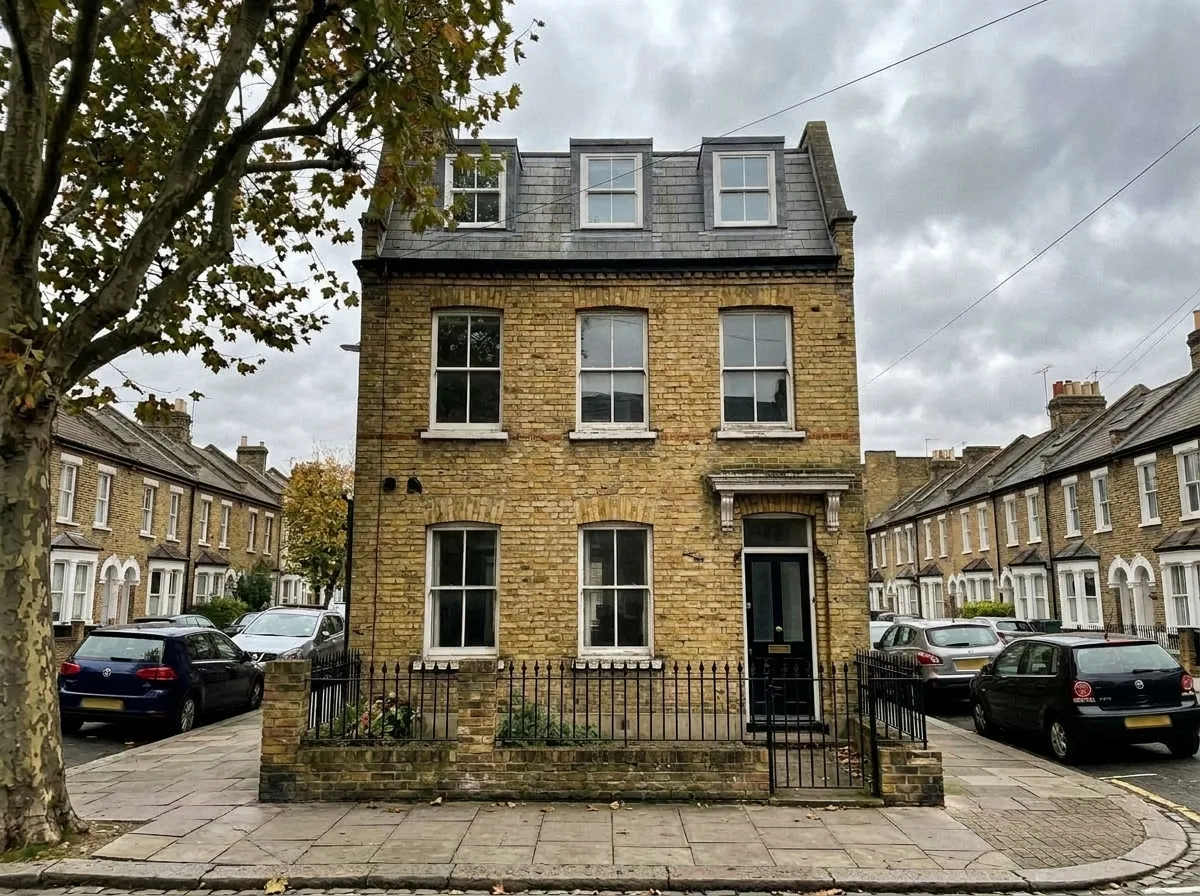
Mansards here land between £55,000 and £80,000 fitted to a good standard, well below inner London where comparable stock passes £100,000, because Tyne and Wear labour runs roughly 12 percent under the UK average. Per square metre that is £2,170 to £2,800, the highest of the four loft types.
What moves the price inside the range:
- Width of the original roof. A two-bay terrace mansard sits at the lower end. A wider Westoe or Whitburn villa pushes higher.
- Specification. Stone tiling, underfloor heating and fitted joinery add £8,000 to £15,000 over a simple shower room and painted walls.
- Stair position. If the new stair rises off the existing landing the work is clean. If the floor below has to be reconfigured, allow £4,000 to £7,000. On period houses with a stair in a bay or a return this is most often underestimated.
- Conservation-grade materials. Natural Welsh slate rather than fibre cement, lead flashings rather than proprietary trims. Inside a conservation area you may not have a choice.
The fixed costs are published. A householder planning application costs £548 from 1 April 2026, and listed building consent carries no application fee. Building control for a loft conversion is £265 including VAT as the plan charge plus £690 including VAT as the inspection charge, £955 in total. Party wall surveyor fees add roughly £900 to £1,500 per neighbour, and a mansard on a terrace means two. Our national cost guide sets these against the rest of the country.
Planning: expect an application, and plan for it properly
Assume from the start that you need full planning permission. The permitted development route closes the moment the roof is raised or the slope extended above the original ridge, and a mansard does both by definition. One authority covers the whole borough, so what matters is which layers of designation sit over your address.
Conservation areas. All 11 matter, because mansards only suit period property and that is where the conservation areas are: Cleadon, Cleadon Hills, East Boldon, Hebburn Hall, Mariners' Cottages, Mill Dam, Monkton, St Paul's, West Boldon, Westoe and Whitburn. The council asks that alterations are sympathetic, retain original character and use traditional materials, and publishes a character appraisal for each.
Article 4 directions. Beyond the borough-wide HMO direction, the council keeps a street-by-street list, and the largest entry is The Lawe in South Shields. Named entries include 15 and 17 Dean Road, 34, 38, 56 and 58 Horsley Hill Road, Front Street in East Boldon, and Front Street, North Guards and Church Lane in Whitburn. Those are precisely the addresses where a mansard is plausible, which is not a coincidence.
Listed buildings. Listed building consent is needed as well as planning permission, and design freedom on a listed roof is narrow.
Pre-application advice. The council runs a paid householder planning enquiry at £50. On a mansard in a conservation area that is the best value item in the budget, because it surfaces the objection before you commission drawings. Worth knowing too: the borough adopted its Local Plan for 2023 to 2040 on 30 July 2026, so officer positions now sit behind an up-to-date development plan.
The build, the money, and how we quote
Weeks 1 to 2 are strip out and scaffold. Weeks 3 to 5 raise the party walls in brick, install steels and lay the new floor. Weeks 6 to 8 frame and clad the steep rear face and make the new roof watertight. Weeks 9 to 12 cover first fix and the new staircase, and weeks 13 to 16 second fix, bathroom, decoration and final inspection. Add 8 to 12 weeks in front for planning and 6 to 8 in parallel for design and building control, so six to eight months from survey to finished room. Party wall notices go out two months ahead and are unambiguously required here, because the work builds on top of the shared wall.
On the money, the absolute number decides it. East Boldon averaged roughly £300,700 over the last year with semis around £294,400, and Cleadon around £264,000. Whitburn behaves similarly, with Green Belt wrapping the edges so extending upward is often the only way to gain space. On a £300,000 house a 15 to 25 percent uplift is £45,000 to £75,000 against a £55,000 to £80,000 build, and four-bedroom scarcity pushes the real figure toward the top. Westoe and the seafront work the same way at the top of the South Shields market, against a town-wide average nearer £168,600. Everywhere else in the borough a mansard will not return its cost.
UK Loft Conversion is a nationwide loft conversion specialist. We are new, so we do not claim a long local track record. What we offer is a free home visit, a written quote itemised by stage so you can see exactly what is included, a planning route assessment against all 11 conservation areas and the Article 4 list, and a 10 year workmanship warranty. Compare the alternatives on the hub.
Before you book
Frequently asked questions
How much does a mansard loft conversion cost in South Tyneside?
Typically £55,000 to £80,000 fitted in 2026, covering structural work, raised party walls, the new floor, slate cladding, rooflights, a staircase, one bathroom and standard finishes. Premium specifications with stone tiling and fitted joinery can push past £90,000. Per square metre that is £2,170 to £2,800, the highest of the four loft types.
Do I need planning permission for a mansard in South Tyneside?
Yes, in practice always. A mansard raises the roof and extends the slope above the original ridge, which falls outside permitted development. A householder application costs £548 from 1 April 2026. Because mansards only suit period property, most candidate addresses also sit in a conservation area, on the Article 4 street list, or both.
Which South Tyneside streets actually suit a mansard?
A short list. The substantial Victorian houses of Dean Road, Sunderland Road and Westoe Drive in the Westoe conservation area. The industrialists' villas at The Bank on Front Street and along Church Lane in Whitburn. The grander later Victorian and Edwardian terraces around Station Road in East Boldon. And the taller terraces and marine villas behind the South Shields Marine Parks on Lawe Road, Seafield Terrace and Beach Road.
Is a mansard worth it on a 1930s semi in Harton or Boldon Colliery?
No. Inter-war and post-war semis have hipped roofs and modest proportions, and a mansard on one looks wrong and costs close to double the right answer. A hip-to-gable at £45,000 to £62,000, usually paired with a rear dormer, gives the master suite for less money and a shorter build. The same applies to Victorian terraces, where a rear dormer at £35,000 to £48,000 captures most of the floor area.
How long does a mansard take to build?
Twelve to sixteen weeks on site. Add 8 to 12 weeks for planning beforehand and roughly 6 to 8 weeks in parallel for design, structural calculations and building control, so six to eight months from first survey to a finished room. Party wall notices need two months and are unambiguously required, because the work builds on top of the shared wall.
What are the fixed costs on top of the build price?
A householder planning application is £548 from 1 April 2026, and listed building consent has no application fee. Building control for a loft conversion is £265 including VAT as the plan charge plus £690 including VAT as the inspection charge, £955 in total. Party wall surveyor fees run roughly £900 to £1,500 per neighbour, and a mansard on a terrace involves two.
Does the money work on a mansard in South Tyneside?
Only where the base value is high. A £300,000 East Boldon or Whitburn property gains £45,000 to £75,000 at the standard 15 to 25 percent uplift against a £55,000 to £80,000 build, and four-bedroom scarcity in those villages pushes the real figure toward the top. Westoe and the seafront work the same way. Against a town-wide average nearer £168,600, most of the borough does not support the spend.
Related pages
- Cities/South Tyneside →
- Cities/South Tyneside/Dormer →
- Cities/South Tyneside/Hip To Gable →
- Cities/South Tyneside/Velux →
- Cities/South Tyneside/South Shields →
- Cities/Newcastle/Mansard →
- Mansard Loft Conversion →
- Loft Conversion Cost →
- Loft Conversion Planning Permission →
- Loft Conversion Types →
- Cities/Gateshead/Mansard →
- Cities/Sunderland/Mansard →
Ready for a written quote?
Free home survey, a written quote itemised by stage, and a 10 year workmanship warranty.